Recomendación: comience en zaryadye durante la hora dorada para capturar un panorama que combine las murallas del kremlin con siluetas modernas, un encanto que hace que esta área se sienta construida en el hogar de la historia.
Luego, muévase al distrito de la ópera, donde las azoteas revelan líneas entre ladrillo y vidrio; ofrecen perspectivas que convierten cada paseo en una oportunidad para enmarcar cada momento con un ambiente fresco.
En un caso conciso, apunte al puente flotante de zaryadye en la hora azul, luego cambie a las murallas del kremlin para capturar siluetas. Observe cómo una geometría fuerte alberga profundidad y escala, y cómo el toque de los reflejos del agua agrega dramatismo a la escena.
Cuando los eventos y la diversión llenan el área, verá a las personas como sujetos en movimiento: forman líneas naturales a través de piedra y vidrio. Capture cada momento a medida que cambia la luz, luego vuelva a visitarlo en diferentes horas para comparar cómo cambia el mismo ángulo.
Planifique una secuencia simple: comience cerca de las murallas del kremlin al amanecer, cambie a zaryadye para una vista de la ciudad, luego termine en el distrito de la ópera para obtener siluetas al atardecer; este hogar de una atracción histórica se convierte en un caso de estudio compacto en composición, color y línea.
Los horarios difieren según el lugar; consulte las páginas oficiales antes de una visita para programar la luz y los niveles de multitud, asegurándose de irse con un conjunto completo de favoritos en lugar de una instantánea apresurada.
Gran Tour Práctico: Lugares Icónicos y Ocultos para la Fotografía Urbana
comience en novodevichy, donde el agua serena refleja las murallas históricas y le brinda una base tranquila y lista para la ruta que tiene por delante.
La ruta del centro-frente corre a lo largo de la orilla del río, deteniéndose en fachadas iluminadas que revelan líneas radiantes; la mezcla de formas clásicas y construidas proporciona marcos listos y una textura fuerte.
Deténgase cerca de la Plaza Roja, un centro histórico donde esas miradas cambian con la luz; las superficies radiantes e iluminadas invitan a largas exposiciones y estudios de textura, y el hecho de la historia estratificada de la arquitectura hace de este un momento privilegiado para conmemorar la cultura.
Área oculta: los pabellones de madera del mercado de Izmailovo: una geometría inusual produce texturas casi cinematográficas. Encontrará un conjunto listo para usar ideal para estudios de detalles, con pabellones recientemente inaugurados que agregan ángulos nuevos a la ruta. Las recientes mejoras en los terrenos lo mantienen en evolución.
A continuación, los pabellones de VDNKh ofrecen una paleta radiante; las nuevas zonas y las luces brillantes invitan a estudios arquitectónicos a gran escala, y el lado occidental produce fuertes contrastes entre acero y yeso. La ruta hacia el terraplén occidental proporciona composiciones táctiles y listas para fotografiar.
Desde allí, diríjase al terraplén occidental para un paseo sereno al atardecer; el centro se ve diferente a través de los reflejos en el agua, y las luces flotantes crean un ambiente pictórico; este toque de ambiente hace que las largas exposiciones sean gratificantes.
Alrededor del grupo de hoteles iluminados por el ritz, capture líneas nítidas y superficies reflectantes; dispare en gran angular para enmarcar la geometría contra el cielo nocturno y el tranquilo resplandor del río.
querrá detenerse en varios puntos, cambiar entre tomas amplias y de detalle, y dejar que la cultura de estos lugares guíe sus elecciones de encuadre. Este circuito está diseñado para iniciar un hábito de evaluación rápida y contacto deliberado con la ciudad.
Amanecer en el Kremlin y la Plaza Roja: ángulos, puntos de vista y sincronización
Comience casi 30 a 40 minutos antes del amanecer en la terraza abierta del Parque Zaryadye, que ofrece vistas orientadas al este hacia las grandiosas murallas del Kremlin. Tómese su tiempo para enmarcar la primera luz que barre los techos: use un lente de 24 a 35 mm para composiciones amplias, luego cambie a 70 a 200 mm para aislar las cúpulas; el momento en que los colores florecen sobre la obra de ladrillo es encantador y vale la pena la pausa.
Si desea un encuadre más estable con menos multitudes, un punto de vista en la azotea accesible a través de una propiedad de Radisson puede brindarle un horizonte más limpio desde aproximadamente 70 a 90 metros de altura. Este ángulo dio un equilibrio más fuerte entre el primer plano y las torres distantes, y puede disfrutar de la tranquilidad antes de la hora punta de la mañana. Para una escala más íntima, párese a lo largo de los bordes de la muralla del Kremlin a unos 15 a 25 metros, donde encontrará siluetas clásicas de la Torre Spasshkae y las iglesias alrededor de la Plaza Roja. Algunos eventos en los lugares cercanos de MIBC pueden cambiar el primer plano, así que planifique en torno a ellos cuando los terrenos abiertos estén llenos de gente.
El tiempo importa: comience durante la hora azul, luego avance hacia el amanecer civil para capturar el color cambiante y las sombras largas. Esos momentos producen una luz más suave y tonos más ricos en las fachadas de los edificios. Los espacios abiertos alrededor de Zaryadye y la plaza abierta alrededor de la gran muralla ofrecen una variedad de estilos para su colección. La cultura de las sesiones de amanecer que se ven en Kerala y Calcuta muestra que la planificación paciente vale la pena, e incluso los maníacos que persiguen ángulos a menudo encuentran ventanas pacíficas. Cuando enmarque esas vistas, tómese su tiempo para marcar la exposición para los reflejos más brillantes sin recortar las sombras profundas.
| Punto de vista | Mejor ángulo/lente | Acceso | Sincronización | Notas |
|---|
| Terraza del Parque Zaryadye (terraza este) | ancho a 24-35 mm, luego 70-200 mm para detalles | área pública; llegar temprano | ~30-40 minutos antes del amanecer; hora azul al amanecer civil | habilitar grandes vistas de las paredes; mantenga el trípode bajo |
| Terraza en la azotea de Radisson (acceso para huéspedes) | 16-35 mm; 50-100 mm para compresión | verificar el acceso con la recepción | hora azul a la primera luz | altura ~70-90 metros; seguro, legal, estable |
| Bordes de la muralla del Kremlin (puntos de vista públicos) | 50-135 mm para torres; 24-70 mm para contexto | espacios públicos a lo largo del perímetro | antes del amanecer al amanecer civil | composición clásica; cuidado con las multitudes |
Torre Spasskaya de noche: luces, multitudes y trucos de larga exposición
Comience su sesión poco después de la puesta del sol; las lámparas florecen, las multitudes se reúnen alrededor de la plaza y el monumento brilla entre las torres. Este momento proporciona una base sólida para crear marcos de larga exposición, especialmente cuando planifica un panorama que incluye los puentes que cruzan el río y la brillante fachada del reloj, con un tono similar al de Kerala en el cielo.
Configure un trípode resistente, ISO bajo y una exposición de 2 a 6 segundos a aproximadamente f/8. Use secuencias de disparo para componer un panorama amplio a través del río, con puentes en primer plano, luego incline para capturar las luces de la ciudad a lo largo de las orillas.
Un punto de vista elevado desde un piso cercano de Radisson u otro punto alto ofrece un arco amplio que abarca la silueta del techo y los reflejos del río. Si el acceso al techo está bloqueado, estabilice la cámara en una barandilla a lo largo del borde de la plaza y use un disparador remoto para mantener la toma nítida. El amplio espacio alrededor de la torre le ayuda a alinear un conjunto limpio de marcos.
Para maximizar el encanto, programe su visita para una pausa antes de que aumente la multitud del metro y después de que comience el frío invernal; el brillo de las farolas crea halos cálidos contra la piedra. Unos minutos antes y después de la medianoche traen un movimiento sutil que puede agregar energía a su escena sin abrumar el encuadre, haciendo que el contraste entre el monumento y la iluminación moderna sea pronunciado, un gran elemento de composición.
Tome varias tomas: una secuencia tomada con horquillado de exposición produce una base flexible para el panorama final. En la publicación, alinee las capas, aumente los reflejos en el techo y mantenga los puentes como una línea principal en la composición. Si desea comparar la escala, incluya una toma tomada desde las orillas de Novodevichy para enfatizar el tamaño del hito entre colinas y calles.
Antes de partir, revise la seguridad alrededor de los ayuntamientos y observe la presencia de artistas actuando cerca; su encantadora vida agrega un elemento humano a su archivo. Una caminata rápida por la calle después de disparar a menudo produce otro ángulo adecuado para un panorama grande y dramático.
Malecones del río Moscú: reflejos, puentes y encuadre del horizonte
Comience en el malecón de Novodevichy al atardecer para capturar reflejos cálidos en el pavimento mojado, el gran horizonte arriba y el primer destello de torres iluminadas al otro lado del río.
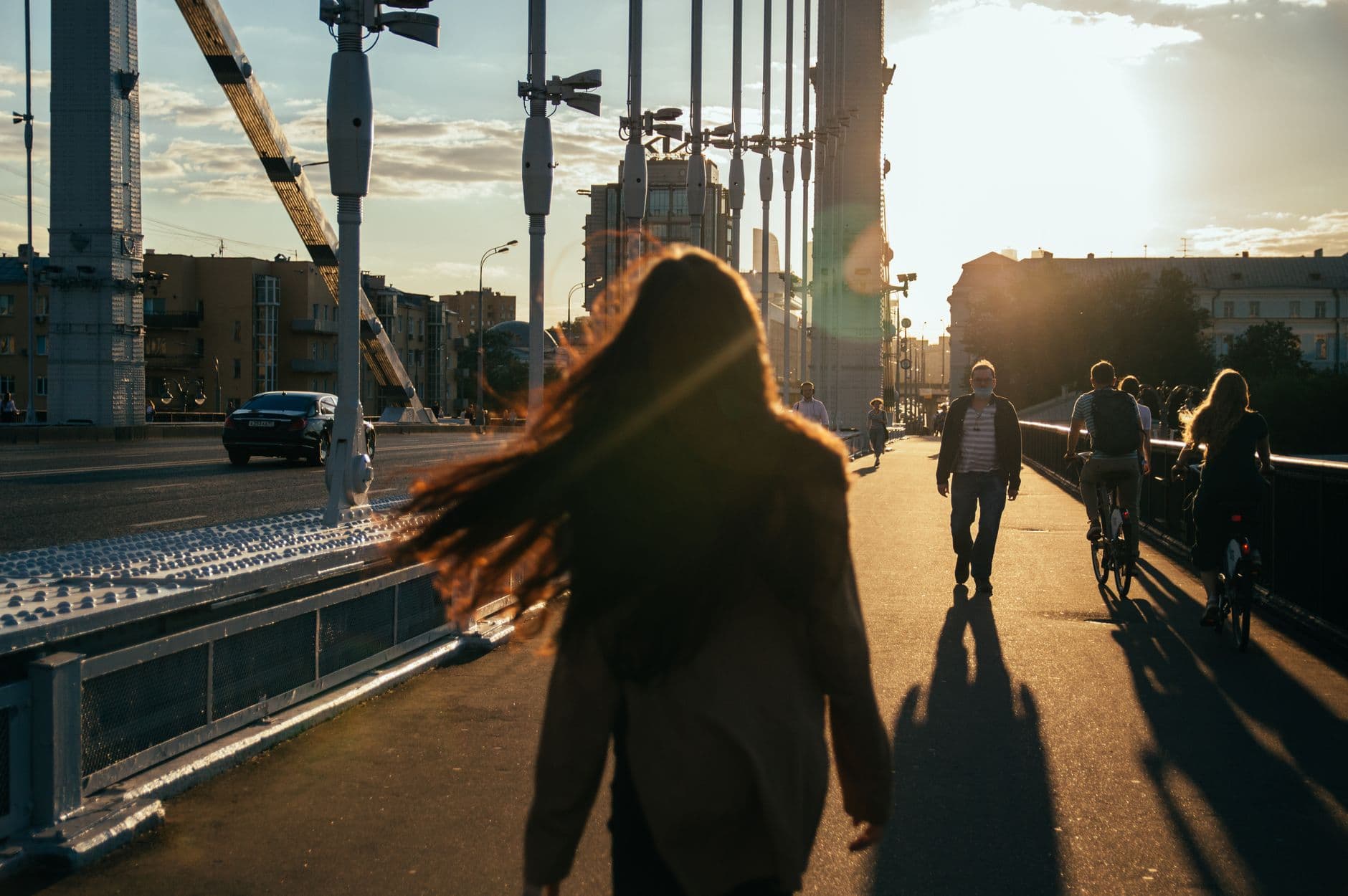
Ruta: desde Novodevichy, camine hacia el norte a lo largo de la orilla sur del río, pasando por grandes céspedes y murallas históricas, luego gire hacia el puente Krymsky y el malecón Kotelnicheskaya. La secuencia ofrece múltiples puntos de vista, con arcos que enmarcan el agua y las siluetas de rascacielos icónicos que se elevan sobre la superficie vidriosa.
Sujetos y encuadre: preste atención a los reflejos en el agua, el ritmo de los arcos y cómo el horizonte se asienta sobre la línea de las lámparas. Pruebe la exposición prolongada para suavizar las olas y resaltar las fachadas iluminadas; dispare tanto panoramas amplios como composiciones ajustadas de arcos y agua.
Tiempo e iluminación: desde finales de la primavera hasta el otoño ofrecen largas horas doradas; por la noche, el río refleja las luces de la ciudad, convirtiendo este tramo en un gran lugar para los tonos neón y ámbar. En invierno, la escarcha crea bordes nítidos en las paredes y los rieles.
Equipo y técnica: comience con un zoom versátil (24-70) para marcos de rango medio y un lente gran angular (16-35) para panoramas completos del río. Un trípode resistente es esencial para las tomas largas; traiga un filtro ND para exposiciones largas a la luz del día y baterías de repuesto en paquetes compactos.
Ambiente de museo y arte: el área del malecón también insinúa un ambiente de museo y salas: fachadas de piedra, patios tranquilos y retratos callejeros ocasionales de artistas locales. La vista que pasa por los postes de luz combina paredes antiguas con un horizonte moderno e iluminado.
Estado de ánimo de la ruta y comparaciones: la escena puede sentirse como un viaje desde la calma tipo Kerala hasta el bullicio tipo Delhi, con la que encontrará una mezcla de rincones tranquilos y puntos de vista concurridos. Sigue siendo una ruta conocida e icónica a lo largo del río, que ofrece una gran paleta para la experimentación mientras explora las curvas y los arcos nuevamente.
Parque Gorky y Jardín Neskuchny: espacios verdes, puentes y paisajes urbanos
Comience en el paseo marítimo frente al complejo del parque y siga la ruta que se desarrolla en el Jardín Neskuchny a medida que se pone el sol. Elija un ángulo que enfatice los puentes iluminados y el agua, creando siluetas icónicas contra el crepúsculo. Aquí, cada paso traza un corredor compacto y alineado al centro que une la vegetación con las vistas al río.
Dentro del recinto verde del Parque Gorky, los espacios al aire libre mezclan caminos históricos con programación cultural. Algunos carriles corren a lo largo de la orilla, otros conducen a claros más pequeños e instalaciones de arte. Aproveche la luz cambiante para enfatizar los puntos de referencia icónicos, con el paseo marítimo que se extiende aproximadamente 200 metros a lo largo del río. Con el tiempo, cada rincón revela un estado de ánimo diferente.
El Jardín Neskuchny es el espacio verde urbano más antiguo a lo largo del río, con diseños tradicionales y árboles que han sido testigos de siglos. Los restos de la finca incluyen una modesta torre que puntúa el horizonte, ofreciendo un contrapunto silencioso al parque más amplio. El jardín invita a caminatas más largas y marcos más lentos, desde rincones íntimos hasta grandes vistas.
Las visitas de invierno revelan otro lado: las lámparas brillan, la nieve suaviza las líneas y el agua refleja las luces circundantes. Algunos momentos indulgentes ocurren cuando haces una pausa junto al río y escuchas respirar a la ciudad. Una estadía en un hotel Radisson cercano hace que la transición de las tomas en interiores a exteriores sea perfecta; las rutas matutinas a lo largo del malecón le permiten capturar el centro de la ciudad desde diferentes ángulos. Con el tiempo, acumula una biblioteca de imágenes, cada marco cuenta una historia de espacios verdes, puentes y vistas al río.
Calle Arbat y callejones del casco antiguo: tácticas callejeras y encuadre sincero
Comience durante las horas posteriores a la puesta del sol a lo largo de la calle Arbat, luego adéntrese en los callejones del casco antiguo, donde las líneas arquitectónicas y los arcos abiertos por el tiempo crean marcos serenos para momentos sin posar. Deje que lo que se desarrolla frente a usted dicte el ritmo: una mirada, una risa, una pausa junto a un monumento y un transeúnte que se convirtió en parte de la escena.
Apunta a un caso simple: un sujeto fuerte contra una pared texturizada, con la silueta del kremlin y el río Moskva asomando detrás. Muévase con intención: su objetivo es contar la cultura y la historia a través de pequeños gestos, no escenificar cada momento. Cuando una escena se sienta equilibrada, retroceda lo suficiente para captar el espacio y la atmósfera, luego acérquese para obtener un retrato más ajustado que aún conserve el entorno.
Técnicas que funcionan constantemente en estos barrios:
- Marcos de primer plano: use arcos, puertas o el borde de un techo para tallar profundidad; deje que el sujeto se siente dentro de una ventana o puerta tallada mientras las luces se derraman más allá.
- Líneas principales: alinee un sujeto a lo largo de la pared de un callejón estrecho o los arcos de un corredor para guiar la vista hacia un monumento distante o un puente sobre el río.
- Luz y ambiente: confíe en las ventanas de las tiendas abiertas, las farolas y las marquesinas de los cines para crear reflejos similares a estrellas; el crepúsculo y la noche temprana aportan tonos clásicos a los tonos de piel y la piedra.
- Siluetas y reflejos: dispare hacia el río cuando pasen los barcos; los reflejos en el pavimento mojado pueden duplicar el drama sin equipo adicional.
- Sujetos y cadencia: mezcle extraños, músicos callejeros y lugareños en conversaciones tranquilas cerca de la fachada de un museo o cerca de salas que resuenan con la historia; capte una risa o una pausa reflexiva para revelar el carácter.
- Sinceridad ética: mantenga la distancia cuando sea necesario y evite interrumpir los momentos; deje que la escena se abra gradualmente y luego capte una expresión genuina.
- Tiempo y espacio: la luz de abril cambia rápidamente; use algunas tomas más largas para dejar que alguien entre en el encuadre y deje que el momento se convierta en parte del paisaje.
Ejemplos de casos para guiar su ojo:
- Calle Arbat: comience con una toma amplia para capturar el ritmo clásico de la calle, luego entre en una alcoba estrecha donde un transeúnte se convierte en el punto focal contra una puerta verde y una ventana abierta. El equilibrio entre la señalización moderna y las fachadas históricas a menudo revela una cultura que se volvió atemporal en un solo marco.
- Callejones del casco antiguo: ingrese a una secuencia de arcos y muros de piedra, luego retroceda para enmarcar un pequeño patio con un monumento visible más allá de una grieta en la pared. Use el sol de la mañana o de la tarde para representar sombras suaves en las piedras, y espere a que un trío de peatones crucen el marco al unísono, capturando el momento en que su movimiento cuenta la historia de la vida diaria en el barrio de la fortaleza.
Puntos de vista y puntos de referencia cercanos para enriquecer sus historias de fondo: el brillo del kremlin en la distancia, el río Moskva deslizándose debajo de los puentes, la pared cubierta de musgo de una fortaleza y un monumento que ancla un recuerdo de la historia. Los museos cercanos y los patios verdes ofrecen fondos más tranquilos para los retratos, mientras que los cines y las pequeñas salas brindan señales de iluminación cuando las multitudes pasan después de un espectáculo.
Configuración práctica y sincronización:
- Equipo preferido: un compacto de 35 mm o 50 mm, con un prime más rápido para poca luz; traiga un segundo cuerpo o un tele ligero para cultivos selectivos cuando las multitudes se espesen.
- Configuración: comience en ISO 400-800, f/4-f/5.6 para retratos estables contra detalles arquitectónicos, y cambie a ISO 1600-3200 si necesita congelar el movimiento en momentos de mucho movimiento.
- Posicionamiento: dispare desde un ángulo lateral para incluir arcos y paredes decorativas; ocasionalmente baje a la altura de la rodilla o apóyese contra una columna para captar el contacto visual y la espontaneidad.
- Respeto y ritmo: equilibre el tiempo dedicado a esperar con ráfagas rápidas para evitar romper la cadencia natural de la escena; retroceda cuando una escena se vuelva obvia y busque señales más sutiles.
Consejos para elevar su aspecto final: enmarque a un sujeto contra la abertura de una puerta hacia el río, dejando que las luces de un puente distante capten un brillo en el ala de un sombrero o en un cuello; use las plantas verdes circundantes para agregar contraste de color a la piedra, creando un paisaje más íntimo de la vida callejera. Si la música o una conversación suave se desvían de un cine o café cercano, programe su toma para incluir ese sonido en un sentido visual: un momento que se siente casi cinematográfico, como una pequeña pieza de cultura que se desarrolla en tiempo real.
En resumen, acérquese con curiosidad, cuente con su instinto y deje que la historia y la arquitectura guíen su ojo. Cuando se mantenga paciente y observe, captará el drama silencioso que hace de esta área un estudio de caso atemporal en la narración sincera y auténtica.