Recommandation : commencez à zaryadye pendant l'heure dorée pour capturer un panorama qui associe les murs du kremlin à des silhouettes modernes, un charme qui donne l'impression que cette zone est intégrée au cœur de l'histoire.
Ensuite, déplacez-vous vers le quartier de l'opéra où les toits révèlent des lignes entre la brique et le verre ; ils offrent des perspectives qui transforment chaque promenade en une opportunité d'encadrer chaque moment avec une ambiance nouvelle.
Dans un cas concis, ciblez le pont flottant de zaryadye à l'heure bleue, puis passez aux murs du kremlin pour capturer des silhouettes. Observez comment une géométrie forte abrite la profondeur et l'échelle, et comment la touche des reflets de l'eau ajoute du drame à la scène.
Lorsque des événements et des divertissements remplissent la zone, vous verrez les gens comme des sujets en mouvement - ils forment des lignes naturelles à travers la pierre et le verre. Capturez chaque moment au fur et à mesure que la lumière change, puis revenez à différentes heures pour comparer comment le même angle change.
Planifiez une séquence simple : commencez près des murs du kremlin à l'aube, passez à zaryadye pour une vue sur la ville, puis terminez dans le quartier de l'opéra pour des silhouettes au crépuscule ; ce foyer d'une attraction historique devient une étude de cas compacte en matière de composition, de couleur et de ligne.
Les heures varient selon le lieu ; consultez les pages officielles avant une visite pour chronométrer la lumière et les niveaux de foule, en vous assurant de repartir avec un ensemble complet de favoris plutôt qu'un instantané précipité.
Grand Tour pratique : Lieux emblématiques et cachés pour la photographie urbaine
Commencez à Novodevitchi, où l'eau sereine reflète les murs historiques et vous donne une base calme et prête pour la route à venir.
La route du centre-avant longe le front de rivière, s'arrêtant aux façades illuminées qui révèlent des lignes rayonnantes ; le mélange de formes classiques et construites fournit des cadres prêts à l'emploi et une texture forte.
Arrêtez-vous près de la Place Rouge, un centre historique où ces regards changent avec la lumière ; les surfaces rayonnantes et illuminées invitent à de longues expositions et à des études de texture, et le fait de l'histoire stratifiée de l'architecture en fait un moment privilégié pour commémorer la culture.
Zone cachée : les pavillons en bois du marché d'Izmailovo - une géométrie inhabituelle produit des textures presque cinématographiques. Vous trouverez un ensemble prêt à l'emploi idéal pour les études de détail, avec des pavillons récemment ouverts ajoutant de nouveaux angles à la route. Les améliorations récentes le long du terrain le maintiennent en évolution.
Ensuite, les pavillons de VDNKh offrent une palette rayonnante ; les nouvelles zones et les lumières vives invitent à des études architecturales à grande échelle, et le côté ouest offre de forts contrastes entre l'acier et le plâtre. La route vers la digue ouest offre des compositions tactiles et prêtes à être photographiées.
De là, dirigez-vous vers la digue ouest pour une promenade sereine au crépuscule ; le centre semble différent à travers les reflets sur l'eau, et les lumières flottantes créent une ambiance picturale ; cette touche d'ambiance rend les longues expositions gratifiantes.
Autour du groupe d'hôtels éclairés par le Ritz, capturez des lignes nettes et des surfaces réfléchissantes ; photographiez en grand angle pour encadrer la géométrie contre le ciel nocturne et la douce lueur de la rivière.
Vous voudrez vous arrêter à plusieurs endroits, passer des plans larges aux plans de détail et laisser la culture de ces lieux guider vos choix de cadrage. Ce circuit est conçu pour amorcer une habitude d'évaluation rapide et de contact délibéré avec la ville.
Lever du soleil sur le Kremlin et la Place Rouge : Angles, points de vue et timing
Commencez environ 30 à 40 minutes avant le lever du soleil sur la terrasse ouverte du parc Zaryadye, qui offre une vue orientée à l'est sur les grands murs du Kremlin. Prenez votre temps pour encadrer la première lumière qui balaie les toits : utilisez un objectif de 24 à 35 mm pour les compositions larges, puis passez à 70 à 200 mm pour isoler les dômes ; le moment où les couleurs s'épanouissent sur la maçonnerie est enchanteur et vaut la peine d'être mis en pause.
Si vous voulez un cadre plus stable avec moins de monde, un point de vue sur le toit accessible via une propriété Radisson peut vous donner une ligne d'horizon plus nette à une hauteur d'environ 70 à 90 mètres. Cet angle a donné un meilleur équilibre entre le premier plan et les tours lointaines, et vous pouvez profiter du calme avant la ruée matinale. Pour une échelle plus intime, tenez-vous le long des bords du mur du Kremlin à environ 15 à 25 mètres, où vous trouverez des silhouettes classiques de la tour Spasshkae et des églises autour de la Place Rouge. Certains événements dans les lieux MIBC à proximité peuvent modifier le premier plan, alors planifiez en fonction de ceux-ci lorsque les terrains ouverts sont bondés.
Le timing est important : commencez pendant l'heure bleue, puis passez à l'aube civile pour capturer les couleurs changeantes et les longues ombres. Ces moments produisent une lumière plus douce et des tons plus riches sur les façades des bâtiments. Les espaces ouverts autour de Zaryadye et la place ouverte autour du grand mur offrent une gamme de styles pour votre collection. La culture des séances de lever de soleil observée au Kerala et à Kolkata montre qu'une planification patiente est payante, et même les maniaques qui chassent les angles trouvent souvent des fenêtres paisibles. Lorsque vous encadrez ces vues, prenez votre temps pour régler l'exposition pour les reflets les plus brillants sans écrêter les ombres profondes.
| Point de vue | Meilleur angle/objectif | Accès | Timing | Remarques |
|---|
| Terrasse du parc Zaryadye (terrasse est) | large à 24-35 mm, puis 70-200 mm pour les détails | zone publique ; arriver tôt | ~30-40 minutes avant l'aube ; heure bleue à l'aube civile | activer les vues grandioses des murs ; garder le trépied bas |
| Terrasse sur le toit du Radisson (accès client) | 16-35 mm ; 50-100 mm pour la compression | vérifier l'accès auprès de la réception | heure bleue à la première lumière | hauteur ~70-90 mètres ; sûr, légal, stable |
| Bords du mur du Kremlin (points de vue publics) | 50-135 mm pour les tours ; 24-70 mm pour le contexte | espaces publics le long du périmètre | avant le lever du soleil jusqu'à l'aube civile | composition classique ; surveiller les foules |
Tour Spasskaya la nuit : Lumières, foules et astuces de longue exposition
Commencez votre session peu après le coucher du soleil ; les lampes s'épanouissent, les foules se rassemblent autour de la place et le monument brille entre les tours. Ce moment fournit une base solide pour créer des cadres à longue exposition, surtout lorsque vous planifiez un panorama qui comprend les ponts enjambant la rivière et la façade de l'horloge lumineuse, avec une teinte de type kerala dans le ciel.
Réglez un trépied robuste, un ISO bas et une exposition de 2 à 6 secondes à environ f/8. Utilisez des séquences de prise de vue pour composer un large panorama à travers la rivière, avec des ponts au premier plan, puis inclinez pour capturer les lumières de la ville le long des rives.
Un point de vue élevé depuis un étage Radisson à proximité ou un autre point élevé offre un large arc qui enjambe la silhouette du toit et les reflets de la rivière. Si l'accès au toit est bloqué, stabilisez l'appareil photo sur une balustrade le long du bord de la place et utilisez un déclencheur à distance pour garder la photo nette. L'espace spacieux autour de la tour vous aide à aligner un ensemble de cadres propres.
Pour maximiser le charme, programmez votre visite à un moment de calme avant que la foule du métro ne gonfle et après que le froid hivernal ne s'installe ; la lueur des lampadaires crée des halos chauds contre la pierre. Quelques minutes avant et après minuit apportent un mouvement subtil qui peut ajouter de l'énergie à votre scène sans submerger le cadre, rendant le contraste entre le monument et l'éclairage moderne prononcé, un excellent élément de composition.
Prenez plusieurs photos : une séquence prise avec le bracketing d'exposition donne une base flexible pour le panorama final. En post-production, alignez les calques, augmentez les reflets sur le toit et gardez les ponts comme une ligne directrice dans la composition. Si vous voulez comparer l'échelle, incluez une photo prise depuis les rives de Novodevitchi pour souligner la taille du point de repère entre les collines et les rues.
Avant de partir, vérifiez la sécurité autour des hôtels de ville et notez la présence d'artistes se produisant à proximité ; leur vie charmante ajoute un élément humain à vos archives. Une promenade rapide le long de la rue après votre prise de vue donne souvent un autre angle approprié pour un grand panorama spectaculaire.
Quais de la rivière Moskova : Reflets, ponts et cadrage de la ligne d'horizon
Commencez au quai de Novodevitchi au coucher du soleil pour capturer les reflets chauds sur le trottoir mouillé, la grande ligne d'horizon au-dessus et le premier éclat des tours illuminées à travers la rivière.
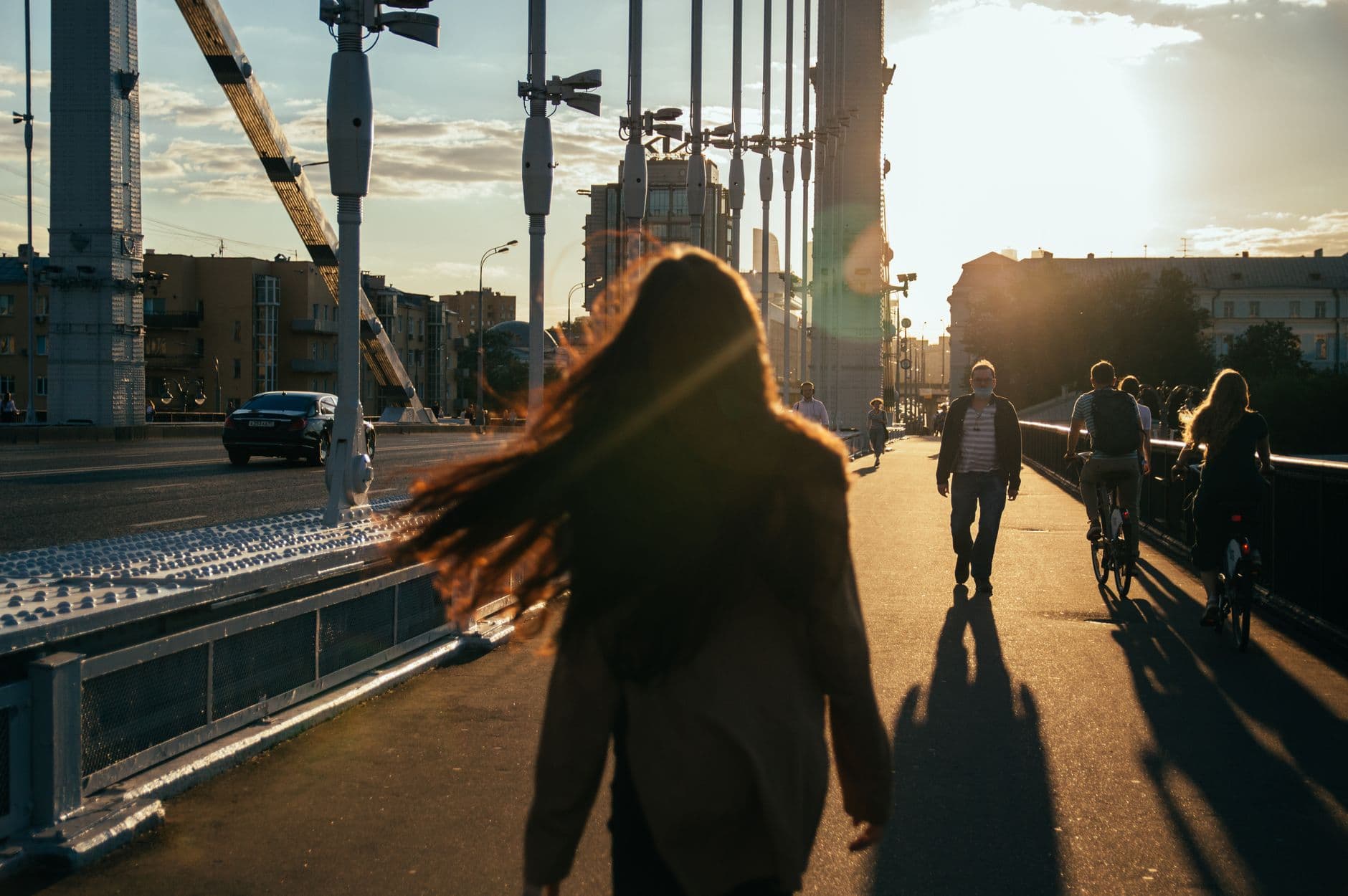
Itinéraire : De Novodevitchi, marchez vers le nord le long de la rive sud de la rivière, en passant devant de grandes pelouses et des murs historiques, puis tournez vers le pont Krymsky et le quai Kotelnicheskaya. La séquence offre de multiples points de vue, avec des arches encadrant l'eau et les silhouettes d'immeubles de grande hauteur emblématiques s'élevant au-dessus de la surface vitreuse.
Sujets et cadrage : faites attention aux reflets dans l'eau, au rythme des arches et à la façon dont la ligne d'horizon se trouve au-dessus de la ligne des lampes. Essayez une longue exposition pour lisser les vagues et mettre en évidence les façades illuminées ; photographiez à la fois de larges panoramas et des compositions serrées d'arches et d'eau.
Timing et éclairage : de la fin du printemps à l'automne, les longues heures dorées sont au rendez-vous ; la nuit, la rivière reflète les lumières de la ville, transformant cette étendue en un endroit idéal pour les tons néon et ambrés. En hiver, le givre crée des bords nets sur les murs et les rails.
Équipement et technique : commencez avec un zoom polyvalent (24-70) pour les cadres de milieu de gamme et un objectif grand angle (16-35) pour les panoramas complets de la rivière. Un trépied robuste est essentiel pour les longues prises de vue ; apportez un filtre ND pour les longues expositions en plein jour et des piles de rechange dans des emballages compacts.
Ambiance de musée et d'art : la zone du quai fait également allusion à une atmosphère de musée et de salles - façades en pierre, cours tranquilles et portraits de rue occasionnels par des artistes locaux. La vue au-delà des lampadaires combine de vieux murs avec une ligne d'horizon moderne et illuminée.
Ambiance de l'itinéraire et comparaisons : la scène peut donner l'impression d'un voyage du calme de type kerala à l'agitation de type delhi, avec un mélange de coins tranquilles et de points de vue animés. Il reste un itinéraire connu et emblématique le long de la rivière, offrant une grande palette d'expérimentation pendant que vous explorerez à nouveau les virages et les arches.
Parc Gorki et jardin Neskuchny : Espaces verts, ponts et paysages urbains
Commencez à la promenade du front de rivière à l'extérieur du complexe du parc et suivez la route qui se déploie dans le jardin Neskuchny au fur et à mesure que le soleil se couche. Choisissez un angle qui met l'accent sur les ponts illuminés et l'eau, créant des silhouettes emblématiques contre le crépuscule. Ici, chaque pas trace un couloir compact et aligné au centre qui relie la verdure aux vues sur la rivière.
À l'intérieur de l'enceinte verte du parc Gorki, les espaces extérieurs mélangent des sentiers historiques avec une programmation culturelle. Certaines voies longent la rive, d'autres mènent à de plus petites clairières et installations artistiques. Profitez de la lumière changeante pour mettre en valeur les monuments emblématiques, la promenade s'étendant sur environ 200 mètres le long de la rivière. Avec le temps, chaque coin révèle une ambiance différente.
Le jardin Neskuchny est le plus ancien espace vert urbain le long de la rivière, avec des aménagements traditionnels et des arbres qui ont été témoins de siècles. Les vestiges du domaine comprennent une modeste tour qui ponctue l'horizon, offrant un contrepoint tranquille au parc plus vaste. Le jardin invite à de plus longues promenades et à des cadres plus lents, des recoins intimes aux grands panoramas.
Les visites hivernales révèlent une autre facette : les lampes brillent, la neige adoucit les lignes et l'eau reflète les lumières environnantes. Certains moments de plaisir se produisent lorsque vous vous arrêtez au bord de la rivière et écoutez la ville respirer. Un séjour dans un hôtel Radisson à proximité facilite la transition entre les prises de vue en intérieur et en extérieur ; les itinéraires matinaux le long du quai vous permettent de capturer le centre-ville sous différents angles. Avec le temps, vous accumulez une bibliothèque d'images, chaque cadre racontant une histoire d'espaces verts, de ponts et de vues sur la rivière.
Rue Arbat et ruelles de la vieille ville : Tactiques de rue et cadrage candide
Commencez pendant les heures qui suivent le coucher du soleil le long de la rue Arbat, puis dérivez dans les ruelles de la vieille ville où les lignes architecturales et les arches ouvertes par le temps créent des cadres sereins pour les moments non posés. Laissez ce qui se déroule devant vous dicter le rythme : un regard, un rire, une pause près d'un monument et un passant qui fait partie de la scène.
Ciblez un cas simple : un sujet fort contre un mur texturé, avec la silhouette du kremlin et la rivière Moskova qui se cachent derrière. Déplacez-vous avec intention - votre objectif est de raconter la culture et l'histoire à travers de petits gestes, pas de mettre en scène chaque moment. Lorsqu'une scène semble équilibrée, reculez juste assez pour saisir l'espace et l'atmosphère, puis rapprochez-vous pour un portrait plus serré qui préserve toujours l'environnement.
Techniques qui fonctionnent systématiquement dans ces quartiers :
- Cadres de premier plan : utilisez des arches, des portes ou un bord de toit pour sculpter la profondeur ; laissez le sujet s'asseoir dans une fenêtre ou une porte sculptée pendant que les lumières se répandent au-delà.
- Lignes directrices : alignez un sujet le long du mur d'une ruelle étroite ou des arches d'un couloir pour guider l'œil vers un monument lointain ou un pont au-dessus de la rivière.
- Lumière et ambiance : comptez sur les vitrines ouvertes, les lampadaires et les marquises de cinéma pour créer des reflets en forme d'étoiles ; le crépuscule et le début de la nuit apportent des tons classiques aux tons de peau et à la pierre.
- Silhouettes et reflets : photographiez vers la rivière lorsque des bateaux passent ; les reflets sur le trottoir mouillé peuvent doubler le drame sans équipement supplémentaire.
- Sujets et cadence : mélangez des inconnus, des musiciens de rue et des habitants dans des conversations tranquilles près d'une façade de musée ou près de salles qui résonnent d'histoire ; saisissez un rire ou une pause réfléchie pour révéler le caractère.
- Candeur éthique : gardez vos distances si nécessaire et évitez d'interrompre les moments - laissez la scène s'ouvrir progressivement, puis saisissez une expression authentique.
- Timing et espace : la lumière d'avril change rapidement ; utilisez quelques prises plus longues pour laisser quelqu'un entrer dans le cadre et laisser le moment faire partie du paysage.
Exemples de cas pour guider votre œil :
- Rue Arbat : Commencez par une prise de vue large pour capturer le rythme classique de la rue, puis entrez dans une alcôve étroite où un passant devient le point focal contre une porte verte et une fenêtre ouverte. L'équilibre entre la signalisation moderne et les façades historiques révèle souvent une culture devenue intemporelle dans un seul cadre.
- Ruelles de la vieille ville : Entrez dans une séquence d'arches et de murs de pierre, puis reculez pour encadrer une minuscule cour avec un monument visible au-delà d'une fissure dans le mur. Utilisez le soleil du matin ou de la fin d'après-midi pour rendre des ombres douces sur les pierres, et attendez qu'un trio de piétons traverse le cadre à l'unisson, en saisissant le moment où leur mouvement raconte l'histoire de la vie quotidienne dans le quartier de la forteresse.
Points de vue et points de repère à proximité pour enrichir vos histoires : la lueur du kremlin au loin, la rivière Moskova glissant sous les ponts, le mur mousseux d'une forteresse et un monument qui ancre un souvenir de l'histoire. Les musées et les cours verdoyantes à proximité offrent des arrière-plans plus calmes pour les portraits, tandis que les cinémas et les petites salles fournissent des repères d'éclairage lorsque les foules passent après un spectacle.
Configuration pratique et timing :
- Équipement préféré : un 35 mm ou 50 mm compact, avec une focale fixe plus rapide pour la faible luminosité ; apportez un deuxième boîtier ou un téléobjectif léger pour les recadrages sélectifs lorsque les foules s'épaississent.
- Paramètres : commencez à ISO 400-800, f/4-f/5.6 pour des portraits stables sur des détails architecturaux, et passez à ISO 1600-3200 si vous devez figer le mouvement dans les moments chargés.
- Positionnement : photographiez d'un angle latéral pour inclure des arches et des murs décoratifs ; baissez-vous occasionnellement à la hauteur des genoux ou appuyez-vous contre une colonne pour saisir le contact visuel et la spontanéité.
- Respect et rythme : équilibrez le temps passé à attendre avec des rafales rapides pour éviter de briser la cadence naturelle de la scène ; reculez lorsqu'une scène devient évidente et recherchez des indices plus subtils.
Conseils pour rehausser votre look final : encadrez un sujet contre une porte s'ouvrant vers la rivière, en laissant les lumières d'un pont lointain attraper un éclat sur le bord d'un chapeau ou un col ; utilisez les plantes vertes environnantes pour ajouter un contraste de couleur à la pierre, créant un paysage plus intime de la vie de rue. Si de la musique ou une douce conversation dérive d'un cinéma ou d'un café à proximité, programmez votre prise de vue pour inclure ce son dans un sens visuel - un moment qui semble presque cinématographique, comme un petit morceau de culture se déroulant en temps réel.
En bref, abordez avec curiosité, comptez sur votre instinct et laissez l'histoire et l'architecture guider votre œil. Lorsque vous restez patient et observez, vous saisirez le drame tranquille qui fait de cette zone une étude de cas intemporelle en matière de narration candide et authentique.