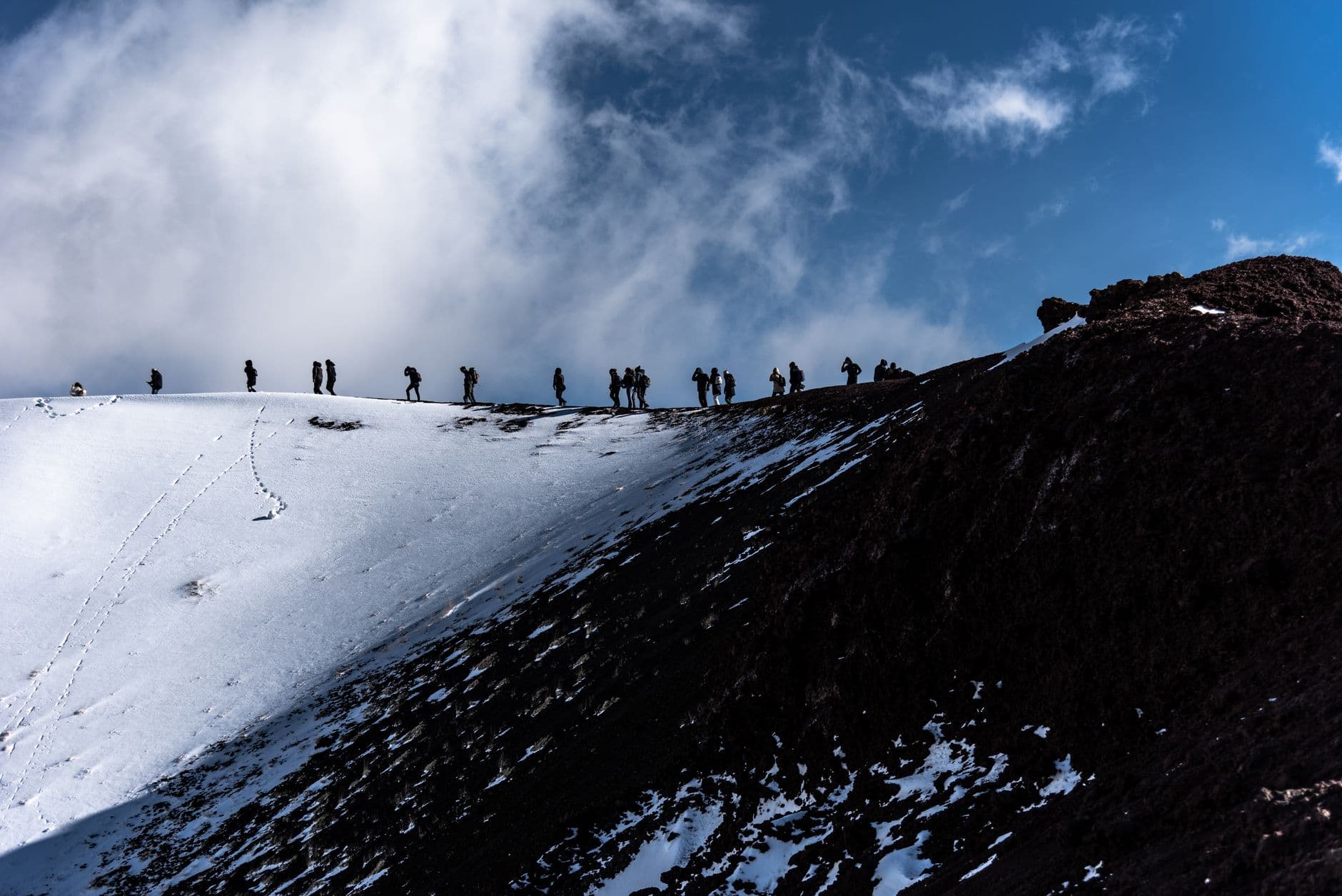
Ο άμεσος δρόμος προς την κορυφή ξεκινά με ένα πλήρως δοκιμασμένο μπλοκ προσαρμογής. Δύο μέρες στη βάση, στη συνέχεια μια προσεκτική ανάβαση σε ένα μεσαίο υψόμετρο στρατόπεδο. Αν το επιτρέψει ο καιρός, μπορείτε να προχωρήσετε ακόμα ψηλότερα. Οι ενδιαφερόμενοι ταξιδιώτες στην περιοχή θα πρέπει να εξετάσουν μια ανατολική διαδρομή για μια πιο ήπια ανάβαση, παρατηρώντας τα φυσικά χαρακτηριστικά, τα χιόνια και τις πιθανές απειλές. Αν ελπίζετε να φτάσετε στην κορυφή σύμφωνα με το πρόγραμμα, το στόχο παραμένει σαφής: να διατηρήσετε το ρυθμό και να παραμείνετε ασφαλείς.
Η υγρασία παίζει κεντρικό ρόλο: πίνετε τακτικά από ένα μπουκάλι ενός λίτρου, προσπαθώντας να καταναλώνετε τουλάχιστον τρεις έως τέσσερις λίτρους την ημέρα για να αντισταθμίσετε τον ξηρό αέρα σε υψόμετρο. Όταν φτάσετε σε ένα υψηλό στρατόπεδο, εγκαταστήστε τις σκηνές νωρίς, ελέγξτε τη θερμάστρα και την μόνωση και κρατήστε την υγρασία κοντά σας. Η επαρκής πρόσληψη υγρών και θερμίδων βοηθά το σώμα να προσαρμοστεί και να παραμένει συγκεντρωμένο στο έργο που ακολουθεί.
Το εξοπλισμό και η ασφάλεια πρέπει να περιλαμβάνουν ένα ράβδο για πεζοπορία για σταθερότητα σε μεικτό έδαφος και σε απότομες κατηφόρες. Σε χιονοθύλες, μπορούν να σχηματιστούν μαλακές χιονοποδάρες από τον άνεμο· προσέξτε για κρυμμένες ράχες και μαύρο πάγο σε σκιασμένες πλαγιές. Πάντα να κινείστε με ασφάλεια, να ακολουθείτε φυσικούς δρόμους και να χρησιμοποιείτε σταθερά σχοινιά όπου υπάρχουν. Σχεδιάστε μια άμεση ανάβαση με στάσεις ανάπαυσης για να ελαχιστοποιήσετε την κόπωση.
Το καιρός και οι περιθώρια ασφάλειας απαιτούν σεβασμό. Οι άνεμοι μπορούν να αυξηθούν γρήγορα, αναγκάζοντας μικρές αναμονές· αποφύγετε να προσπαθήσετε να φτάσετε στην κορυφή με δυνατούς ανέμους. Όταν οι συνθήκες το επιτρέπουν, αγγίξτε την κορυφή κατά τη διάρκεια της ημέρας και κατεβείτε σε ένα ασφαλές στρατόπεδο πριν από τη δύση του ηλίου. Ένας ρυθμός που δεν αναγκάζει κανέναν να υπερβαίνει τα όριά του βοηθά να διατηρηθεί το ταξίδι εύκολα διαχειρίσιμο, και η ανάβαση παραμένει αρκετά δύσκολη για πρωτοεμφανιζόμενους με περιορισμένη προσαρμογή.
Περιφερειακά ζητήματα περιλαμβάνουν άδειες, κόστους και οργανωτικά θέματα. Τοπικοί πολίτες παρέχουν πρακτικές συμβουλές για δρόμους, οδηγητική συμπεριφορά και εγκατάσταση σκηνών. Αν χρειάζεται να οργανώσετε μεταφορά από το αεροδρόμιο στη βάση, εξετάστε τις επιλογές και σχεδιάστε πόσα θα ξοδέψετε για φαγητό, καύσιμα και εξοπλισμό έκτακτης ανάγκης. Οι ανάγκες σας - υδάτιση, θρεπτική διατροφή, ύπνος και ημέρες ανάπαυσης - είναι σημαντικές· μην αγνοείτε συμπτώματα από πτώση πίεσης, κόπωση ή αφυδάτωση.
Προγραμματισμός για μια εκδρομή μικρής ομάδας (9 άτομα) στο όρος Ελμπρούς
Η διαδικασία έκδοσης βίζας πρέπει να ολοκληρωθεί τουλάχιστον 8 εβδομάδες πριν την αναχώρηση. Διατάξτε διπλή είσοδο αν το πρόγραμμά σας περιλαμβάνει μια γειτονική χώρα. Αυτό μειώνει τον κίνδυνο καθυστερήσεων τελευταίας στιγμής.
Μια ομάδα εννέα ατόμων λειτουργεί καλύτερα με δύο οδηγούς για ασφάλεια, έναν μάγειρα και έναν υπεύθυνο εξοπλισμού. Οι υπόλοιποι συμμετέχοντες αναλαμβάνουν εναλλάξ υποστηρικτικές εργασίες κατά τις ημέρες προσαρμογής. Προτεραιότητα δίνεται στην άνεση χωρίς να θυσιάζεται η ασφάλεια.
Παράθυρο προσαρμογής διαρκεί επτά ημέρες με μια επιπλέον ημέρα. Κύρια στόχοι: κατανόηση των αντιδράσεων σε υψόμετρο, διαχείριση των κερδών υψομέτρου και ολοκλήρωση εντός μιας εβδομάδας. Περιλαμβάνεται ελαφρύ προπονητικό προγραμματισμό, σχεδιασμό υδρόλυσης και αυστηρή τήρηση ύπνου για μέγιστη ανάκαμψη.
Το κύκλωμα προσαρμογής cheget ξεκινά από 2.100-2.500 μ., προχωράει σε 3.000-3.500 μ. και επιστρέφει στο καταφύγιο. Η μεταφορά με τηλεφερικό εξοικονομεί χρόνο, αλλά τα σακίδια δεν πρέπει να υπερβαίνουν τα 12-14 κιλά ανά άτομο για ευκολότερη κίνηση. Αν το καιρό επιτρέπει, ολοκληρώστε δύο αναβάσεις σε διαφορετικές μέρες για να κερδίσετε εμπιστοσύνη σε δύσκολες περιοχές.
Ο σχεδιασμός της διαδρομής επικεντρώνεται στο υψηλό στρατόπεδο της περιοχής του Γκαραμπάσι, περίπου 3.800 μ., το οποίο προσφέρει μια βάση μεσαίας υψομέτρου πριν από την προσπάθεια για την κορυφή. Από εκεί, αναμένεται η παρουσία χιονισμένων πλαγιών, ρωγμών και προσέγγισης από μια κορυφογραμμή. Για λόγους ασφάλειας, εγκαταστήστε σταθερά συστήματα σχοινιών όπου είναι απαραίτητο. Δύο μήκη σχοινιών plus ένα επιπλέον σχοινί βοηθούν στη διατήρηση ενός ασφαλούς γέφυρας μεταξύ των ομάδων.
Η διαχείριση της ανύψωσης στοχεύει σε σταδιακές βελτιώσεις των 300-500 μέτρων την ημέρα πάνω από τη βάση, συμπεριλαμβανομένων των ημερών ανάπαυσης. Για υψόμετρα έως και 3.800 μέτρα, παρακολουθήστε τα συμπτώματα. Αν εμφανιστούν πονοκέφαλοι ή ζάλη, η προτεραιότητα είναι να βρείτε καταφύγιο, να ξεκουραστείτε και να διατηρήσετε την υγρασία.
Το φυσικό έδαφος περιλαμβάνει επιφάνειες παγετώνων, μοραίνες, βραχώδεις εκβλάσεις και, σε ορισμένα σημεία, αρχαία στρώματα λάβας κοντά σε φυσικά χαρακτηριστικά. Μείνετε σε σημαδευμένους δρόμους για να ελαχιστοποιήσετε τον κίνδυνο κρυφών ρωγμών· συνδέστε σε σταθερές γραμμές όταν υπάρχουν και διατηρήστε σταθερό ρυθμό για να αποφύγετε την υπερβολική κόπωση.
Εξοπλισμός και προμήθειες περιλαμβάνουν ρούχα τριών στρωμάτων με μεσαία στρώματα από μαλλί, ανθεκτικό κάλυμμα, θερμομονωμένα παπούτσια, γκέιτερς, κράνος, ζώνη, παγοδύτες, κορδόνι, καραβίδες, σακίδιο ύπνου που αντέχει σε -20°C, στρώμα, κουζίνες, εξοπλισμό μαγειρέματος, φίλτρο νερού, σύστημα υδράτωσης, συμπληρώματα ηλεκτρολυτών, ηλιοπροστασία και ένα κιτ πρώτων βοηθειών. Στην κατασκήνωση, η χρήση της κουζίνας και η οργάνωση του χώρου μαγειρέματος εξασφαλίζουν ζεστά γεύματα. Προγραμματίστε τρία γεύματα την ημέρα μαζί με σνακ. Φέρτε τουλάχιστον 2 λίτρα νερού ανά άτομο καθημερινά και αποθηκεύστε με ασφάλεια το καύσιμο.
Η διαχείριση της διαμονής βασίζεται στην πρόσβαση με τηλεφερίκ από τις ζώνες του θέρετρου προς το Τσεγκέτ ή το Γκαραμπάσι, με βάση κοντά στα 2.400-2.600 μ. και ένα υψηλό στρατόπεδο γύρω στα 3.800-4.000 μ. Η πρόγραμμα περιλαμβάνει μια ημέρα ανάπαυσης στη μέση της εβδομάδας για να διατηρηθεί η απόδοση. Θα παρατηρήσετε ότι η άνεση βελτιώνεται όταν οι σκηνές, τα σακίδια ύπνου και τα μονωμένα στρώματα επιλέγονται καλά.
Το σχεδιασμό έκτακτης ανάγκης περιλαμβάνει ελέγχους συντρόφων, χρήση ζώνης ασφαλείας και διαδικασίες σταθερού σχοινιού. Πάντα ζευγαρώνετε τους αναβάτες για έλεγχο πριν από κάθε κίνηση. Για ενέργεια, συμπεριλάβετε συμπληρώματα ηλεκτρολυτών και εύπεπτες σνακ για να διατηρήσετε σταθερή απόδοση. Αν αλλάξει ο καιρός, είστε έτοιμοι να κατέβετε σε χαμηλότερο καταφύγιο και να επανεξετάσετε με τη βάση υποστήριξης.
- Λογιστική και προσωπικό Δύο εξειδικευμένοι οδηγοί επιβλέπουν το ρυθμό, την πλοήγηση και την ασφάλεια.
- Ένας μαγειρέφτης χειρίζεται τα γεύματα, την οργάνωση της κουζίνας και τη διαχείριση καυσίμων.
- Ένας υπάλληλος εξοπλισμού συντονίζει τις σκηνές, τις κουζίνες και το εξοπλισμό ύπνου.
- Οκτώ συμμετέχοντες αναλαμβάνουν ελαφριές εργασίες με περιστροφική σειρά. Κάθε μέρα, ένας συμμετέχων δρα ως σύνδεσμος επικοινωνίας.
- Προσαρμογή και εβδομαδιαίο πρόγραμμα
Η πρώτη ημέρα φτάνει με ενημερώσεις, έλεγχο εξοπλισμού και βασικές δραστηριότητες στο κατάστημα.
- Δύο ημέρες προσαρμογής στις πλαγιές του Τσεγκέτ (2.000-3.000 μ.) προηγούνται των υψηλότερων κατασκηνώσεων.
- Μια ημέρα ανάπαυσης στη μέση της εβδομάδας διατηρεί την ενέργεια για το παράθυρο της κορυφής.
- Δρομές και υψηλές βάσεις
Η κύρια προσέγγιση κατευθύνεται προς το υψηλό στρατόπεδο Γκαραμπάσι (≈3.800 μ.) για προσαρμογή σε μεσαία υψομετρική ζώνη.
- Η κορυφαία προσπάθεια συνήθως χρησιμοποιεί χιονοστιβάδες, στη συνέχεια ένα τμήμα της κορυφής. Το καιρός καθορίζει την ώρα έναρξης και τα όρια αναχώρησης.
- Σταθερά τμήματα σχοινιών εγκαθίστανται όπου χρειάζεται· να έχετε επιπλέον σχοινί έτοιμο για γρήγορη εγκατάσταση ή επισκευές.
- Εξοπλισμός, καταφύγιο και προμήθειες Τριπλό σύστημα με μεσαίο στρώμα από μαλλί· φορτώστε ελαφριά όπου είναι δυνατόν για να διευκολυνθεί η κίνηση σε πιο κεκλιμένες περιοχές.
- Οι κουζίνες και τα σκεύη παραμένουν σε δύο ξεχωριστά κιτ για να επιταχύνουν τη μαγειρική κατά τη διάρκεια κακού καιρού.
- Σκηνές καταφυγίου με μόνωση από το έδαφος, μαζί με σακίδια ύπνου για κρύες νύχτες. Διατήρηση ξηρών ρούχων κάτω από την έκθεση στον άνεμο.
- Ασφάλεια, διαχείριση κινδύνων και αντιμετώπιση έκτακτων περιπτώσεων
Ελέγχος καιρού κάθε πρωί. Αν αυξηθεί ο κίνδυνος από ανέμους, λευκή θύελλα ή χιονοστιβάδα, καθυστερήστε την ανάβαση ή αποσυρθείτε στη βάση.
- Ο σχεδιασμός επικοινωνίας περιλαμβάνει δορυφορικό φάρο και καθημερινές επαφές με τη βάση.
- Οι διαδρομές κατεβασμάτων έχουν προγραμματιστεί εκ των προτέρων για όλα τα κύρια τμήματα. Η ανάβαση σταματάει αν η χρήση οξυγόνου ή η κόπωση ξεπερνούν τα ασφαλή όρια.
- Λάβετε ασφάλιση με κάλυψη για ορειβατική διάσωση και εκκένωση. Επιβεβαιώστε την ισχύ του βίζα και τις προϋποθέσεις εισόδου.
- Αντιγραφή των σημαντικών εγγράφων. Αποθήκευση ψηφιακών αντιγράφων σε ασφαλή φάκελο cloud που είναι προσβάσιμος από τη βάση.
- Το προϋπολογισμό περιλαμβάνει ενοικίαση εξοπλισμού, χρέωση αδειών, οδηγούς, καύσιμα, φαγητό και προϋπολογισμό έκτακτης ανάγκης για καθυστερήσεις λόγω καιρού.
Προ-Τάξιδι Φυσική Προετοιμασία και Πρόγραμμα Εκπαίδευσης για Έννεα Αναβατήρες
Ξεκίνα με ένα σχέδιο έξι εβδομάδων που αυξάνει την αντοχή, ενισχύει τα πόδια και βελτιώνει την αναπνοή σε υψόμετρο, θα παρατηρήσεις πρόοδο με ένα απλό εβδομαδιαίο τεστ.
Βασικές δοκιμασίες για εννέα αναρριχητές: 1.6 χιλιόμετρα δρόμου σε λιγότερο από 12 λεπτά, 40 push-ups, 60 squats σε δύο λεπτά και μια δοκιμασία βήματος 3 λεπτών με 90 βήματα ανά λεπτό.
Η εβδομάδα 1-2 επικεντρώνεται στην ανάπτυξη της βασικής αερόβιας ικανότητας: 3 συνεδρίες καρδιο 45 λεπτών, 2 κύκλοι δύναμης 60 λεπτών, plus 1 ημέρα ελαφριάς κινητικότητας.
Η τρίτη εβδομάδα εισάγει εργασία σε λόφους: κλίση στο τρεντμίλ ή εξωτερικοί λόφοι, 6x2 λεπτά με βαριά σακίδια 10-15 kg, επιστροφή με τρέξιμο.
Εβδομάδα 4 περιλαμβάνει μεγαλύτερες βόλτες με χαμηλή ένταση με πλήρη εξοπλισμό, με στόχο να διατηρήσετε την καρδιακή συχνότητα στη ζώνη 2, για 2-3 ώρες, καθώς και μια διανυκτέρευση σε στρατόπεδο κοντά στο Αζάου για άσκηση.
Εβδομάδα 5-6: μειώστε τον όγκο, διατηρήστε σύντομες συνεδρίες δύναμης, διατηρήστε την ευκινησία, βεβαιωθείτε ότι οι πρωινές σας ρουτίνα είναι ήπιες για να αποφύγετε την κόπωση.
Αναπροσαρμογή σε υψόμετρο: περάστε χρόνο σε μέτρια υψόμετρα σε κοντινά χωριά, συμπεριλάβετε στάσεις μετά τη μεταφορά, αν είναι δυνατόν περάστε 1-2 νύχτες σε υψόμετρο πριν από την κύρια ανάβαση.
Εξοπλισμός και οργανωτικά: εννέα αναρριχητές μοιράζονται εξοπλισμό. Ορισμένοι θα προσλάβουν οδηγούς ή θα οργανώσουν μεταφορά από τη Μόσχα στην περιοχή Αζάου. Το προϋπολογισμό περιλαμβάνει σκηνές, στρώματα, φούρνο, φίλτρο νερού και ένα βιβλίο για τις βραδιές.
Προγραμματισμός εκπαίδευσης: καθημερινό πρόγραμμα με ξύπνημα το πρωί, ενίσχυση το μεσημέρι και ευλυγισία το βράδυ. Τα περισσότερα μαθήματα περιλαμβάνουν άσκηση κατηφόρα σε ήπια κλίση. Προστίθενται περιθώρια ασφάλειας για καιρικές συνθήκες με άνεμο.
Ανάκτηση και ασφάλεια: παρακολουθήστε την ασφαλή απόδοση. Αν το καιρός γίνει ανέμιστος ή θυελλώδης, σταματήστε. Υδροδοτήστε καλά και παρακολουθήστε το επίπεδο οξυγόνου με απλό οξυμετρικό αν είναι διαθέσιμο.
Μετα-εκπαιδευτικές αναφορές: καταγραφή του λόγου για κάθε συνάντηση, καταγραφή μετρικών, σημείωση κόστους και χρημάτων που δαπανήθηκαν, προσαρμογή του σχεδίου· εννέα αναβάτες παραμένουν συνδεδεμένοι μέσω ενός τετράδρου ή απλού εφαρμογής για την κοινή χρήση της πρόοδός τους.
Base Camp to Summit: Ημερήσιο Πρόγραμμα για Ομάδα 9 Ατόμων
Μετακίνηση στην Γκαραμπάσι, προσαρμογή τη νύχτα και προσεκτικός καθημερινός ρυθμός. Διατηρήστε το ρυθμό εύκολο, μείνετε μαζί και ορίστε έναν υπεύθυνο για ελέγχους ασφάλειας. Προγραμματίστε για κρύες πρωινές ώρες και επιστρέψτε αργά αν αλλάξει ο καιρός. Αυτό το σχέδιο λειτουργεί όλο το χρόνο με κατάλληλη προετοιμασία και καθαρά ορισμένους ρόλους για μια ομάδα εννέα ατόμων.
| Day | Ύψος | Κύριες Δραστηριότητες | Διαμονή | Notes |
| 1 | 3.750 χιλιόμετρα | Μεταφορά στο Garabashi; ελαφρύ κύκλωμα προσαρμογής στο φως στο εύκολο μονοπάτι με θέα στο φαράγγι; έλεγχος εξοπλισμού; τσάι στις 15:00; σύντομη ενημέρωση για την ασφάλεια | Γκαράμπασι | Ομάδα 9 ατόμων; ελαστικοί χρόνοι; μικρές κερδισμένες επιφάνειες; να μείνετε ζεστοί |
| 2 | ~3.800-3.900 μ. | Μετακίνηση στο barrelhut; σύντομη προσέγγιση του παγετώνα; άσκηση με σχοινί; καθημερινή ανάπαυση; έλεγχος στρωμάτων; ψυχροί άνεμοι, εύκολο ρυθμό | Το barrelhut είναι μια εταιρεία που προσφέρει υπηρεσίες φωτογραφίας και βίντεο για γάμους και άλλες εκδηλώσεις. Η εταιρεία έχει την έδρα της στο Λονδίνο και προσφέρει υπηρεσίες σε όλο τον κόσμο. Το barrelhut είναι γνωστό για την ποιότητα των φωτογραφιών και των βίντεο που παράγει, καθώς και για την επαγγελματική του προσέγγιση. Η εταιρεία χρησιμοποιεί σύγχρονο εξοπλισμό και τεχνολογία για να δημιουργήσει μοναδικά και αξέχαστα μνημεία για τους πελάτες της. Το barrelhut προσφέρει επίσης υπηρεσίες φωτογραφίας και βίντεο για επιχειρήσεις και προσωπικές εκδηλώσεις. Η εταιρεία έχει συνεργαστεί με πολλές γνωστές εταιρείες και έχει κερδίσει πολλά βραβεία για την εργασία της. Το barrelhut είναι μια επιλογή που αξίζει να λάβετε υπόψη αν ψάχνετε για μια εταιρεία φωτογραφίας και βίντεο για τον γάμο σας ή για άλλη εκδήλωση. | Κοιλάδες ορατές; μένετε μαζί; επιστρέψτε μέχρι το μεσημέρι/το απόγευμα |
| 3 | ~3.900-4.000 μ. | Περίπατος προσαρμογής κατά μήκος του κάτω παγετώνα; δοκιμή κραμπόν; πρώτα η ασφάλεια; έλεγχος οξυγόνου; κλήση για έλεγχο ομάδας; να είσαι ευέλικτος | Το barrelhut είναι μια εταιρεία που προσφέρει μοναδικά διαμερίσματα σε σχήμα βαρελιού, ιδανικά για διακοπές ή διαμονή σε φυσικό περιβάλλον. | Σκούρα πρωινά; πρόγραμμα 8-10 ώρες συνολικά δραστηριοτήτων |
| 4 | ~5.642 μ. (στόχος κορυφής) | Σκούρο ξεκίνημα 01:30-02:30; ανάβαση σε πιο δύσκολες περιοχές του παγετώνα; οι χρόνοι παρακολουθούνται; μία προσπάθεια για την κορυφή είναι δυνατή; διαδρομή επίθεσης προς το άκρο; κατέβαση στο γκαραμπάσι | Γκαράμπασι | Αν είναι αργά, υπάρχει η δυνατότητα να τελειώσει αργότερα. Αν υπάρχει άνεμος ή κρύο, προτιμήστε να διακόψετε την ανάβαση και να επιστρέψετε. |
| 5 | ~1,800-2,000 m επίπεδο | Κατεβαίνετε στο χαμηλότερο επίπεδο; μεταβαίνετε στη βάση της κοιλάδας; αναλύετε τα αποτελέσματα; γιορτάζετε την ισχυρή συνεργασία της ομάδας; σχεδιάζετε την αναχώρηση | Αζάου περιοχή ξενοδοχείο | Οι ώρες επιστροφής εξαρτώνται από τα μέσα μεταφοράς. Βεβαιωθείτε ότι έχετε ημέρα ανάκαμψης αν χρειάζεται. |
Ρόλοι Ομάδας, Πρωτόκολλα Επικοινωνίας και Λίστες Ελέγχου Ασφάλειας
Αναθέστε αμέσως τρεις βασικούς ρόλους: Αρχηγός Ομάδας, Υπεύθυνος Ασφάλειας και Πλοηγός. Ο Αρχηγός Ομάδας αποφασίζει για τη διαδρομή και το ρυθμό, αξιολογεί τους κινδύνους και διατηρεί επαφή με τη βάση. Ο Υπεύθυνος Ασφάλειας εκτελεί ελέγχους εξοπλισμού, παρακολουθεί τις καιρικές συνθήκες και συντονίζει τα εναλλακτικά σχέδια. Ο Πλοηγός σχεδιάζει τη γραμμή, χρονολογεί τα σημεία διέλευσης και καταγράφει τις αλλαγές στο υψόμετρο. Ορίστε έναν υποβοηθητικό επαφή για να διατηρείται η επικοινωνία όταν το σήμα είναι αδύναμο. Όλοι γνωρίζουν τις ευθύνες τους, τη δυτική πειθαρχία και την έμφαση στην ασφάλεια. Αυτές οι πρακτικές κρατούν τους ανθρώπους συγκεντρωμένους και μειώνουν σημαντικά τις πιθανότητες σφάλματος.
Συγκοινωνιακό πρωτόκολλο: ορίστε ένα σημείο επαφής για ενημερώσεις και ένα κοινό ημερολόγιο. Ελέγξτε το πρωί και το βράδυ; χρησιμοποιήστε απλά σήματα: ένα σφυρίχτρα σταματά, δύο σφυρίχτρες προχωρά, τρία σφυρίχτρες σηματοδοτούν κίνδυνο. Ραδιόφωνα: κανάλι Α για την ομάδα, κανάλι Β για τη βάση. Διατηρήστε οπτική επαφή όπου το επιτρέπει το έδαφος; κρατήστε τα μηνύματα σύντομα και πρακτικά. Αυτό διατηρεί όλους συγχρονισμένους σε όλο το πεδίο και τις διαβάσεις, και εξασφαλίζει ότι η βάση του Αζάου μπορεί να αντιδρά γρήγορα όταν χρειάζεται.
Προκαταρκτικές λίστες ασφαλείας: πριν από την κίνηση, επιβεβαιώστε το κράνος, το ζώνη ασφαλείας, τα κραμπόν, το παγοδύτη, τις σχοινιές, τα καραβίδια, τις συσκευές ασφαλείας, τα γάντια, τα γυαλιά, τα φακοί κεφαλής, τις επιπλέον μπαταρίες. Δοκιμάστε το εξοπλισμό επικοινωνίας. Κατανομή των σακιδίων ομοιόμορφα στα σακίδια, βεβαιωθείτε ότι το νερό, τα σνακ και μια πραγματική κιτ έκτακτης ανάγκης είναι προσβάσιμα. Αν μείνετε σε barrelhut, ελέγξτε τη λειτουργία της εστίας, την αερισμό και την πυρασφάλεια. Σχεδιάστε τις αναγκές τουαλέτας και τη διαχείριση αποβλήτων για την προστασία του περιβάλλοντος. Περιλάβετε ένα συμπαγές, ζεστό στρώμα για τις χειμερινές συνθήκες.
Επιχείρηση και ρόλοι στην πράξη: ορίζεται η καθημερινή ταχύτητα που ταιριάζει σε όλους. Ο Οδηγός ενημερώνει τις αποστάσεις και τις ώρες διέλευσης. Ο Υπεύθυνος Ασφάλειας παρακολουθεί τους κινδύνους από χιόνι και βράχους, συμπεριλαμβανομένων των χαρακτηριστικών λάβας, και αξιολογεί τους κινδύνους στο πεδίο. Η βάση του Αζάου συντονίζεται με την δυτική ομάδα. Ποτέ δεν αφήνεται κανείς πίσω· το σύστημα συντρόφων είναι υποχρεωτικό· επικοινωνία κάθε λίγες ώρες ή μετά από αλλαγές στο έδαφος. Οι καθημερινές επιθεωρήσεις αποτρέπουν κάποιον να μείνει πίσω, και όσοι παραμένουν πίσω πρέπει να εντοπιστούν γρήγορα.
Εξοπλισμός και προμήθειες: οι καθημερινές προετοιμασίες παραμένουν απαραίτητες. Ελέγξτε το βάρος των σακιδίων, βεβαιωθείτε για τα στρώματα, το επιπλέον καύσιμο και τις ενισχυμένες ενεργειακές προμήθειες. Πακετάρετε ελαφριά αλλά πλήρως εξοπλισμένοι. Κρατήστε επιπλέον ρούχα και βροχοπροστατευτικά έτοιμα. Αποθέστε ημέρες για απολαυστικές θέα και ξεκούραση για να διατηρήσετε το ηθικό ψηλό. Όσοι μεταφέρουν επιπλέον νερό πρέπει να προσαρμόσουν το ρυθμό τους ανάλογα.
Εκτάκτου ανάγκης και αναφορές: ασκείστε γρήγορες κινήσεις διάσωσης και αυτοδιάσωσης· προπονήστε την αποχώρηση από εκτεθειμένες πλάκες. Διατηρείτε ένα ημερολόγιο με τις καιρικές συνθήκες, τα ίχνη της πανίδας (γάτες) και τις συνθήκες. Αν κάποιος παραμείνει πίσω, βεβαιωθείτε ότι έχει επαφή με την βάση του Αζάου και ένα σχέδιο για να τον φτάσετε με ασφάλεια. Συνεχώς βελτιώστε τις διαδικασίες με βάση χρόνια πρακτικής στο πεδίο και πραγματικές εμπειρίες. Οι καθημερινές ρουτίνες κρατούν όλους έτοιμους και ασφαλείς, καθιστώντας την κίνηση ευχάριστη.
Οδηγίες Βάρους Εξοπλισμού, Ρούχων και Συσκευασίας για Νέο Κλιματιστές
Συστήνεται να μεταφέρετε συνολικά 12-15 κιλά ανά αναβάτη (συμπεριλαμβανομένων 2-3 λίτρων νερού και των ημερήσιων θερμίδων), με το βασικό εξοπλισμό να ζυγίζει 9-11 κιλά χωρίς νερό. Έτσι, απομένουν 1-2 κιλά για σνακ και μικρό εξοπλισμό την ημέρα της κορυφής.
Ενδυμασία (ανά άτομο): εσωτερικό στρώμα 0.25-0.4 kg; μεσαίο στρώμα από φλίσ 0.6-1.0 kg; ανθεκτικό εξωτερικό κάλυμμα με Syltran 0.9-1.6 kg; θερμαινόμενο σακάκι 0.6-0.9 kg; μαλακά παντελόνια 0.4-0.6 kg; γάντια 0.25-0.4 kg; καπέλο 0.1-0.2 kg; κάλτσες 0.1-0.2 kg; παπούτσια 1.8-2.2 kg; γκέιτερς 0.2-0.4 kg. Η ανθεκτικότητα στο νερό, η αναπνοή και η στρωματοποίηση κάνουν τη διαφορά στις βόρειες διαδρομές. Η στρωματοποίηση επιτρέπει να παραμένεις άνετος χωρίς να υπερθερμανθείς, πρέπει να φέρεις ένα συμπαγές στρώμα από πούχια για γρήγορη θέρμανση όταν αυξάνεται ο άνεμος. Οι μεγάλες μέρες μεταξύ των ελεγκτικών σημείων απαιτούν αξιόπιστη στρωματοποίηση για να παραμείνεις ζεστός και ξηρός.
Βασικό εξοπλισμό (ανά άτομο): ζώνη 0,25-0,4 kg; κράνος 0,25-0,4 kg; κραμπονιέρες 1,2-1,7 kg; παγοδύτης 0,7-1,0 kg; φακός κεφαλής 0,1-0,2 kg; χάρτης/πυξίδα 0,05-0,1 kg; δορυφορικός δέκτης ή PLB 0,15-0,25 kg; μπουκάλια νερού 0,3-0,5 kg; σετ επισκευής και ταινία 0,1-0,2 kg. Για τα βραχώδη τμήματα, διατηρήστε τα εργαλεία ασφαλισμένα και ελέγξτε την προσαρμογή της ζώνης πριν από κάθε κίνηση.
Κοινό εξοπλισμό και φορτίο ομάδας (εννέα αναβάτες): μία σχοινιά 60 μ. (6-9 κιλά ανάλογα με τη διάμετρο), κιτ στερέωσης 0,5-1,0 κιλά, συσκευές ασφάλισης και βραχίονες 0,5-1,0 κιλά, καταφύγιο ή βιβύ 1,5-3,0 κιλά, κατσαρόλα με καύσιμο 1,0-2,5 κιλά. Κατανομή των κοινών αντικειμένων σε δύο σακίδια ώστε κανείς να μην μεταφέρει περισσότερο από 2-3 κιλά εξοπλισμού ομάδας. Αυτό βοηθά να διατηρηθεί σταθερός ο ρυθμός και το βήμα των ατόμων και διευκολύνει την απάντηση σε περίπτωση ανάγκης αποχώρησης αν οι συνθήκες χειροτερεύσουν.
Προσέγγιση και βασική λογιστική: ξεκινάμε από το Τερσκόλ, με βάση τη διαμονή κοντά στο Κισλοβόντσκ, με ενημερώσεις από δορυφόρο για τη διαδρομή. Η προσέγγιση γίνεται μέσω κοιλάδων και βόρειων υψωμάτων. Πρέπει να σχεδιάσουμε 4-10 προσπάθειες προσαρμογής σε διάφορες ημέρες, εκμεταλλευόμενοι τις ευκαιρίες με καλό καιρό. Αν ο καιρός βελτιωθεί, μπορείτε να ανεβαίνετε υψηλότερα, αλλά αν χειροτερεύσει, υποχωρήστε στο καταφύγιο ή στη διαμονή και αναθεωρήστε. Οι ανεβατικές προσπάθειες (восхождения) σε αυτήν την περιοχή απαιτούν υπομονή και προσεκτικό ρυθμό.
Ασφάλεια και συμβουλές για το ρυθμό: πίνετε τακτικά για να διατηρήσετε την υγρασία σας· ακολουθήστε το σύστημα συντρόφων· κρατήστε τα βράχια και τα χαλίκια κάτω από τα πόδια σας· αποφύγετε να βιαστείτε· στοχεύστε σε σταθερές κινήσεις στο χιόνι και το πάγο· ελαχιστοποιήστε τα απορρίμματα· διατηρήστε ρυθμό 4-5 ωρών για το περπάτημα και ξεκουραστείτε στα σταθμά για να αποφύγετε την κόπωση· λιγότερο εξοπλισμός σημαίνει λιγότερο κίνδυνος· δώστε ιδιαίτερη προσοχή στις προβλέψεις και τις ειδοποιήσεις δορυφόρων· ακολουθήστε τους καθιερωμένους δρόμους και ποτέ μην διασχίζετε εκτεθειμένες κορνίζες χωρίς υποστήριξη, και αποφύγετε τα διασταυρωμένα χιονοπεδία.
Ακλιμάτιση, Παρακολούθηση Υγείας και Διαδικασίες Έκτακτης Ανάγκης
Προγραμματίστε ένα ελάχιστο παράθυρο προσαρμογής 7-10 ημερών στο χώρο, με τρεις νύχτες σε υψόμετρο 3.000-3.600 μ. και μια καθοδηγούμενη ανύψωση έως 4.000-4.600 μ., ακολουθούμενη από μια ελεγχόμενη κάθοδο προς το χαμηλότερο στρατόπεδο. Για τις αποστολές στο Έλμπρους, μια καθοδηγούμενη ομάδα είναι απαραίτητη για τη διατήρηση του ρυθμού, της ασφάλειας και της ηθικής. Κατασκευάστε αυτόν τον σχεδιασμό σε μήνες προετοιμασίας-καρδιο, δύναμη και μεγάλες αποστάσεις πεζοπορίας-πλέον προϋπολογισμού για άδειες, καθοδηγητές και μεταφορά. Η πιο ολοκληρωμένη προετοιμασία αυξάνει τον βαθμό επιτυχίας, ο οποίος έχει πραγματική σημασία.
Ρουτίνα προσαρμογής: η αρχική αξιολόγηση της βασικής υγείας περιλαμβάνει τον καρδιακό ρυθμό και το SpO2. Η σταδιακή ρουτίνα ακολουθεί ως εξής: μέρες σε υψόμετρο 2.900-3.200 μ. με 1-2 ώρες εύκολες κινήσεις, αυξάνοντας σταδιακά έως 3.600-3.800 μ.; καθημερινές βόλτες 2-4 ωρών, χωρίς να υπερβαίνει τα 1.000 μ. καθαρό κέρδος υψομέτρου την πρώτη ημέρα. Δύο νύχτες σε κάθε στάδιο, με περιθώριο για ανάπαυση. Κινούστε αργά, διατηρείτε την υδράτωση με 1-2 λίτρα νερό και διατηρείτε την ομάδα συνδεδεμένη με ραδιόφωνα ή τηλέφωνα. Για πιο υψηλές δραστηριότητες, προχωρήστε μέχρι το μισό δρόμο κοντά στα 4.000-4.200 μ. μόνο αν τα συμπτώματα είναι ήπια και ο καρδιακός ρυθμός σταθερός. Η ορίζοντα θα αλλάξει καθώς αλλάζει η έκθεση στο υψόμετρο. Η νότια πλευρά τείνει να λαμβάνει περισσότερο ήλιο. Από την βόρεια πλευρά οι συνθήκες μπορεί να είναι πιο ήπιες και το ρυθμό τον καθορίζει η ατομική αντίδραση.
Υγεία παρακολούθηση: παρακολουθήστε συμπτώματα όπως πονοκέφαλος, ναυτία, ζάλη, έμετο, σύγχυση, κόπωση και διαταραχές ύπνου. Ελέγξτε την καρδιακή συχνότητα σε ηρεμία κάθε πρωί και την SpO2 σε ηρεμία και μετά από ελαφριά άσκηση. Καταγράψτε τα αποτελέσματα, συμπεριλαμβανομένου του χρόνου, του ρυθμού, του υψομέτρου και της ποιότητας του ύπνου, σε κοινό αρχείο, σημειώνοντας παρατηρήσεις για ανάλυση τάση. Οι ελέγχοι υγείας, συμπεριλαμβανομένου της ψυχικής κατάστασης, πρέπει να περιλαμβάνονται για κάθε μέλος. Αν η SpO2 σε ηρεμία πέσει κάτω από το 88% ή εμφανιστούν συμπτώματα AMS, διακόψτε την ανάβαση και κατεβείτε στο προηγούμενο στρατόπεδο. Μια επιβεβαιωμένη βελτίωση δείχνεται από σταθερή καρδιακή συχνότητα, καλύτερο ύπνο και ομαλοποίηση της όρεξης σε 24-48 ώρες. Παίρνετε φωτογραφίες (φωτογραφία) της πρόοδός σας και αξιοσημείωτων χαρακτηριστικών μοραίνης για παρακολούθηση των συνθηκών και του τοπίου.
Εναλλακτικές διαδικασίες: η προγραμματισμός του καιρού είναι κρίσιμος. Μόνο μια προσπάθεια για την κορυφή πρέπει να γίνει εντός ενός σταθερού παράθυρου 24-48 ωρών με ήπιους ανέμους και καθαρό ουρανό. Αν το παράθυρο καταρρεύσει ή τα συμπτώματα χειροτερεύσουν, παραμείνετε στη βάση προσαρμογής και επανεξετάστε. Η κάθοδος είναι υποχρεωτική όταν η ΑΜΣ χειροτερεύει ή η γνωστική λειτουργία μειώνεται. Ένα προκαθορισμένο σχέδιο για την ομάδα, με έναν καθορισμένο ηγέτη (ένα μέλος) και ένα αντικαταστάτη. Βεβαιωθείτε ότι υπάρχει επικοινωνία με ραδιόφωνο, επιπλέον μπουκάλια και προμήθεια νερού, κιτ πρώτων βοηθειών και ένα απλό σχέδιο διάσωσης. Σε περίπτωση έκτακτης ανάγκης, μεταβείτε στο καταφύγιο της νότιας πλευράς ή στο βόρειο καταφύγιο (севера), ανάλογα με τις καιρικές συνθήκες, και διατηρήστε μια εναλλακτική διαδρομή. Ενημερώστε τις συνθήκες του μοραίνης και του παγετώνα και αναθεωρήστε την αξιολόγηση του ορίζοντα για την προγραμματισμό.
Πρακτικές σημειώσεις: για κάθε αρχική ανάβαση, ορίστε ένα ρεαλιστικό ημερήσιο στόχο. Το περιβάλλον μπορεί να επηρεάσει το ρυθμό. Αν η ομάδα είναι μεγάλη, σκεφτείτε να χωριστεί σε δύο υποομάδες για να διατηρηθεί η ασφάλεια. Αυτό το μέτρο βοηθά στην αποφυγή συμφόρησης σε εκτεθειμένες μοραίνες. Για την εξοπλισμό, προτεραιότητα δώστε σε παχιά μόνωση και αξιόπιστο μπουκάλι νερού. Φέρτε επιπλέον στρώμα για ανέμους ή ξαφνικές ψυχρές αλλαγές και ένα συμπαγές κιτ έκτακτης ανάγκης. Η αναρρίχηση στο Έλμπρους απαιτεί σεβασμό στους τοπικούς κανονισμούς, τήρηση του προϋπολογισμού και συνεργασία με έναν πιστοποιημένο τοπικό συνεργάτη. Αυτή η προσέγγιση αυξάνει τις πιθανότητες για κάθε μέλος της ομάδας να ολοκληρώσει με ασφάλεια την αναρρίχηση, υποστηρίζοντας τους στόχους του ορειβατισμού και την μακροπρόθεσμη προετοιμασία.