


Rekommendation: Följ de nio kapellen, sedan följ den centrala axeln bakom den utsmyckade ornamentiken för att förstå hur planen utvecklas.
Sankt Basilius katedral var uppförd på 1550-talet på order av Vasilevich, och den står som en symbolisk blandning av ortodox tro och en dramatisk revolution inom kyrkoarkitektur. Dess klassiska form döljer en slående ornamentik som bjuder ögat att resa sig över nio kapell runt ett centralt skepp; den nionde kupolen krönar ensemblen som en avslutande not. Bakom murverket ringer klockorna i en takt som har blivit bekant för både kyrkobesökare och besökare.
Under århundraden av användning har platsen förvandlats till ett levande monument snarare än en statisk helgedom. Fasadens murverk och bälten ramar in kupolerna, medan interiören välkomnar kyrkobesökare med valv, fresker och ett utrymme som känns både intimt och högtidligt.
Idag förblir katedralen ett symbol för Moskvas klassiska identitet, som lockar otaliga besökare och lokalbor som studerar dess ornamentik och hur klockorna ekar över torget. Dess historia blev en referenspunkt för senare arkitekturexperiment och en påminnelse om att konst, tro och samhällsliv kan samexistera i en enda, bestående form. Platsen fortsätter att forma stadens 30-årsrundor och bortom, och bjuder in dig att närma dig och lyssna på historien som fyllde luften.
Sankt Basils katedral Exteriör: En praktisk guide till Moskvas majestätiska lökkuppelmästverk
Planera ditt besök vid gryningen eller strax efter öppnandet för att fånga det naturliga ljuset som skimmer över de krämfärgade fasaderna och glimmar på kupolerna krönta med kokosjniker. Hela den yttre delen består av nio antika kapell klungna på Röda torget, var och en krönt av en unik lökkuppel och förbunden genom detaljerad tegelarbete. Belägna i hjärtat av Moskva, symboliserar dessa byggnader Rysslands medeltida liv och representerar makten under den tiden, med färger och former som bestått i hundratals år.
Titta noggrant på formernas rytm: kupolerna växlar mellan platta, förgyllda och glasade ytor medan kokosjnikerna bildar en spetsig krans ovanför varje kupol. För att besöka, börja från Röda torgets sida, gå sedan över till Kitaj-Gorod-hörnet och slutligen Moskvaflodens stränder för att se hur proportionerna förändras och siluetten ändras. Dessa yttre element bär symbolisk betydelse, och hur ljuset faller på varje yta avslöjar hur liv och tro gestaltades i sten och tegel genom århundradena.
Fototips hjälper till att hålla bilderna precisa: använd ett vidvinkelobjektiv, fotografera med en vertikal ram för att bevara löksformade former, och ställ in en bländare mellan f/8 och f/11 med låg ISO för ren textur. Tidig morgon ger mjukare skuggor; sen eftermiddag lägger till varma toner längs de krämfärgade väggarna. Om du jämför dessa med andra byggnader med lökkupor i Moskva, kommer du att märka hur liknande motiv anpassades till lokala material och stadsstorlek.
Legender knyter byggarna till namn som Ioann och Postnik, och vissa berättelser nämner Gregori i samband med projektet. Oavsett ordningen förmedlar fasaden makt och liv, och de nio kupolerna står som ett symbol för Rysslands motståndskraft och stadens historiska berättelse inskriven i livet.
| Aspect | Här är en naturlig, högkvalitativ svensk översättning av din text: Rekommendation Om du vill ha en exakt översättning av en specifik text, vänligen skicka den här. Jag kommer då att översätta den till naturligt, högkvalitativ svenska med korrekta svenska namn på platser, landmärken, museer, katedraler, gator, städer och länder. Varumärken, företagsnamn, produktnamn, telefonnummer och priser kommer att förbli oförändrade, liksom adresser (byggnadsnummer och originalstavning av gatanamn). Exempel på korrekt översättning: - Saint Isaac's Cathedral → Sankt Isaaks katedral - St Petersburg / Saint Petersburg → Sankt Petersburg - Moscow → Moskva Skicka gärna din text så att jag kan hjälpa dig! | Notes |
|---|---|---|
| Utkiksplatser | Från Röda torget, från Kitaj-Gorod-hörnet, och från Moskvaflodens strandpromenad | Varje vinkel avslöjar olika detaljer av kokosjniker, kupoler och tegelmönster. |
| Belysning | Målet är gryning eller sen eftermiddag. | Mjuk skugga betonar texturen på krämfärgade fasader |
| Här är översättningen: Detaljer att uppmärksamma Sankt Petersburg är en av Rysslands mest fascinerande städer, med en rik historia och imponerande arkitektur. Sankt Isaaks katedral är en av stadens mest kända landmärken, medan Eremitaget är ett av världens största museer. Nevski Prospekt är huvudgatan och ett populärt turistmål. Om du besöker Moskva, bör du inte missa Röda torget och Kreml. Leninmausoleet ligger också där, och GUM är ett berömt köpcentrum. I Stockholm kan du besöka Stockholms slott, Vasa Museet och Gamla stan. Djurgården är en populär ö med flera museer och parker. Om du vill besöka Paris, se till att gå till Eiffeltornet, Louvren och Notre-Dame. Champs-Élysées är en av stadens mest kända gator. För mer information, kontakta oss på info@example.com eller ring 123-456-7890. Våra kontor ligger på 123 Main Street, New York, NY 10001. | Mönstrad tegelmur, färgförändringar på kupoler, symboliska figurer i ornament | Leta efter de nio kupolerna och den spetsiga kronan |
| Fototips | Vidvinkelobjektiv, lodrät bildkomposition, låg ISO | Här är översättningen: Välkommen till vår reseguide för Sankt Petersburg, Ryssland. Besök Sankt Isaaks katedral, en av stadens mest ikoniska byggnader, eller utforska Ermitaget, ett av världens största museer. Promenad längs Nevskijprospektet, huvudgatan i Sankt Petersburg, och upptäck stadens rika historia och kultur. Om du vill besöka Moskva, ta tåget från Leningrads station. I Moskva kan du besöka Röd platsen, Kreml och GUM-gallerian. För en historisk upplevelse, besök Kolomenskojes kloster, beläget utanför staden. I Sankt Petersburg rekommenderar vi att du besöker Peterhofpalatset, känt för sina spektakulära fontäner, eller utforska Peter och Pauls fästning, stadens äldsta byggnad. För konstälskare är Kunstkameran ett måste, ett av Rysslands äldsta museer. Om du är intresserad av arkitektur, besök Kazans katedral eller Smolnykatedralen, båda imponerande byggnader med en rik historia. För en avslappnande stund, promenera längs Fontänkanalen eller besök Summer Garden. I Moskva kan du också besöka Tretyakov-galleriet, känt för sin omfattande samling rysk konst, eller utforska Gorkyparken, en populär plats för både lokalbefolkningen och turister. Oavsett om du är i Sankt Petersburg eller Moskva, finns det alltid något att upptäcka. Glöm inte att prova den lokala maten, som borscht, pelmeni och blini, och njut av den ryska gästfriheten. För mer information, kontakta oss på +7 (812) 123-45-67 eller besök vår hemsida www.example.com. Vi ser fram emot att hjälpa dig planera din resa! |
Centralkuplarna: geometri, färger och ikonisk silhuett
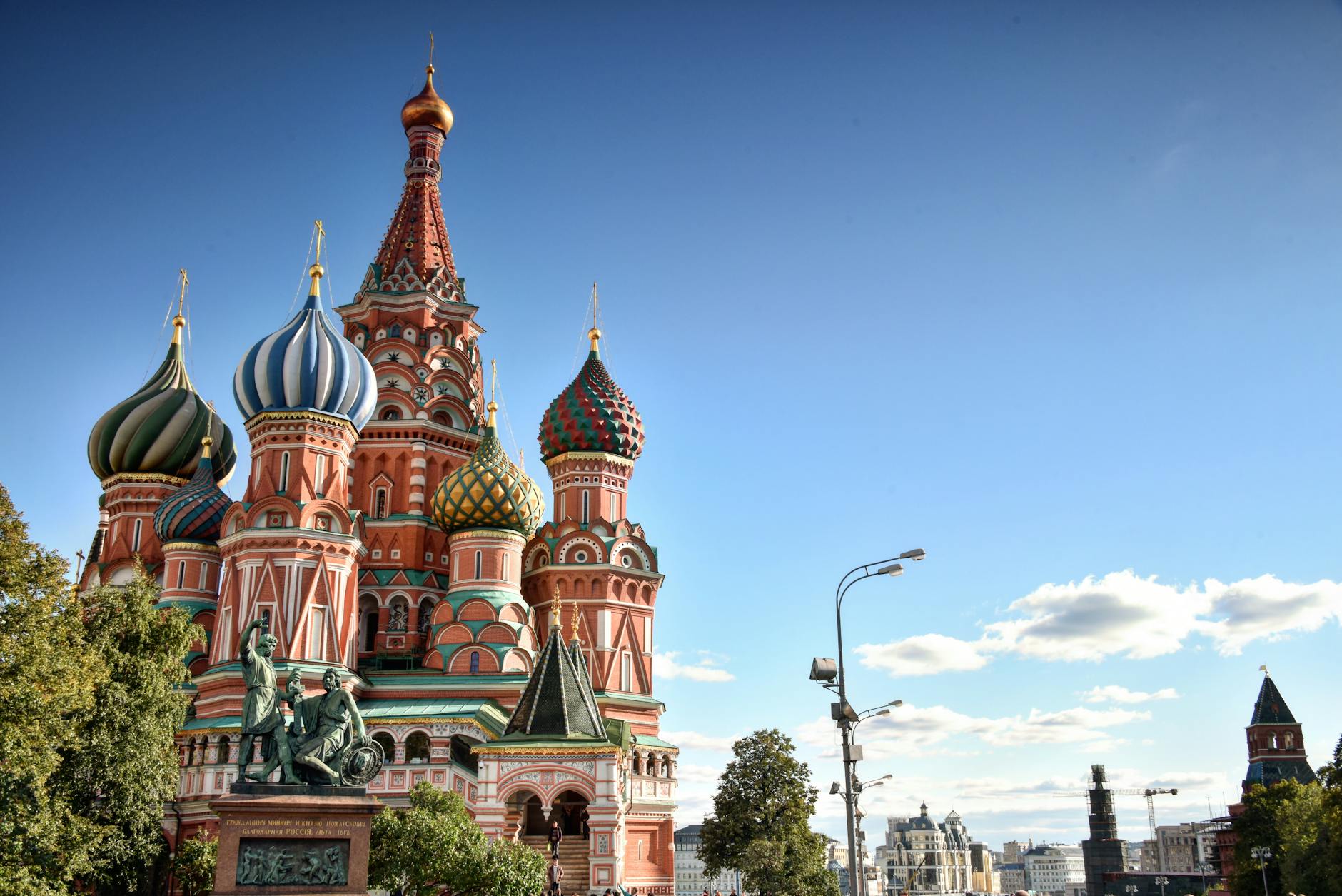
Besök Röda torget vid skymningen för att fira de centrala kupolerna och se hur deras geometri och färg samverkar. Observera representationer av kupolernas geometri när de fångar ljuset, och märk hur siluetten markerar skylinjen. Denna trio bildar en trinitet av lökformade kupoler ovanför trappformade tamburer, som stiger decimeter högt. Khutynsky noterar att designen förankrar kompositionen och att kupolerna bär en sagolik glans i juli.
Geometriskt sett vilar varje kupol på en tambur med smala fönster, för att sedan smalna av till en lökformad topp som sticker upp över. Anordningen skapar en kompakt, lättläst silhuett från vilken vinkel som helst, en egenskap som leder ögat mot katedralens hjärta. Ritmen runt den centrala gruppen speglar ett medvetet designspråk som också påverkat representationer i andra ryska kyrkor.
Färger och glasyra ger byggnaden liv: dristiga polykroma emaljer, guldblad och glasyrerade mönster förändras med solen, och gör kuporna till ett konstverk som värnar om historien som reliker. Paletten förmedlar heliga betydelser och regional smak, och krönikor beskriver restaureringar som förändrade nyanserna. Klockor från närbelägna kyrkor följde en gång processionerna och formade hur besökarna uppfattade skylinjen. Krönikor nämner nora som beskriver glöden som sagolik och sann för Moskvas anda.
Idag förblir de centrala kupolerna en bakgrundshistoria och ett landmärke som markerar Rysslands visuella identitet. De står också som sanna symboler för rysk arkitektur, en kröningsstund för den trinitetsinspirerade layouten. Kupolerna fungerar som reliker från historien, med representationer som återfinns i kyrkor och monument. Skattkistan innehåller inskriptioner, klockor och den kronik av vård som håller färgen och siluetten vid liv för andra att fira.
Murningsmönster: Vertikala remsor, band och symboliska motiv
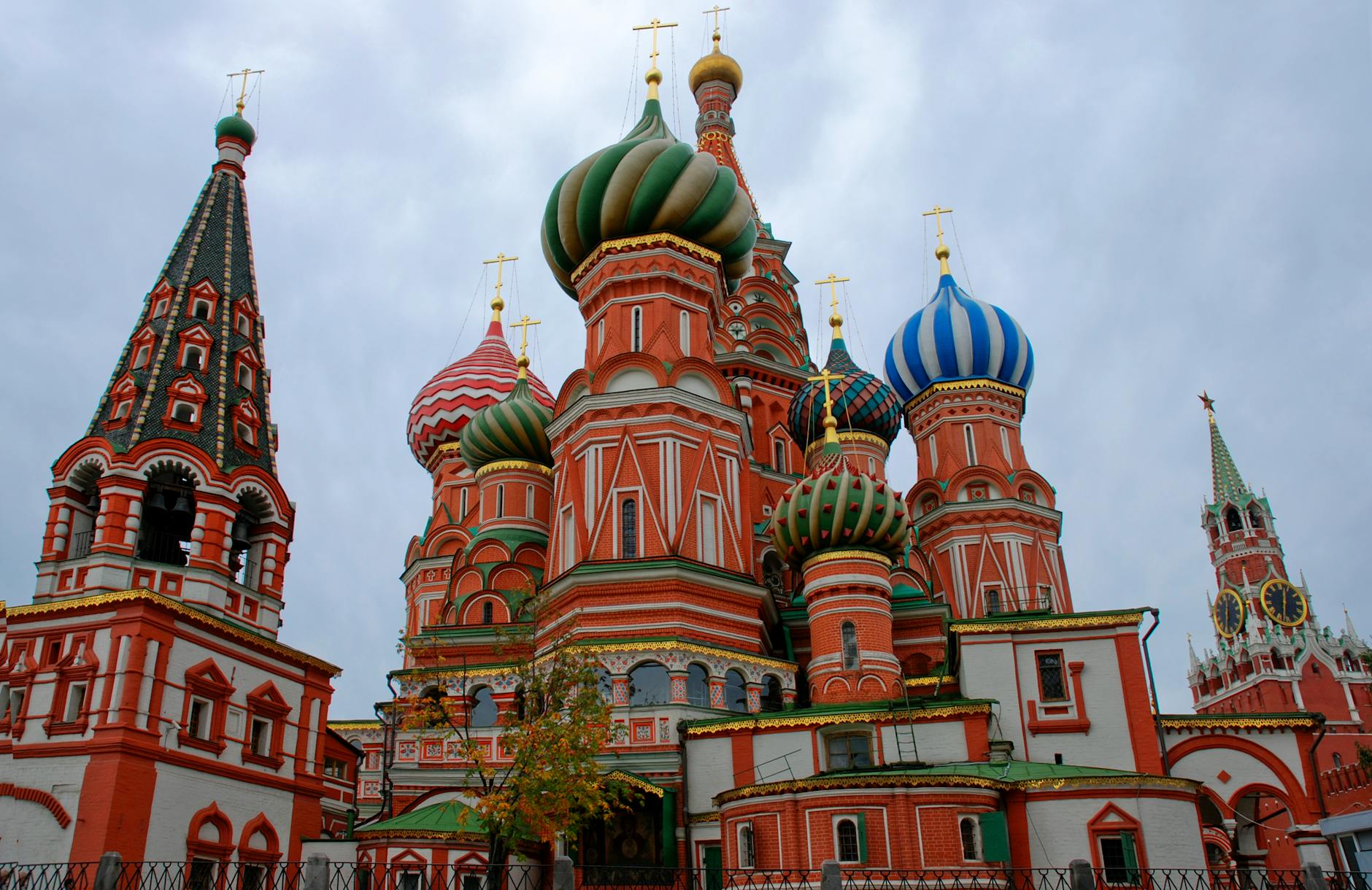
Undersök de lodräta tegelstrimmorna som löper längs katedralens väggar; dessa mönster sträcker sig i meter och lyfter visuellt strukturerna mot de lökformade kupolerna.
Bandering syns runt bågar och krön, skapat av växlande tegelnyanser och noggrann murpunktning för att ge en mättad rytm över fasaden.
Symboliska motiv framträder i murverket: vissa band anses referera till treenigheten, och leder förbipasserande genom långhuset mot en stund av eftertanke.
Ovanliga element, som kokosjniker, krönar tornen och ramar in tegelmönstren, vilket leder blicken uppåt mot kupolerna.
Novgorodtraditioner och senare tatarska influenser syns i bygglogiken, med murverk konstruerat för att klara Moskvas väder.
Källarutrymmen nära grunden visar samma mönster; linjerna förblev konsekventa även när de övre fasaderna förändrades.
Öppettider varierar säsongsvis, så planera en kort promenad längs murverket för att studera färgskiftningar; 1600-talsrenoveringarna ändrade några band men behöll den grundläggande rytmen.
Byggnadsdetaljer och akustik avslöjar hur tegelmassor och murbruk bidrar till ljudet inuti, vilket formar stunden för talare och kyrkobesökare.
Den kristna symboliken finns bredvid tegelprogrammet, men mönstren uttrycker främst vertikal enhet och ett gemensamt språk mellan separata strukturer mot ett sammanhållet ansikte för tillbedjan.
Exteriördekoration: Arker, Fönster och Skulpturala Detaljer
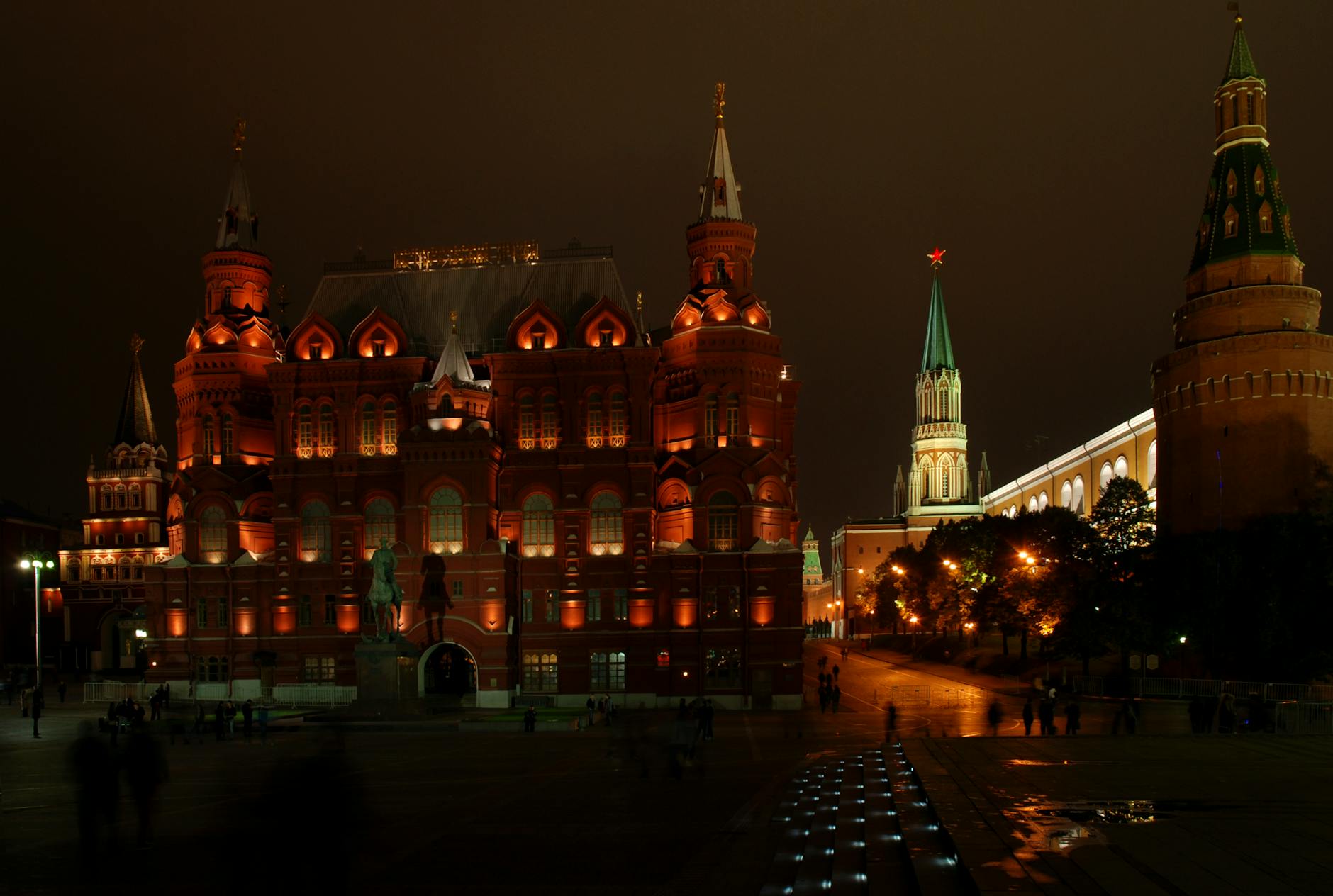
Fokusera på valvarna och kokosjnikerna för att läsa byggnadens historia i tegelverket. Basilerna samlas kring en central kärna, och godisrosa kupoler reser sig över ett mönstrat tegelområde, och leder ögat från grund till topp med en självsäker, konstnärlig rytm.
- Valv och tegelmönster: Fasaden växlar mellan rundade och spetsiga valv, var och en omgiven av upphöjda tegelramar. Kokosjniker krönar flera valv och fönster, vilket ger vertikal betoning som förenar nio basilikor till en enda siluett. En pelarliknande pilaster upprepas längs fasaden, vilket förstärker strukturen. Färgvariationer i teglet bildar subtila band som sträcker sig flera meter i höjd, vilket skapar djup även på plana ytor.
- Fönster och blyinlägg: Fönstren varierar från smala springor till bredare bågformade öppningar. Stenramar och utskurna kantlinjer accentuerar varje fönster, medan panernas och blyinläggens arrangemang speglar bågarna ovanför, leder in ljuset inuti och skapar ljusa reflektioner på soliga dagar; bländning kan göra betraktaren blind en stund. Öppningarnas rytm hjälper ögat att röra sig runt exteriörens ställning.
- Skulpturala detaljer och ikonografi: Exteriören bär reliefer av helgon och symboliska motiv, integrerade i murverk och stenarbeten. Forskare har trott att armeniska influenser framträder i vissa reliefer, med hänvisningar till Gregorius och Armenien som citerats av några forskare. Dessa figurer personifierade en korskulturell dialog som formade medeltida rysk kyrkokonst och är fortfarande läsliga för uppmärksamma besökare.
- Färg, kupoler och material: De sockerfärgade kupolerna krönar ett fält av rödtegelväggar, medan stenkapitäl och kornischer avbryter skylinjen. De ljusa paletterna är inte bara dekoration; de signalerar helig plats och hierarki, en egenskap som fascinerat betraktare i generationer. Kupolerna stiger i grupper, deras former sammanflätas för att skapa en dynamisk skyline som syns från många håll.
- Bevarande, skada och restaurering: Väder, tid och tidigare skador krävde noggrann arbete av engagerade team. Modern bevarande kombinerar traditionella kalkbruk med kompatibla moderna bindemedel för att bevara texturen utan att överrösta originaldetaljer. Processen, dokumenterad med exakta mätningar i meter, bibehåller fasadens läsbarhet för nya generationer samtidigt som den hedrar historien nära kremlpalatsen och inom Moskvas hemliga landskap. Besökare, lokalbefolkning och forskare gynnas alla av vården som upprätthåller detta exteriöra mästerverk.
Bästa vinklar för exteriörfotografi: Ljus, komposition och tidpunkt
Skjut från Röda torget vid gryningen, på låg nivå, för att få de sockerfärgade kupolerna att sticka ut och byggnaden att se ut som en målning; den här vinkeln framhäver detaljerna, tiden och århundradena av hantverk som formade Moskvas skyline, och det förmedlar omedelbart den kraftfulla närvaron hos dem.
Från en något snett vinkel framträder kupolklustret som en tredimensionell skulptur mot en ren himmel; att rama in dem på detta sätt förstärker deras gudomliga närvaro och framhåller deras antika hantverk, en rysk bedrift som har blivit ett statssymbol.
Tidsinställ dina bilder för blå timmen precis innan gryningen eller efter solnedgången; den extra stunden ger djup åt färgerna och avslöjar subtila texturer på de sockerfärgade ytorna, samtidigt som kupolerna lyser med en värme som påminner om målningar och återger Moskvas hjärtslag.
Ram med framgrundselement för att ge tillhörighet och skala - människor, skyltar eller stenbeläggning - som leder ögat mot den centrala spiren; från en högre utsiktsplats framträder byggnaden dynamisk, hållen mot himlen, och den kristna ikonografin i traditionell rysk design blir tydlig i de former som överlevt strider och tid. (Notera: "Krist ikonografi" har översatts till "den kristna ikonografin" för att passa bättre i sammanhanget. Om "Krist" syftar på en specifik person eller symbol, vänligen ange det för en mer exakt översättning.)
Använd ett brett objektiv (14-24mm på fullformat, 10-18mm på crop); håll ISO lågt, ställ bländaren till f/8-f/11 för skärpa; ta brackade exponeringar för HDR, kontrollera reflektioner efter regn och respektera lokala regler under gudstjänsttid.
Utblickar, tillgänglighet och omgivande siktslinjer
Börja vid Röda torgets norra kant för den bästa vy över den kupformade, lökkuppiga strukturen som definierar Moskvas skyline. Tornen med gula accentfärger reser sig över torget och ger en fantastisk, ikonisk ram som hjälper till att fira katedralens skatter och dess berömda status, med jungfruikoner synliga i dess dekorativa motiv.
Exteriöranslutningar är tillgängliga från torget, med plana trottoarer och tydliga siktslinjer. Inne begränsar smala passager och trappor rullstolsåtkomst, så planera ett besök som prioriterar exteriörvyer om tillgänglighet är viktigt; kontrollera aktuella öppettider och besöksdesken innan du försöker komma in.
Från Khutynsky-gatan och närliggande gångvägar får du vyer där de gula accenterna och kupoltornen reser sig över den gamla gatulinjen, vilket erbjuder fotomöjligheter som framhåver katedralens kontrast mot den omgivande Moskvas skyline, till skillnad från många nyare monument.
Byggnaden bär spår av restaureringar från 1700- och 1800-talen; innan dessa förändringar hade strukturen enklare former, men arbetet bevarade dess karaktär och förstärkte motiv som väcker förvåning. Staten skyddar dessa skatter som symboler för Moskvas identitet, och platsen är känd för sina ikoner och färg.
Planera besök tidigt på morgonen eller sent på eftermiddagen när ljuset gör färgerna levande utan trängsel. Vid middagssol kan bländning vara elak mot fotografen. Ett kompakt zoomobjektiv hjälper dig att fånga fler vinklar från en enda utsiktsplats; för mer variation, gå mot Khutynsky-gränsen för att inkludera närliggande kupoler och det närbelägna hemmet för historiska hantverkare. Berättarkiosker användes för att förklara ikonerna och strukturen för besökare; de närliggande torgplatserna användes förr av köpmän, vilket ger sammanhang till vad du ser idag och bjuder in dig att utforska mer än ett perspektiv - en värd erfarenhet för någon som vill fånga Moskvas stora siluett.


