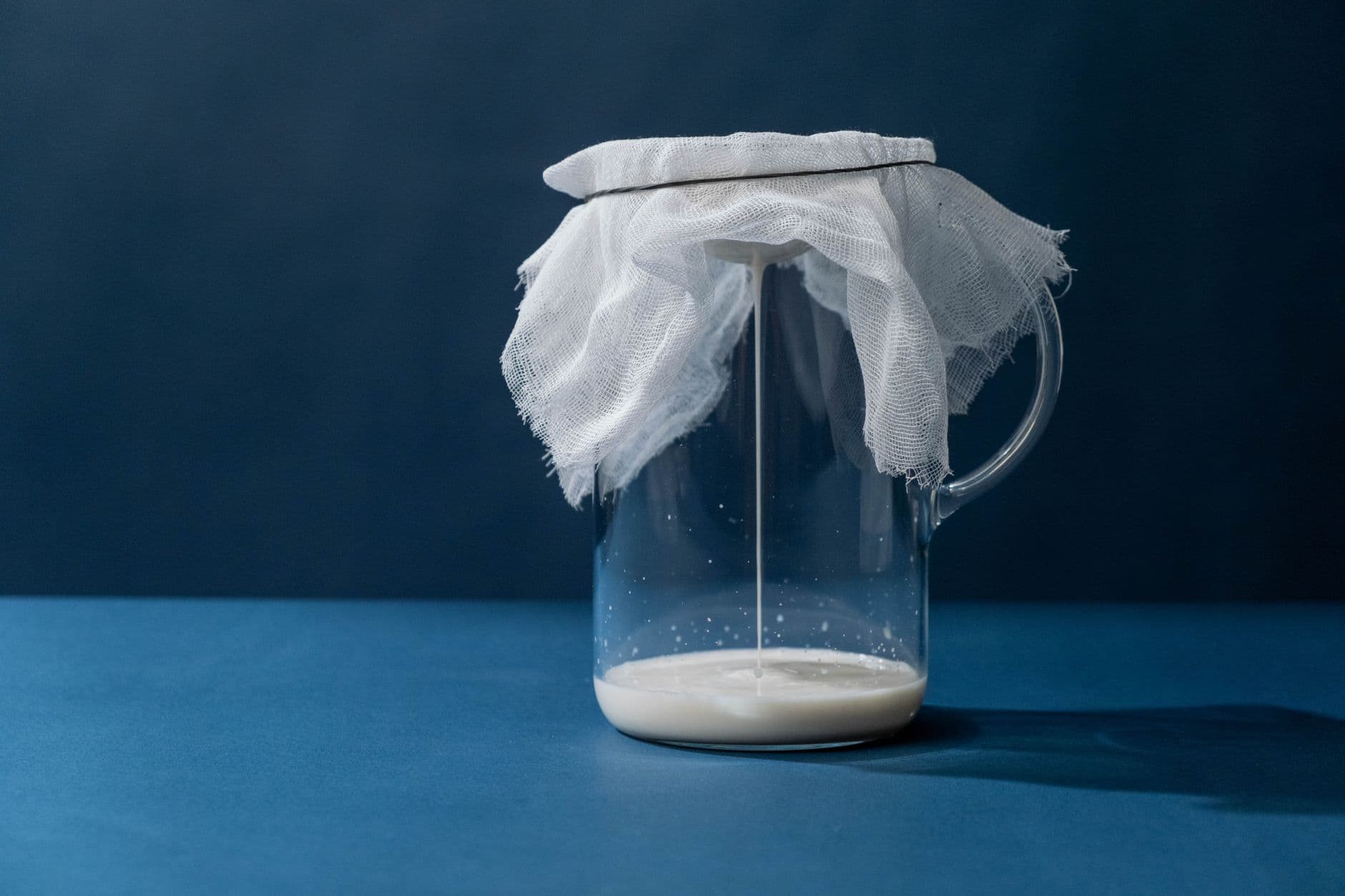

Begin met 2 eetlepels levende symbiotische korrels en 1 liter volle melk, en laat het ongeveer 24 uur op kamertemperatuur staan. Dit levert een bruisende, probiotica-rijke drank op met een zachte smaak en een gladde textuur. Zodra het klaar is, merk je een milde bruis en een lichte melkaroma op. Sla de eerste verrijking nooit over; het vormt de basis voor elke batch.
Gebruik een glazen pot met een diameter van ongeveer 10 cm en een brede hals om luchtuitwisseling mogelijk te maken; bedek met een ademende stof en zet vast met een elastiek. Vermijd metalen deksels, omdat zuren kunnen reageren. Begin voor het beste resultaat met een starter van Russische oorsprong om batches consistent te houden. Plaats de pot op het aanrecht en vermijd de koelkast tijdens het belangrijkste kweekvenster, dat doorgaans 20-28 uur duurt, afhankelijk van de kamertemperatuur. Ga dan over tot zeven wanneer het oppervlak zachte bubbels vertoont en de geur pittig wordt.
Zeef de drank na 24 uur door een plastic zeef en bewaar de korrels voor een volgende batch. Spoel de korrels kort af met schoon water en doe ze terug in de starterpot. Dit ondersteunt een symbiotische cultuur; de smaak groeit en er verschijnt koolzuur, zelfs na de eerste run. Als de kamer koel is, kan dit langer duren; in warmere keukens kun je de overgang binnen 18-26 uur verwachten.
Breng de gezeefde drank over naar de koelkast om het proces te vertragen en een koude verfrissing te ontwikkelen; na verloop van tijd krijgt het diepte en een gladder mondgevoel. Consumeer binnen 5-7 dagen, waarbij je de ochtend als een vast ritueel gebruikt. Houd het voor het beste resultaat puur, of meng het met fruit, een snufje zout of een scheutje gewone yoghurt. De drank bevat probiotica en vitamines en kan worden genoten met eenvoudige kaas of als basis voor smoothies; verschillende batches zullen de algehele balans verbeteren.
Houd met je hand de reinheid in stand en vermijd metalen gereedschappen; gebruik altijd schone potten en keukengerei. Meet waar mogelijk ingrediënten af met eetlepels en houd de uren bij voor consistentie. Vul de container nooit te vol en overhaast het proces nooit - laat het kalme bioproces zich ontvouwen, en je ontvangt de meest verse, best afgestemde batch.
Melkkefir: Praktische handleiding voor thuis
Aanbeveling: Gebruik een glazen pot (0,5-1 liter), voeg 400-500 ml verse melkdrank en 1-2 eetlepels betrouwbare starter toe, kweek 24-36 uur bij 20-22°C, zeef en vul vervolgens flessen voor koeling.
Houd de uitrusting schoon en vermijd metaal tijdens het roeren en hanteren. Roer met een houten lepel, zeef door een plastic of roestvrijstalen zeef en breng de vloeistof over in flessen met strakke doppen. Deze aanpak minimaliseert besmetting en houdt de smaken stabiel; sommige huishoudens delen starter in zakken of potten met vrienden, wat helpt om verbonden te blijven met een bredere gemeenschap en de zorgen over het inkopen van elke batch vermindert.
De kwaliteit van de ingrediënten is belangrijk: streef naar melk met ongeveer 2-3% vet; ultra-gepasteuriseerde producten kunnen de activiteit vertragen, dus kies gepasteuriseerde of licht bewerkte melk. De cultuur wordt goed verdragen door de meeste melkbasissen. Zoals door veel testers is aangetoond, kan een snufje magnesiumhoudende mineralen de textuur verbeteren. Probeer voor een plantaardig alternatief amandel- of kokosdrank, waarbij je opmerkt dat de smaak- en zuurbalans zal verschillen. Bij warmer lenteweer werkt de cultuur meestal sneller, terwijl koelere seizoenen langere tijden vereisen; toch laat de timing een voorspelbaar bereik zien van 24-48 uur bij normale kamertemperaturen.
Veelvoorkomend probleem: drank wordt te zuur of te waterig. Als hun smaak niet in balans is, verkort dan de cyclus of verminder de starter en zorg ervoor dat de container schoon is. Als er een onaangename geur of schimmel verschijnt, gooi de batch dan weg en begin met een nieuwe starter. Na het zeven kun je wei-afscheiding opmerken; dit is niet gevaarlijk en kan worden teruggemengd of gebruikt in recepten. Zoals blijkt uit praktische tests, helpt het aanpassen van tijd en temperatuur om de zuurgraad te beheersen.
Opslag en hergebruik: zeef en bottel, en koel vervolgens; je kunt 2-3 eetlepels starter van elke batch bewaren om te voeden met verse melk voor de volgende run. Flessen moeten afgesloten blijven en op een koele plaats worden bewaard; je kunt starter delen met anderen, of een kleine voorraad van een vertrouwde bron veiligstellen. Met zorgvuldige zorg kan je traditie jarenlang actief blijven; veel huishoudens onderhouden actieve culturen door frequent voeden en af en toe rusten op de vensterbank in de lentezon. Als je een korte pauze nodig hebt, kan de starter maximaal een week in een koele hoek worden bewaard. Voor verdere begeleiding helpt informatie over marktopties en gedeelde tips van barcharov en andere ervaren makers je op de hoogte te blijven.
Hoe je thuis authentieke melkkefir maakt: een stapsgewijs plan
Aanbeveling: houd een schone fles, een zeef en een starter van het yoghurt-type klaar; houd de melkdrank op een constante temperatuur van 22-25°C totdat je zachte schuimvorming en een echte smaak opmerkt, bottel en koel vervolgens voor de beste textuur.
Fase één - voorbereiding: desinfecteer glaswerk, zet een fles klaar met een ademende deksel en houd een zeef bij de hand. Verzamel de startercultuur, een lepel en een kleine hoeveelheid verse melkdrank. De essentiële regel is schone apparatuur om consistente resultaten te behalen.
Fase twee - kweken: giet de melkdrank in de fles, voeg de starter toe en roer voorzichtig. Dek losjes af om luchtuitwisseling mogelijk te maken en plaats op een warme plek uit de buurt van direct zonlicht. Afhankelijk van de warmte kan deze sessie 24-48 uur duren; als je een milder profiel wilt, verkort dan de tijd. Hoewel je minder schuim zult zien met een lichtere starter, is het echte doel een evenwichtige smaak van het yoghurt-type.
Fase drie - zeven en bottelen: zeef de vaste stoffen met behulp van de zeef over een schone container en druk zachtjes aan om de gezeefde drank op te vangen. Breng over naar een nieuwe schone fles, laat een beetje ruimte over en dek af. Label met de datum en december- of maartbatchnummers om smaakverschuivingen in de loop van de tijd te volgen. Deze stap legt de schone, gladde textuur vast die je zoekt, en het proces wordt een herhaalbare routine.
Fase vier - opslag en gebruik: koel de gebottelde drank en consumeer binnen 5-7 dagen, of langer als je de voorkeur geeft aan een stevigere beet. Gebruik de gezeefde vloeistof als basis voor smoothies of giet over ontbijtgranen, en overweeg een dubbele fermentatiecyclus als je een sterkere smaak wilt - weet gewoon dat langer op kamertemperatuur laten de zuurgraad verhoogt. De volgende tips helpen: roer voorzichtig voor het serveren, vermijd kruisbesmetting en houd een apart keukengerei voor het scheppen van vaste stoffen en vloeistoffen.
Opmerkingen: deze drank wordt vaak vergeleken met kombucha vanwege zijn smaak en bruis, maar het blijft een keuze op basis van melk. Als er een vraag rijst, begin dan met een kleine batch en pas de timing aan, en bottel vervolgens voor onmiddellijk gebruik. Deze aanpak geeft betere resultaten dan het haasten door cycli, en het vereist geen pillensupplementen om effectief te zijn. Bedankt voor het lezen; als je meer vragen hebt, antwoord dan met wat je wilt aanpassen, en ik zal het plan dienovereenkomstig aanpassen, afhankelijk van je toegang tot een schone zeef en een stabiele warme plek.
Stap 1 Benodigdheden: Verzamel melk, kefirkorrels, glazen pot en ontsmettingsmiddelen
Zet een schone, afgedekte pot met wijde opening klaar en verzamel deze items van een lokale bron; dit maakt het incuberen voorspelbaar en veilig. Houd een volledig werkstation georganiseerd; het verschil is te zien na jarenlange oefening. Gebruik een verhouding van 2-3 eetlepels starterculturen per liter melkvloeistof; het zal zich vestigen in gladde, pittige profielen in 24-48 uur bij 20-24°C. Deze opstelling is veel beter dan een open kom voor consistentie en smaak, en het behoudt het vitamine-rijke profiel van de melk.
- Container en deksel: Een glazen pot met wijde opening van 1 liter met een ademende doek of papieren deksel, vastgemaakt met een elastiek; afgedekte opstelling minimaliseert stof en luchtstromen tijdens het incuberen.
- Melkvloeistof: Verse, lokale melk van een vertrouwde bron; gepasteuriseerd is prima, maar niet-gehomogeniseerde opties leveren vaak een vollere body op.
- Starterculturen: 2-3 eetlepels per liter; vermijd overmatige hoeveelheden, die de fermentatie kunnen vertragen of tot een dikkere textuur kunnen leiden.
- Zeef: Fijnmazig, niet-reactief om vaste stoffen op te vangen na het incuberen; spoel goed af tussen batches om overdracht te voorkomen.
- Keukengerei: Houten of plastic lepel om te roeren, maatlepels en een schone flessenborstel voor potten; vermijd reactieve metalen.
- Ontsmettingsmiddelen: Milde zeep, heet water, handdoeken en een optioneel voedselveilig ontsmettingsmiddel of 5% azijnoplossing voor snelle sterilisatie; was de handen voor het hanteren.
- Thermometer of timer: Een timer helpt de tijd bij te houden; een thermometer helpt de incubatietemperatuur te controleren voor consistente resultaten.
- Labelen en opslag: Gebruik bovendien een waterdichte marker of tape om de batchdatum, melkbron en notities over de textuur te noteren; dit helpt bij het volgen van populariteit en toekomstige aanpassingen, zoals het wisselen van bron of het aanpassen van de verhouding.
Houd notities per maand bij; veel makers merken een hogere activiteit op in maart en november. Was de handen voor het hanteren, controleer op een aangenaam aroma en let op kolonies; er kunnen kleine knoppen verschijnen naarmate de activiteit toeneemt. Als het een onaangename smaak oplevert, begin dan opnieuw met een verse batch en pas de verhouding dienovereenkomstig aan.