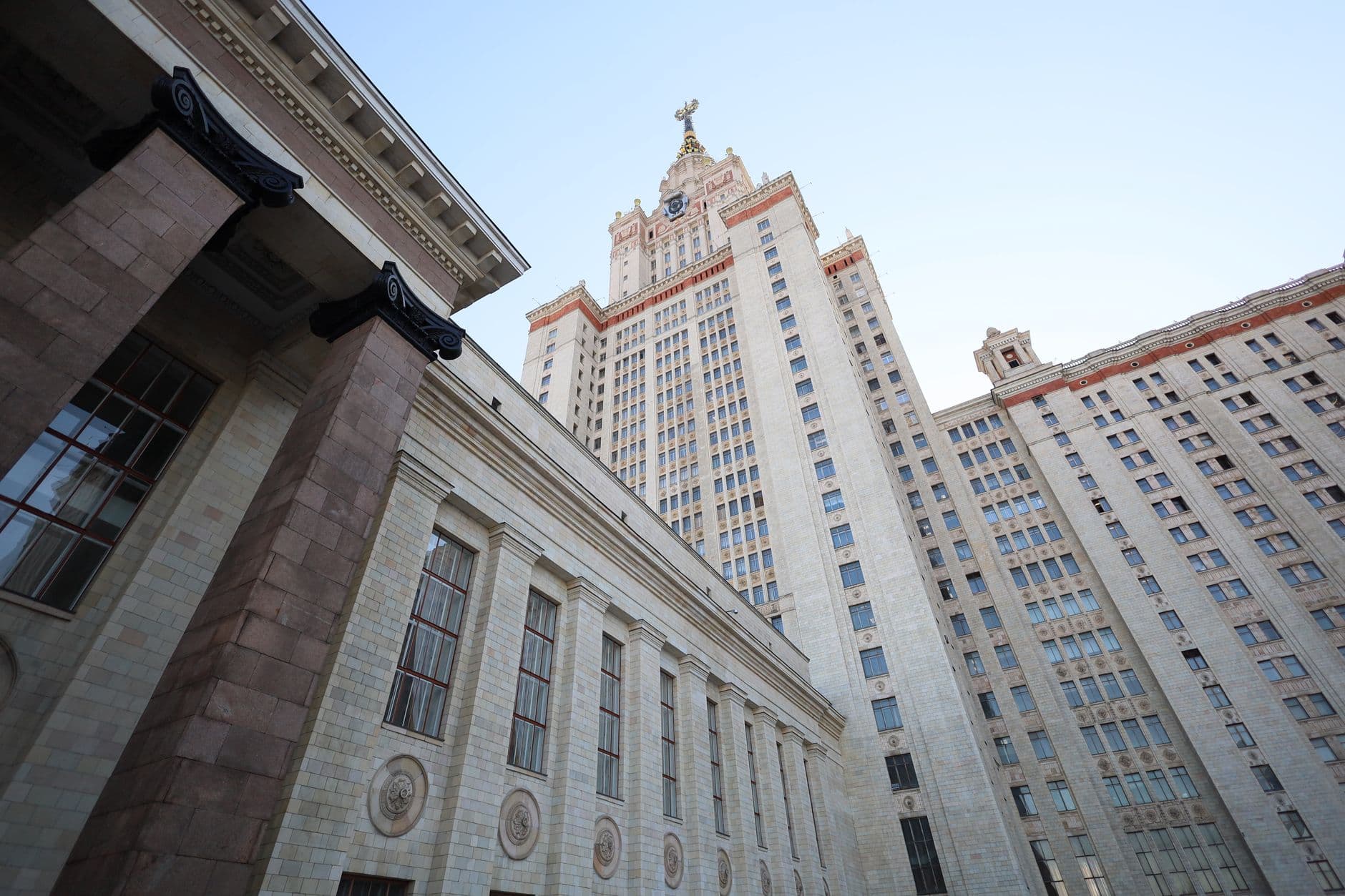
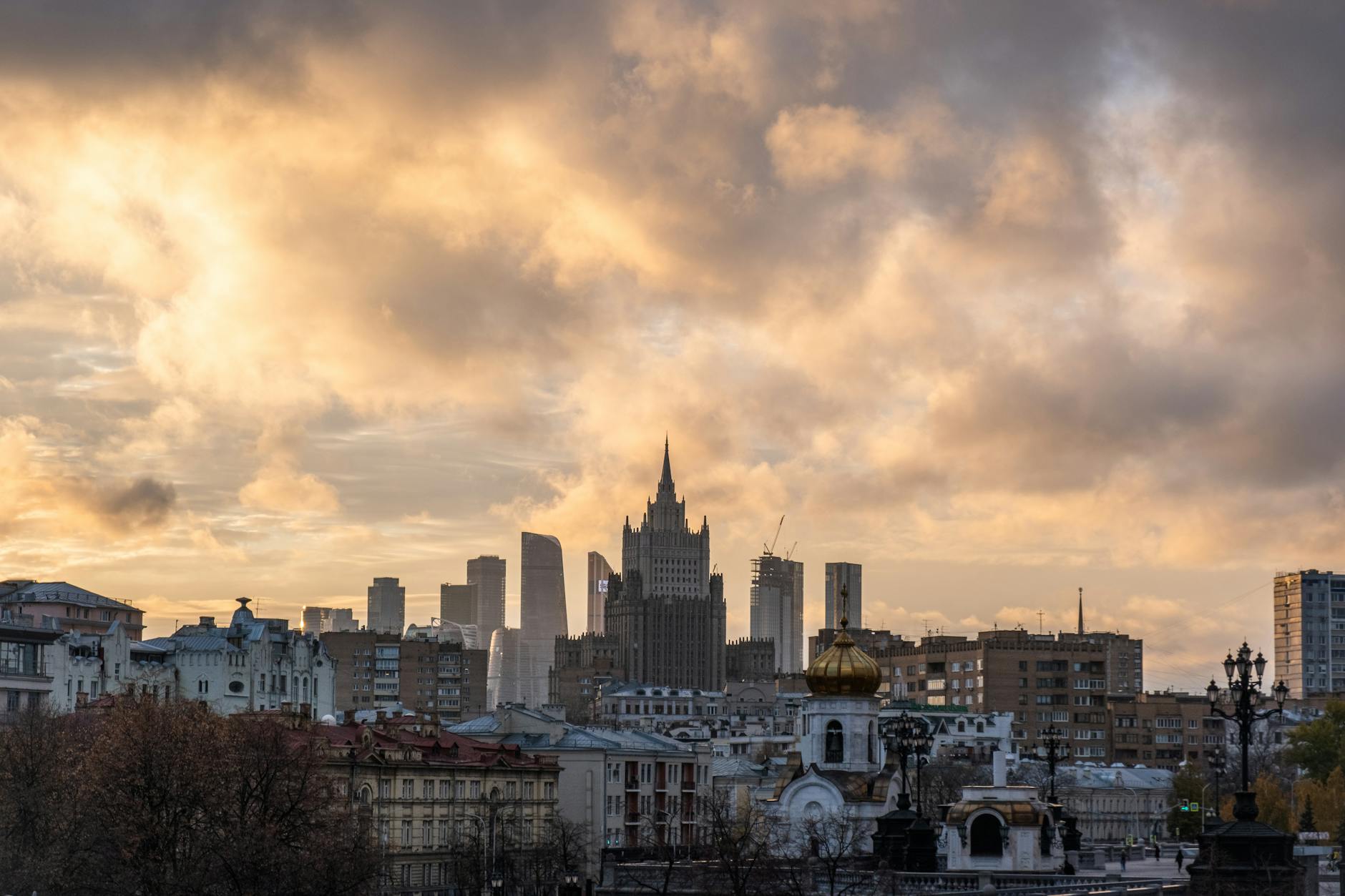
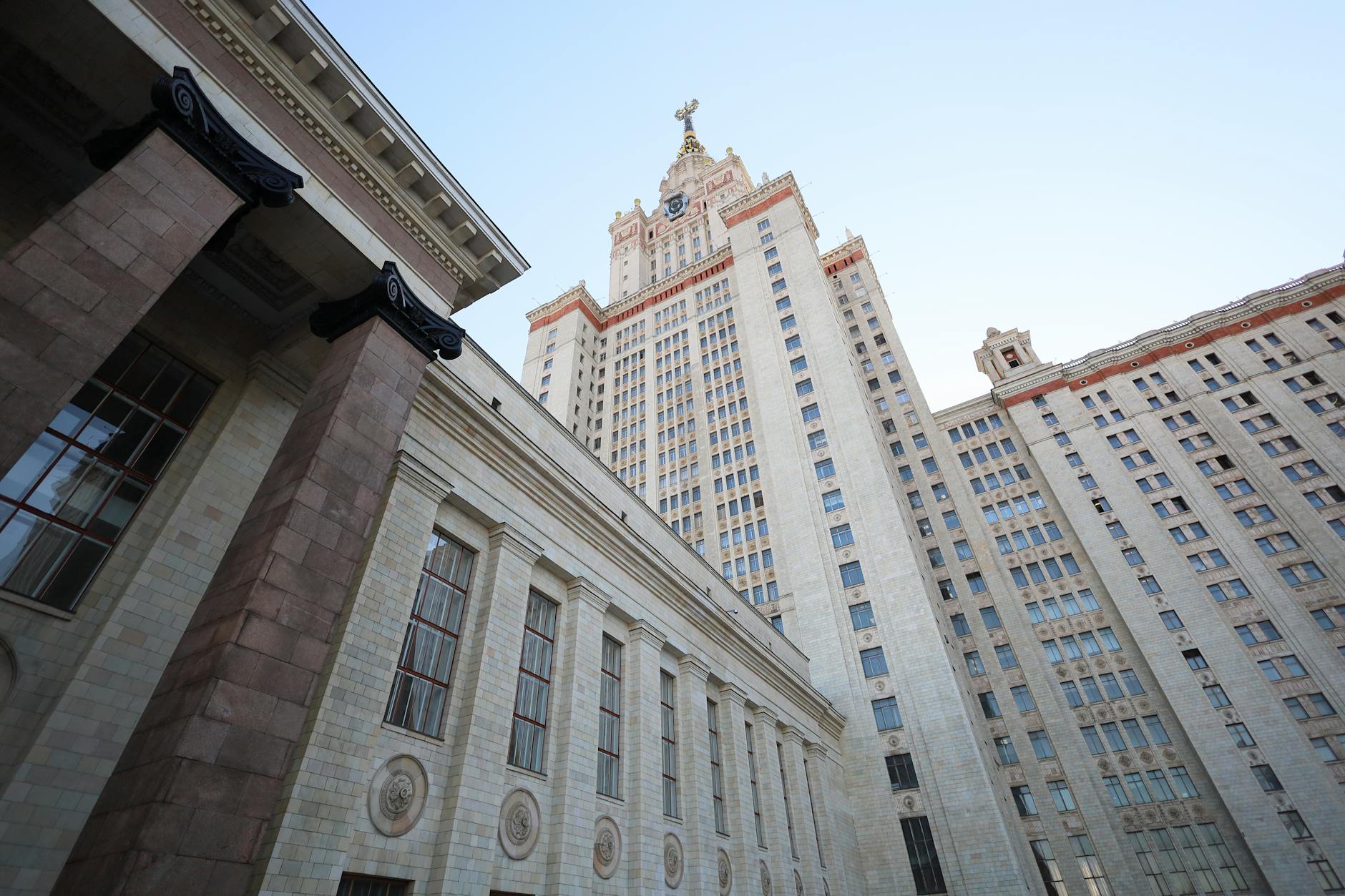
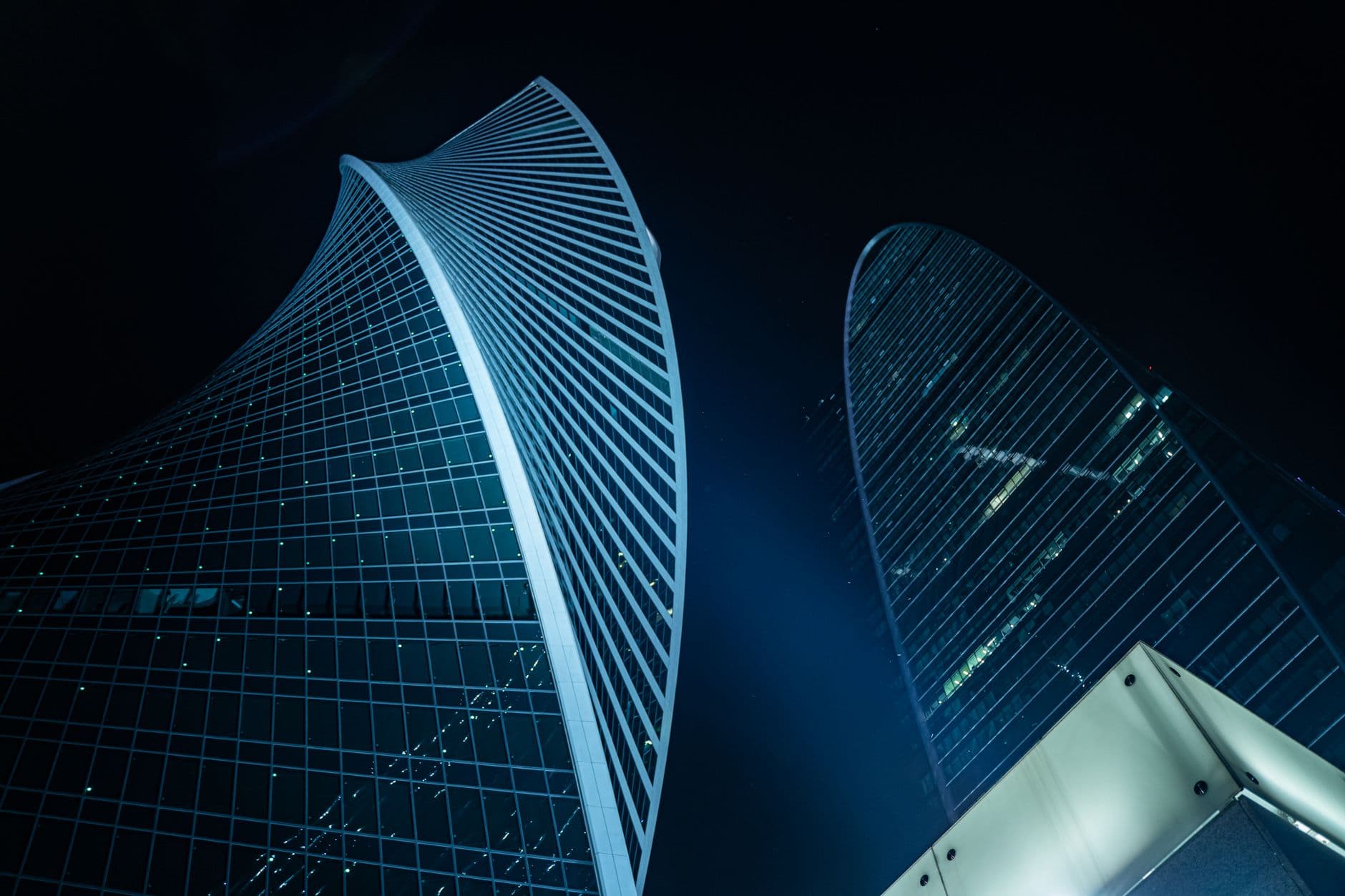
De skyline van Moskou wordt gekenmerkt door de opvallende aanwezigheid van Stalins wolkenkrabbers, een constellatie van architectonische dominantie die de unieke mix van functionaliteit en ideologie toont. Deze torenhoge structuren, die lokaal bekend staan als de "Zeven Zusters" en voornamelijk langs de oevers van de Moskva-rivier staan, dienden verschillende doelen, waaronder residentiële appartementen, hotels en administratieve kantoren. Hun U-vormige ontwerpen en 5-puntige sterren bovenop elk gebouw symboliseren de aspiraties van een natie en versterken tegelijkertijd de culturele identiteit van de stad.
Een van de meest iconische van deze wolkenkrabbers is die aan de Smolenskaya Oelitsa, die, net als zijn tegenhangers, een dubbele gevel heeft die is versierd met ingewikkelde sculpturen en granieten afwerking die de architectonische doelen van die tijd weerspiegelt. Toen studenten van de Rostkovsky Academie deze indrukwekkende constructies voor het eerst tegenkwamen, voelden ze waarschijnlijk een gevoel van ontzag, aangezien elk gebouw is uitgerust met tonnen apparatuur om zijn diverse functies te ondersteunen. Deze gebouwen dienden niet alleen hun beoogde doelen, maar werden ook visuele herkenningspunten voor bezoekers van Moskou, en illustreerden de combinatie van kunstenaarschap en techniek.
Later hebben renovatieprojecten deze wolkenkrabbers gemoderniseerd met behoud van hun historische charme, waardoor ze de tand des tijds hebben doorstaan. Het Hiltonhotel, een van de hoogste van de Zusters, biedt moderne voorzieningen die gericht zijn op een nieuwe generatie, om ervoor te zorgen dat ze relevant blijven in het culturele landschap van vandaag. Gebieden rond deze wolkenkrabbers, zoals Zaryadye Park, bieden gratis platforms voor burgers en toeristen om te wandelen en de architectonische schoonheid te bewonderen, wat een harmonieuze relatie tussen geschiedenis en modern stadsleven laat zien.
In een rij torenhoge reuzen zijn de Stalin-wolkenkrabbers niet zomaar gebouwen; ze weerspiegelen een tijd waarin architectuur gemaakt was om te blijven, ontworpen om macht en belofte uit te stralen. Vermoedelijk kan men, terwijl men door de straten loopt bekleed met deze betekenisvolle creaties, niet anders dan de kleine details, de puntige daken en de zorgvuldige overweging die in elk ontwerp is gestoken, waarderen. Moskou's architecturale nalatenschap, gemanifesteerd in zijn wolkenkrabbers, blijft degenen inspireren die in deze levendige stad wonen en verblijven.
Historische context van de Stalins' wolkenkrabbers
De constructie van Stalins wolkenkrabbers, vaak aangeduid als "vysotki", ontstond in een tijd waarin de Sovjet-Unie haar kracht en veerkracht wilde uitstralen naar zowel haar burgers als de wereld. Voortgekomen uit de ambities van een natie die herstelde van de onrust van het begin van de 20e eeuw, waren deze indrukwekkende bouwwerken bedoeld om de architectonische dominantie van Moskou te symboliseren.
In de jaren dertig, met de opkomst van Stalin's macht, heerste er een kalmte in de natie na jaren van onrust. De wolkenkrabbers waren gepland als onderdeel van een bredere ontwikkelingsstrategie die de modernisering van de infrastructuur van de stad omvatte, zoals de metro en de aanleg van nieuwe stations. De imposante hoogtes van deze gebouwen, waarvan sommige tot 200 meter reikten, waren bedoeld om de hoogste punten in de stad te vormen, de skyline te domineren en de kracht van het socialisme te tonen.
Namen zoals de Zeven Zusters werden later synoniem met Stalins visie voor Moskou. De bouw van deze constructies vergde aanzienlijke inspanningen, waarbij vaak gebruik werd gemaakt van de arbeid van gevangenen uit goelags, wat een zware aanklacht was tegen het regime, zelfs toen het de gebouwen positioneerde als symbolen van vooruitgang. Opmerkelijke voorbeelden zijn het gebouw aan de Smolenskaya en de imposante structuur die het Ministerie van Buitenlandse Zaken huisvest, vaak beschouwd als een van de meest versierde in termen van zijn architectonische kenmerken.
Het ontwerp van de wolkenkrabbers werd sterk beïnvloed door de neoklassieke architectuur en omvatte elementen zoals puntige daken en sierlijke keramische gevels die de Sovjetidentiteit vierden, met decoraties die verband hielden met de Russische geschiedenis en cultuur. Elke wolkenkrabber werd minutieus gepland; architecten van diverse instituten deden onderzoek om constructies te creëren die de tand des tijds zouden doorstaan en de status van de stad wereldwijd zouden vestigen.
Naarmate deze gebouwen vorm kregen, markeerden ze ook een verschuiving in het architectonische landschap van Moskou, weg van kleinere, meer nederige constructies. De transformatie weerspiegelde een breder thema van ambitie, waarbij bewoners en de overheid gezamenlijk een stad voor ogen stonden die macht uitstraalde. Dezelfde periode zag de ontdooiing van politieke spanningen tijdens het tijdperk van Chroesjtsjov, maar de wolkenkrabbers bleven als blijvende getuigenissen van de grootse ambities van het vorige regime.
De wolkenkrabbers van Stalin werden vervolgens verankerd in het dagelijks leven van de burgers en gidsden hen door de uitgestrekte vlaktes van Moskou. Vlakbij prominente ambassades en restaurants gelegen, dienen ze niet alleen als architectonische wonderen, maar ook als integrale delen van het stadsleven, en trekken ze de aandacht van zowel de lokale bevolking als toeristen die zich verbazen over hun statuur.
Samengevat is de historische context van Stalins wolkenkrabbers sterk verbonden met het culturele verhaal van Rusland. Ze vertegenwoordigen een tijdperk waarin ambitieuze architecturale projecten zich aftekenden tegen de achtergrond van een stad die een snelle transformatie onderging, en stonden onder het waakzame oog van zowel haar inwoners als reizigers.
Oorsprong en Ideologische Betekenis
De oorsprong van de stalinistische wolkenkrabbers kan worden teruggevoerd tot de vroege Sovjetperiode, toen de noodzaak om macht en moderniteit te etaleren van het grootste belang werd. Deze iconische gebouwen, vaak bijgenaamd "de Zeven Zusters", waren bedoeld om de kracht en ideologie van de USSR in heel Europa te etaleren. Hun ingenieuze U-vormige ontwerpen creëerden een krachtige esthetiek, terwijl ze ook licht en ruimte voor de interieurs maximaliseerden.
Strategisch gelegen op prominente locaties in heel Moskou, waren deze wolkenkrabbers niet alleen functioneel, maar ook symbolisch significant. Ze vertegenwoordigden een bestuursstructuur waarbij de ministeries van landbouw, defensie en buitenlandse zaken hun invloed over de stad uitbreidden. Deze architectonische dominantie leek op wat werd waargenomen in andere machtige landen, zoals de Hilton-vestigingen in grote metropolen, waar de beste middelen werden toegewezen om gasten te imponeren.
Elk gebouw had zijn eigen doel, met ambassades, overheidsinstellingen en zelfs woonwijken. De ontwerpen van Mikhail Oltarzhevsky legden de nadruk op metselwerk en bevatten vijfsterrenvoorzieningen, wat zowel lokale als internationale bezoekers aantrok. Het Ustinsky-gebouw heeft bijvoorbeeld een uniek fonteindek dat dient als verzamelplaats voor gasten, terwijl andere nog steeds tentoonstellingen en culturele evenementen organiseren.
Deze structuren waren iets duurder om te bouwen dan andere hedendaagse projecten, wat resulteerde in een verlamde bouweconomie doordat middelen werden geheralloceerd naar dergelijke grootse projecten. Desondanks was het resultaat een verzameling van de grootste gebouwen in de stad, elk met een hoogte van meer dan 150 meter. Ze vertegenwoordigden niet alleen een verschuiving in architectuur, maar ook een ideologische uiting van Sovjetmacht, aangezien ze bewondering opriepen uit landen zo ver weg als Oekraïne.
Naarmate het metronetwerk uitbreidde, werden deze wolkenkrabbers herkenningspunten die verschillende delen van de stad verbonden, waardoor de beweging van burgers en toeristen werd vergemakkelijkt. Deze doelbewuste inspanning om zichtbaarheid en toegankelijkheid te creëren, benadrukte de ambitie van het Sovjetregime om zijn invloed en capaciteiten zowel intern als extern uit te dragen.
tegen de koers van de Bank van Rusland op 01.10.2026 · powered by tutkakdoma
Vergelijking met Internationale Trends van die Tijd
De architectuurstijl van Stalins wolkenkrabbers, vaak "Stalinistisch Gotisch" genoemd, weerspiegelt opvallend de heersende trends van het midden van de 20e eeuw, terwijl het tegelijkertijd op unieke wijze afwijkt. Terwijl de Sovjets hun dominantie probeerden te vestigen, dienden deze structuren niet alleen als functionele gebouwen, maar ook als grootse symbolen van macht en ideologie. Terwijl internationale steden experimenteerden met modernistische ontwerpen, integreerde de constellatie van Moskouse wolkenkrabbers een ingewikkelde mix van stijlen die een toewijding aan grootsheid toonden.
De opvallende silhouetten van deze gebouwen, zoals de Lomonosov Universiteit en het Radisson hotel, kenmerken zich door torenhoge spitsen en sierlijke kroonlijsten die zich duidelijk onderscheiden van de minimalistische trends die men in steden als Boekarest en New York ziet. Hier was de algehele kwaliteit van elke structuur significant; elk niveau was nauwgezet ontworpen en bevatte decoratieve elementen zoals torentjes en extra ornamenten. Deze kenmerken zou men doorgaans niet aantreffen in de hedendaagse gebouwen van westerse hoofdsteden, waar eenvoud vaak de voorkeur kreeg boven extravagantie in hun ontwerpen.
In tegenstelling daarmee vormen de interactieve fonteinen en openbare ruimtes die de wolkenkrabbers vergezelden, een geschenk aan de inwoners van Moskou en nodigen ze zowel bewoners als bezoekers uit om deel te nemen aan hun omgeving. In tegenstelling tot veel westerse bouwwerken uit die tijd, die vaak te kampen hadden met verval, werden de nalatenschappen van de Sovjetarchitectuur met een gevoel van duurzaamheid gecreëerd. De ongemakkelijke balans tussen functioneel nut en visuele excessen (излишеств) in het Stalin-tijdperk diende om kracht en veerkracht uit te stralen, vooral in een tijd die werd gekenmerkt door de Goelag-conflicten en maatschappelijke ontberingen.
Terwijl internationale architecturale stromingen naar dit tijdperk uniformiteit bepleitten, omarmden de Sovjets diversiteit binnen hun ontwerpen, waarbij gevarieerde elementen werden opgenomen die nationale trots weerspiegelden. Als gevolg hiervan toont het architecturale landschap van Moskou een ambitieuze wisselwerking van stijlen die moderne bezoekers inspireren. Elke wolkenkrabber blijft een bewijs van het idee dat dominantie kon worden bereikt door schoonheid en complexiteit, waardoor een dynamische skyline ontstond die nog steeds bewondering trekt, maat voor maat, van architecten, historici en toeristen.
Invloed van Sovjetpolitiek op architectuur
Het architectonische landschap van Moskou werd diepgaand gevormd door de Sovjetpolitiek, wat resulteerde in een onderscheidende stijl die de ideologische aspiraties van die tijd weerspiegelde. Hoge wolkenkrabbers, ook wel Stalinstalens genoemd, waren ontworpen om de macht en dominantie van de staat te tonen, en hun elegante silhouetten werden iconische vertegenwoordigingen van Sovjet-ambitie.
Een bezoek aan deze bouwwerken biedt gasten een uniek inzicht in hoe politiek het stedelijk weefsel beïnvloedde. De vijfpuntige sterren die deze gebouwen bekronen, symboliseerden de Communistische Partij en vestigden hun plaats stevig in de skyline. Elke keer dat een nieuwe wolkenkrabber werd gebouwd, was het niet slechts een gebouw, maar eerder een belichaming van de controle en visie van de staat. De beslissing om te bouwen werd vaak gedicteerd door politieke noodzaak, met als doel de hoogste plafonds in architectonische prestaties te bereiken.
Het meest opvallend is dat de gevels van deze wolkenkrabbers versierd waren met complexe bas-reliëfs en bogen, wat bijdroeg aan hun grandeur. De oorspronkelijke bouwers gebruikten staal en keramische materialen, wat zorgde voor duurzaamheid en architectonische betekenis. Specifiek werden wooncomplexen ontworpen om arbeiders te huisvesten, wat het Sovjet-ideaal van gemeenschappelijk wonen weerspiegelde. Ondanks de grootse ontwerpen ging een deel van de culturele essentie verloren in het streven naar monumentaliteit, waarbij bepaalde details tijdens de bouw werden bedekt of vereenvoudigd.
Binnen deze wolkenkrabbers waren de functies verdeeld over verschillende instituten en faculteiten, wat de veelzijdige aanpak van huisvesting en culturele ontwikkeling illustreert. Vladimir Tsjetsjulin en andere architecten begonnen elementen uit eerdere stijlen te integreren, waardoor een diorama van Sovjet-tijdse aspiraties ontstond. Deze diepe verbinding met het politieke landschap zorgde ervoor dat elke hoek van deze gebouwen een doel had, en een collectieve ideologie belichaamde.
De fundamenten die in deze periode zijn gelegd, blijven de hedendaagse architectuur beïnvloeden en vertonen een mengeling van traditionele en moderne technieken. De erfenis van deze gebouwen is niet alleen zichtbaar in Moskou, maar strekt zich uit tot steden als Petersburg, waar vergelijkbare ontwerpen zijn overgenomen. Het verleden herinterpreteren, de invloed van Sovjetpolitiek op architectuur blijft tot nadenken stemmen over de kruising van staatscontrole en culturele expressie.
Architecten
Belangrijkste Kenmerken
Locatie
Mordvinov
Elegante silhouetten, bas-reliëfs
Moscow
Chechulins
5-puntige sterren, staalconstructies
Sint-Petersburg
Groep Bouwvakkers
Keramische gevels, bogen
Diverse locaties
Architectonische kenmerken van Triumph Palace
Triumfpaleis is een bewijs van de architectonische ambitie van Moskou en toont een uitgestrekte structuur die de essentie van de Sovjetprioriteiten in het modernistische tijdperk weergeeft. Gepland als een luxe wooncomplex, werd dit monumentale gebouw ontworpen door een groep architecten, met een opmerkelijke bijdrage van Leonid Mordvinov. Het resultaat is een torenhoog gebouw dat zowel functionele als decoratieve elementen integreert, waarbij elke laag bijdraagt aan de algehele grandeur.
Bovenop het Triumph Palace torent een kenmerkende spits uit, waardoor het een van de hoogste wolkenkrabbers van Moskou is met een hoogte van bijna 200 meter. Deze top dient niet alleen als een visueel middelpunt, maar herbergt ook een antenne die voor communicatie wordt gebruikt. Beneden beschikt het gebouw over uitgestrekte ondergrondse ruimtes, wat de capaciteit vergroot om aan de woonbehoeften van de bewoners te voldoen. De structuur is ontworpen om een moderne levensstijl te bieden en tegelijkertijd traditionele decoratieve ornamenten te integreren die een eerbetoon zijn aan het rijke artistieke erfgoed van Rusland.
Elk aspect van het Triumph Palace was zorgvuldig gepland, en weerspiegelde de wens van de partij om een blijvende erfenis te creëren. Beelden en interactieve elementen sieren de buiten- en binnenkant en belichamen de geest van Sovjet-trots. De gevel van het gebouw vertoont een mix van beknopte lijnen en ingewikkeld houtsnijwerk, een stijl die terug te voeren is op eerdere Sovjet-architectuur, maar toch een moderne twist geeft om te concurreren met hedendaagse bouwwerken. Op deze manier bestaat het Triumph Palace niet alleen als een residentie, maar als een leidend symbool van de architectonische evolutie van Moskou.
In een historische context, hoewel het gebouw werd gebouwd in een periode waarin oorlogsnalatenschappen het ontwerp sterk beïnvloedden, blijft het een geschenk aan toekomstige generaties. Het is door velen bezocht, waaronder hoogwaardigheidsbekleders en toeristen die de torenhoge aanwezigheid aan de oever van de Moskva bewonderen. De locatie van het gebouw aan de rand benadrukt een dualiteit van Moskou - een gebied dat wordt gekenmerkt door zowel bruisend stadsleven als rustige ruimtes.
Nu de stad geëvolueerd is, heeft Triumph Palace zich aangepast en veranderingen meegemaakt door het veranderende politieke landschap. Delen van het gebouw werden uiteindelijk aangepast aan nieuwe architectonische trends, om ervoor te zorgen dat het relevant bleef ondanks het verstrijken van de decennia. Zelfs onder het leiderschap van Nikita Chroesjtsjov, die de weelde van de Stalinistische architectuur vaak bekritiseerde, zijn de kernelementen van het Paleis intact gebleven, een bewijs van zijn tijdloze ontwerp.
In het ochtendlicht staat Triumph Palace standvastig, een herinnering aan wat bereikt kan worden door de huwelijk van wetenschap en kunst, zelfs in de meest uitdagende periodes. Al sinds de bouw symboliseert het gebouw een transformerend proces in het architecturale landschap van Moskou - een dynamische evolutie die de stadsgezicht van vandaag blijft beïnvloeden.
Ontwerpelementen Uniek aan Triumph Palace
Het Triumph Palace is een opmerkelijke representatie van architectonische grandeur in de verzameling van sobere wolkenkrabbers van Moskou. Dit bouwwerk, voltooid in de vroege jaren 2000, staat bekend om zijn kenmerkende ontwerpkenmerken die zowel moderne esthetiek als historische verwijzingen combineren. Opvallend is de silhouet van het gebouw met een reeks bogen die een sierlijke en imposante gevel aan het stadsbeeld verlenen. Deze bogen dienen niet alleen als decoratieve elementen, maar bieden ook structurele ondersteuning aan de lange en torenhoge structuur.
Een van de meest opvallende aspecten van Triumph Palace is de spits, die tot aanzienlijke hoogte reikt en het gebouw markeert als een officieel herkenningspunt in de skyline van de stad. Dit element versterkt de algehele status van het bouwwerk en creëert een visuele hiërarchie onder de omliggende gebouwen. Het ontwerp omvat een combinatie van traditionele Russische architectuur, vermengd met moderne elementen die de huidige trends en levensstijlen weerspiegelen. Het gebruik van luxueuze materialen zoals marmer en hoogwaardige tegels geeft de interieurruimtes een prestigieuze sfeer, terwijl het ook de status van het gebouw als een gewenste locatie voor kantoren en woningen versterkt.
Het project, ontworpen door Mikhail Posokhin, begon met ambitieuze doelen, met als doel een ruimte te creëren die niet alleen bewoners en bedrijven zou huisvesten, maar ook zou dienen als een centraal punt voor rondleidingen en observatie. Het totale aantal verdiepingen en de gevarieerde ruimtes in Triumph Palace zorgen ervoor dat elke kamer een uniek uitzicht biedt op Moskou en het levendige stadsleven. Sommige observatiegebieden bieden een helder zicht over de metropool, waardoor bezoekers kunnen ontsnappen in de uitgestrekte aanblik van de stad, ondanks dat ze zich in een bruisende stedelijke omgeving bevinden.
Ondanks het moderne uiterlijk weerspiegelen bepaalde ontwerpelementen de rigide structurele stijlen die gangbaar waren in de architectuur van Leningradsky. Het algehele ensemble bevat kenmerken die de architectonische afkomst van Moskou respecteren en tegelijkertijd hedendaagse lijnen en functionaliteit integreren. Deze mix maakt Triumph Palace niet alleen een woning, maar ook een verzameling innovatieve, ruimte-efficiënte kantoren ontworpen voor efficiëntie en comfort. Over het algemeen vertegenwoordigt Triumph Palace een nieuw hoofdstuk in het architecturale verhaal van Moskou, met ontwerpfilosofieën die zowel bewoners als onderzoekers aanspreken.
Structurele Innovaties en Technische Uitdagingen
De constructie van Stalins wolkenkrabbers in Moskou was een opmerkelijke prestatie van engineering en design, die een mix van moderne technologie en traditionele esthetiek liet zien. De gebouwen dienden zowel functionele als sociale doelen, met als doel ontzag in te boezemen en de macht van de staat uit te stralen. De weg naar hun voltooiing was echter gevuld met aanzienlijke uitdagingen en innovatieve oplossingen.
Een van de belangrijkste structurele innovaties was het gebruik van gewapend metselwerk. In tegenstelling tot andere hedendaagse wolkenkrabbers die vaak vertrouwden op stalen frames, beweerden de architecten en ingenieurs van het Stalinistische tijdperk de voordelen van stevig metselwerk, dat zowel duurzaamheid als een onderscheidende stijl bood. Deze aanpak was niet zonder uitdagingen, met name het bereiken van de vereiste hoogte met behoud van stabiliteit.
Het Kotelnicheskaya Embankment Gebouw is een schoolvoorbeeld van deze innovatie. Bovenop zijn massieve basis rijst het gebouw gracieus op en toont een gouden kroon-achtige versiering. Het was ontworpen om de grootsheid van de skyline van Moskou te benadrukken. Ondanks de voordelen van metselwerk werd het bouwproces soms belemmerd door de beperkingen van beschikbare materialen, wat zorgvuldige inkoop en het opstellen van aanvullende middelen vereiste.
Technische uitdagingen die tijdens de bouw werden ondervonden, waren onder meer:
Het balanceren van de gewichtsverdeling in uitgestrekte constructies.
Implementeren van ingewikkelde decoratieve elementen die nauwgezet vakmanschap vereisten.
Zorgen dat de ingangen en gangen zowel functioneel waren als sierlijk ontwerp lieten zien.
Integratie van moderne systemen voor verlichting en sanitair binnen de historische ontwerpeisen.
Toen de bouw begon, stuitten bouwvakkers soms op problemen met de funderingslagen, die zich onder straatniveau bevonden. Deze lagen vereisten extra aandacht om de stabiliteit van zulke enorme bouwwerken te garanderen. Helaas waren vertragingen gebruikelijk, en sommige projecten werden geannuleerd of gepauzeerd vanwege politieke veranderingen of tekorten aan middelen.
Het architectonische ensemble van Stalins wolkenkrabbers vertegenwoordigt een missie om iconische bouwwerken te creëren die de tand des tijds zouden doorstaan. Elk gebouw, inclusief dat aan de Arbatstraat, is zorgvuldig versierd met zowel functionele als decoratieve elementen die hun esthetische aantrekkingskracht vergroten. Bezoekers van Moskou kunnen vanuit deze bouwwerken genieten van een vogelvluchtperspectief en zich vergapen aan hun schaal en grandeur.
Over het algemeen waren de technische prestaties die met de wolkenkrabbers van Moskou gepaard gingen, cruciaal om de Sovjetcapaciteiten te tonen en boden ze een groots visioen dat zowel een architectonische triomf als een sociale verklaring was. Zoals Arkady Polyakov opmerkte tijdens een recent seminar, zijn deze wolkenkrabbers niet alleen voorbeelden van technische briljantie, maar ook een bewijs van de culturele ambities van hun tijd.