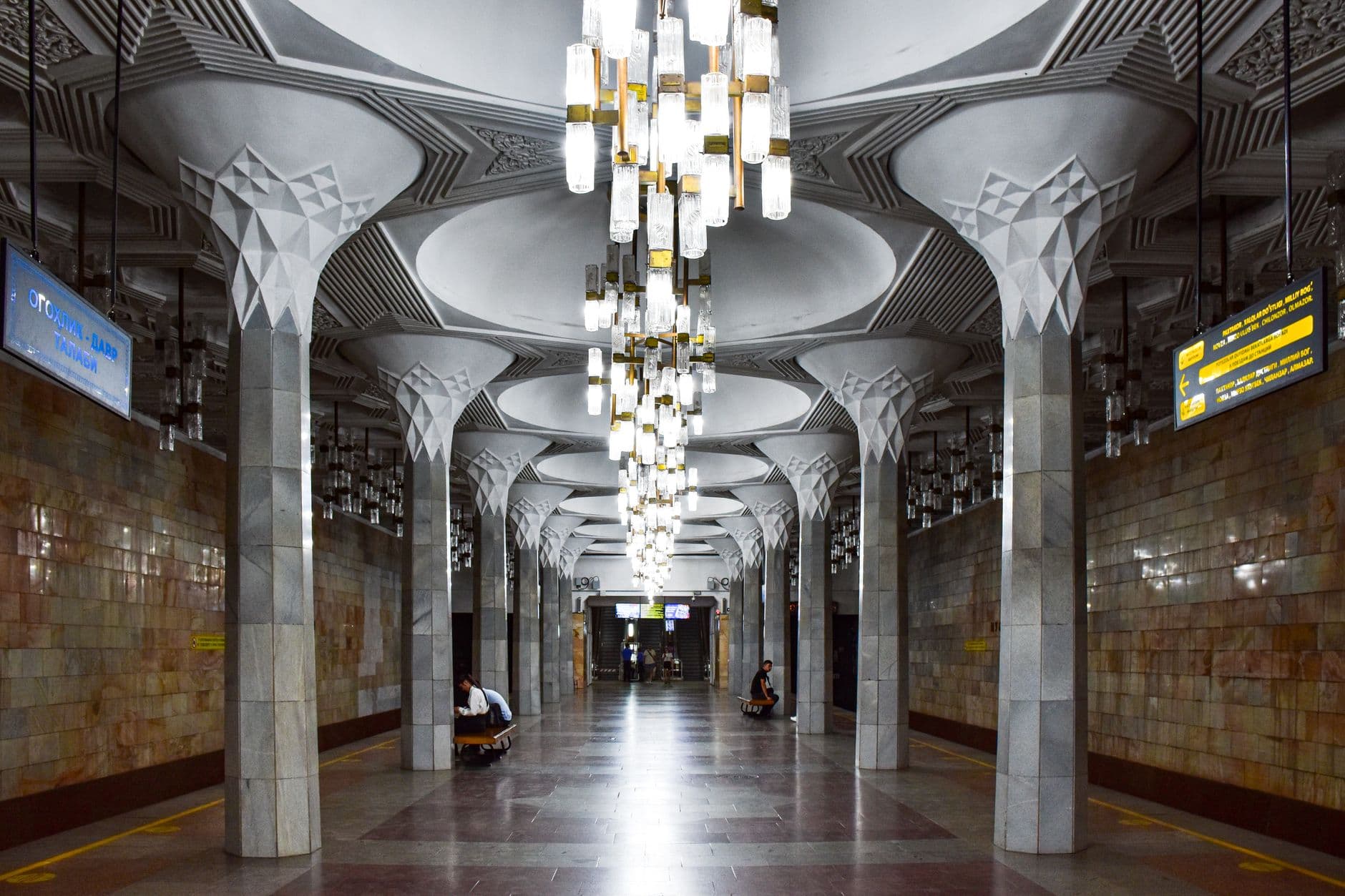

Moscow's transport network is fast, cheap and genuinely pleasant to use — the metro alone carries around 6.5 million people a day through stations that double as museums. For a visitor the whole system comes down to one decision made on arrival: get a Troika card. Everything else follows from that.
Start with the Troika card
Troika is Moscow's reloadable transport card, and it covers the metro, buses, trams, trolleybuses and the Moscow Central Circle. You buy it at any metro ticket office or vending machine for a 150-rouble deposit, of which 50 roubles comes back when you return the card.
The saving is immediate: a single metro ride costs about 38 roubles on Troika against roughly 55 for a paper ticket, and the "Wallet" balance option brings it a little lower still. Fares are adjusted periodically, so treat these as the shape of the pricing rather than a quote — the current tariff is posted at every ticket office.
The metro
Fifteen lines, more than 250 stations, trains every 90 seconds to five minutes, running from 05:30 to 01:00. Signage is bilingual and announcements are in Russian and English on most lines.
Komsomolskaya and Mayakovskaya are the stations people photograph, and they are worth a deliberate detour rather than a glimpse in transit. Rush hours run roughly 07:00-10:00 and 16:00-19:00; outside them the metro is quick and uncrowded.
Buses, trams and trolleybuses
Above ground the same Troika card works, and the ninety-minute transfer fare makes short hops cheap. Trams are the slow pleasure of the system — the routes along the Boulevard Ring and through Chistye Prudy show you a city the metro tunnels underneath.