
The train is stopped, the board shows the same departure time, and you're calculating how late you'll be for your connection. Few people know that compensation is due for this, and the rule is clearly written in the charter.
Three percent per hour
Article 110 of the Railway Transport Charter: For a train departure delay or a delay in arrival at the destination station, the carrier shall pay the passenger a penalty of three percent of the fare for each hour of delay.
There's a cap: no more than the cost of the ticket. This means that after a thirty-three-hour delay, the amount stops increasing, but by that point, you'll be refunded the full ticket price.
This is considered separate from, and not instead of, a refund. Furthermore, the charter explicitly reserves the passenger's right to claim compensation for other incurred damages in the usual manner — for example, if a reservation was lost due to the delay.
It does not apply to electric trains.
An important exception, and one that resolves half the questions: the rule does not apply to suburban transport. A train delay does not fall under Article 110.
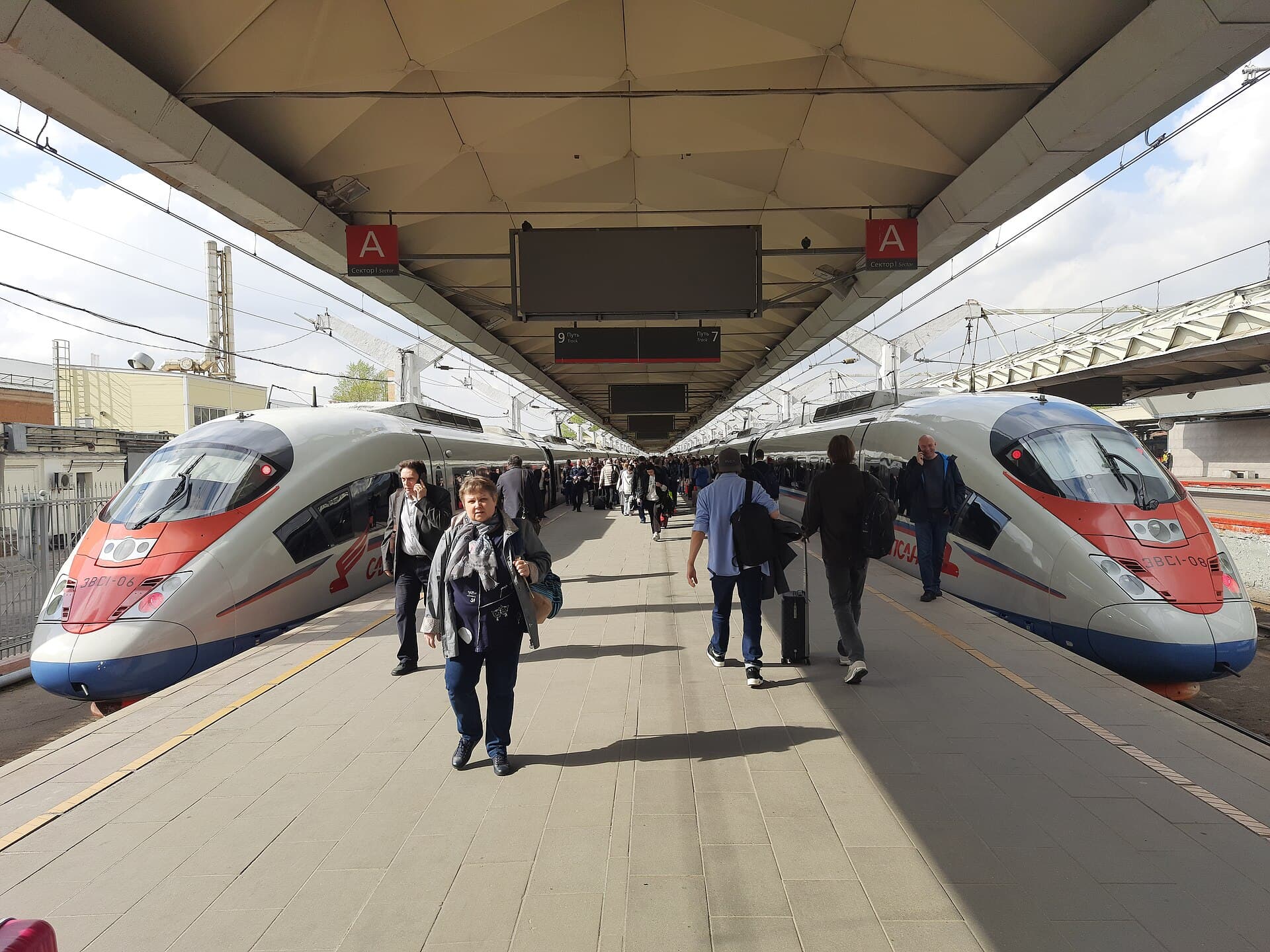
So, we're talking about long-distance trains, from the Sapsan to the platzkart. For the MCD and regular suburban routes, the mechanism is different.
When the carrier doesn't pay
The charter lists the cases in which the carrier is exempted from penalties, if they can prove them:
force majeure
troubleshooting vehicle malfunctions that endanger the life or health of a passenger, but only if the malfunction was not caused by the carrier's fault;
other circumstances beyond the carrier's control.
⚠️ Please note the distribution of roles: the carrier must prove these circumstances, not you. By default, a penalty is imposed, and the refusal must be justified.
How does this look in practice
Let's take a ticket for 4,000 ₽ and a four-hour delay. Three percent is 120 ₽ per hour, so for four hours, that's 480 ₽. The amount isn't mind-blowing, and that's precisely why most passengers don't claim it.
But on long routes, the picture is different. A delay of one day on a ticket for ₽6,000 is already ₽4,320, and after a day and a half, you hit the ceiling and get the full ticket price.
The procedure for paying a fine is determined by the rules for providing passenger transportation services—that is, you need to contact the carrier, not look for a separate authority.