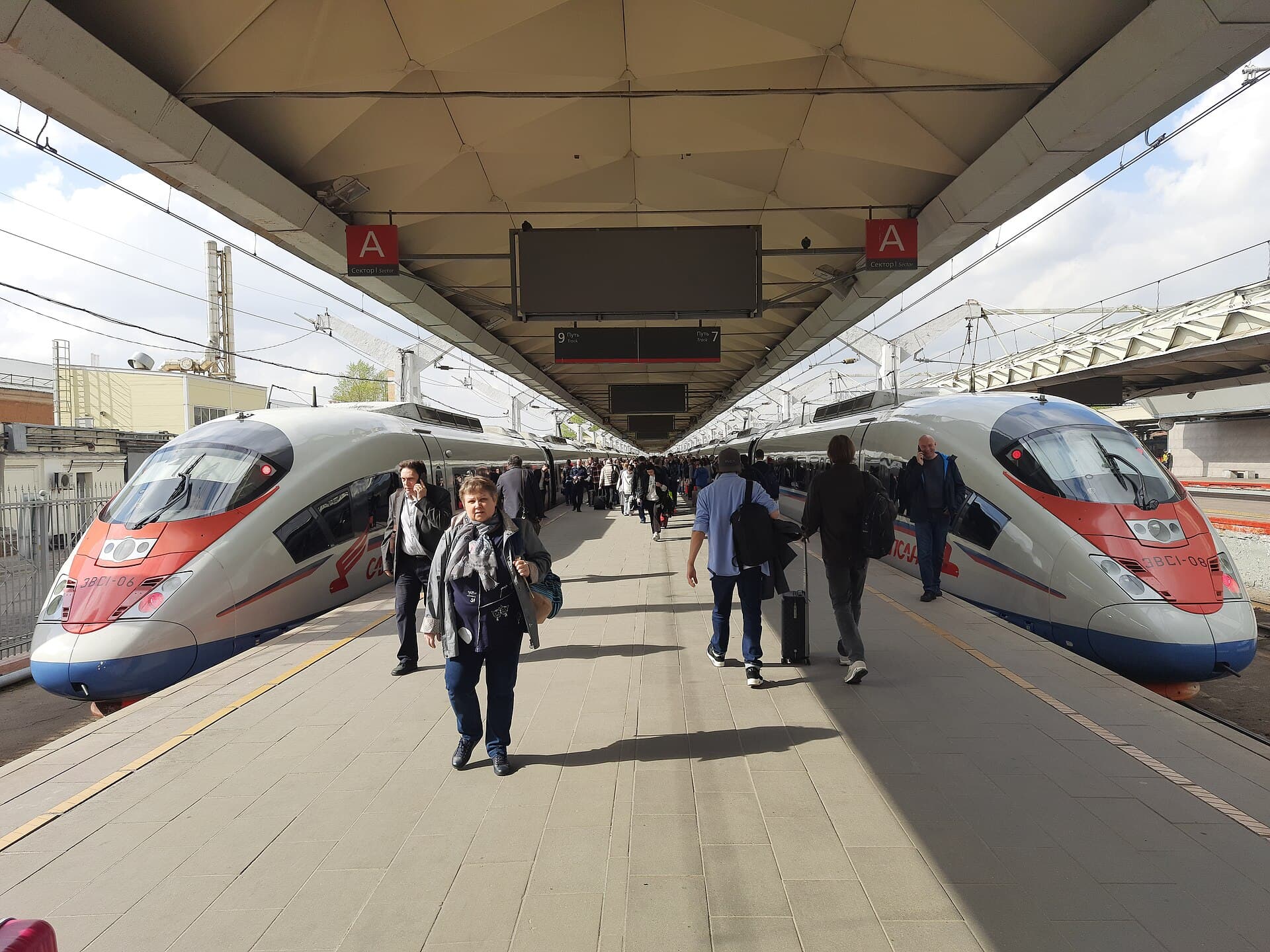

The departure board at Leningradsky Station shows that your train left four minutes ago. Almost everyone's first reaction is the same: consider the ticket lost and go buy a new one at the last-minute price.
That's an expensive mistake. The railway transport regulations give a delayed passenger quite a lot of time, and in most cases, the money on the ticket stays yours.
Twelve hours for reformatting
The main rule is that a passenger has the right to revalidate their ticket for another train if they miss their departure—within twelve hours of the scheduled departure time of the original train.
The condition is simple: pay the difference for the platzkart. This means you don't have to pay for the whole trip again, only the difference is charged.
If the reason is more serious — an illness or an accident — the period extends to five days from the departure of the train.
What is the "platskart cost" on a Sapsan ticket?
The word is confusing: what does "platzkart" have to do with it if the carriage is seated? The fact is that the price of any train ticket formally consists of two parts: the ticket price, i.e., the charge for the distance itself, and the "platzkart" price, i.e., the charge for a seat on a specific train.
You pay the second part upon reissuance, and it's this part that you lose if you cancel your trip after being late. It's useful to understand this division because all refund rules are formulated through it.
If you don't need to go anymore
You were late and decided not to travel at all - you can get the fare back minus the cost of the reserved seat. It's not everything, but it's far from nothing.
It is also useful to know how refunds work when you haven't missed your departure yet and are simply canceling your trip in advance. The scale is strict and is calculated from the departure time:
No later than eight hours prior - both the ticket price and the seat reservation fee are refunded.
Less than eight hours but no later than two hours—the ticket price and half the carriage price.
In under two hours—just the ticket price. The couchette is not refunded.
Here's the practical conclusion, which many find counterintuitive. If you already realize you won't make it, it's more advantageous to forfeit your ticket two hours beforehand than to be late and have to rebook. However, in the interval between "less than two hours" and "the train has left," the difference almost disappears - and then the twelve-hour window for rebooking becomes the best option.