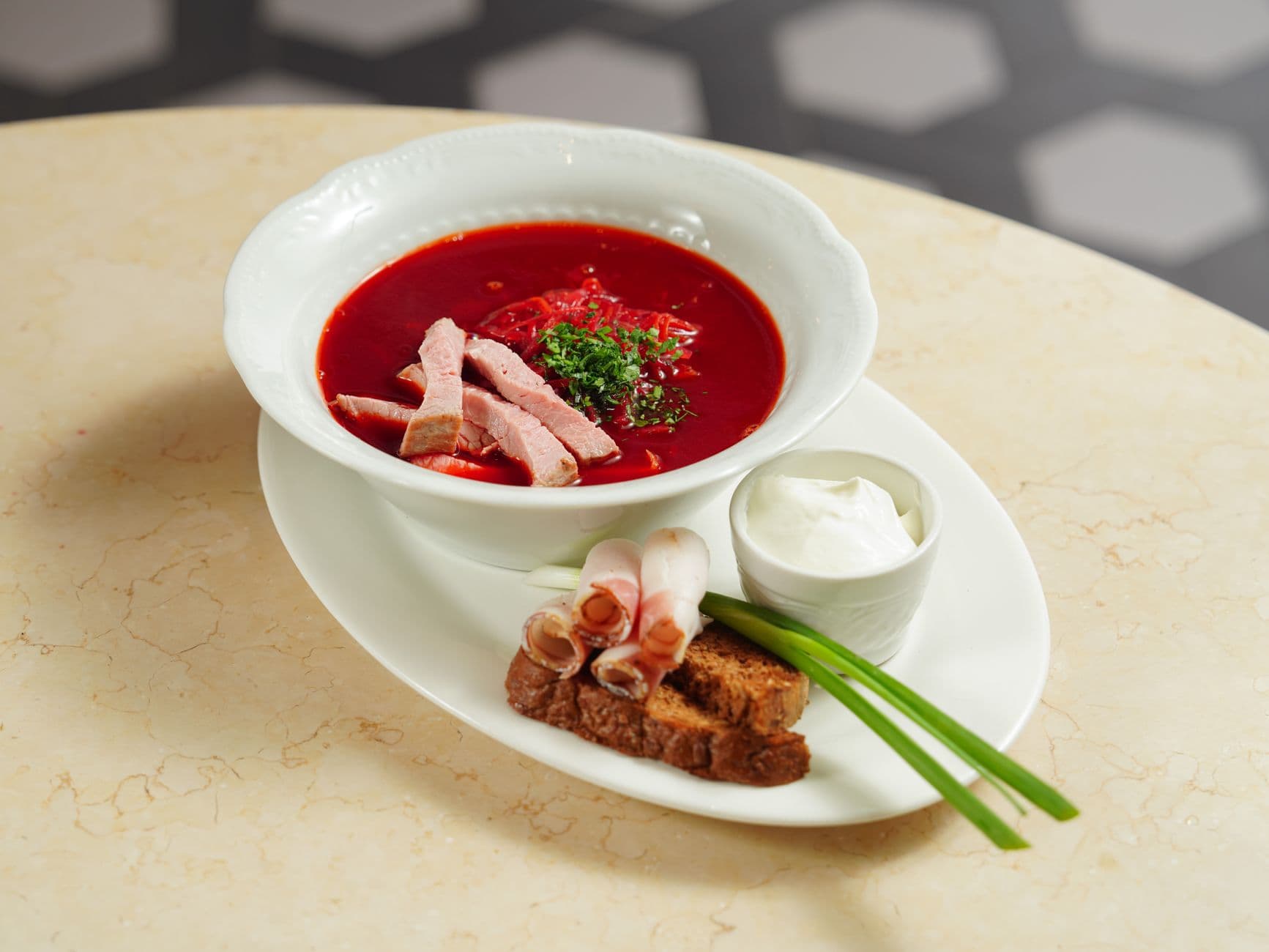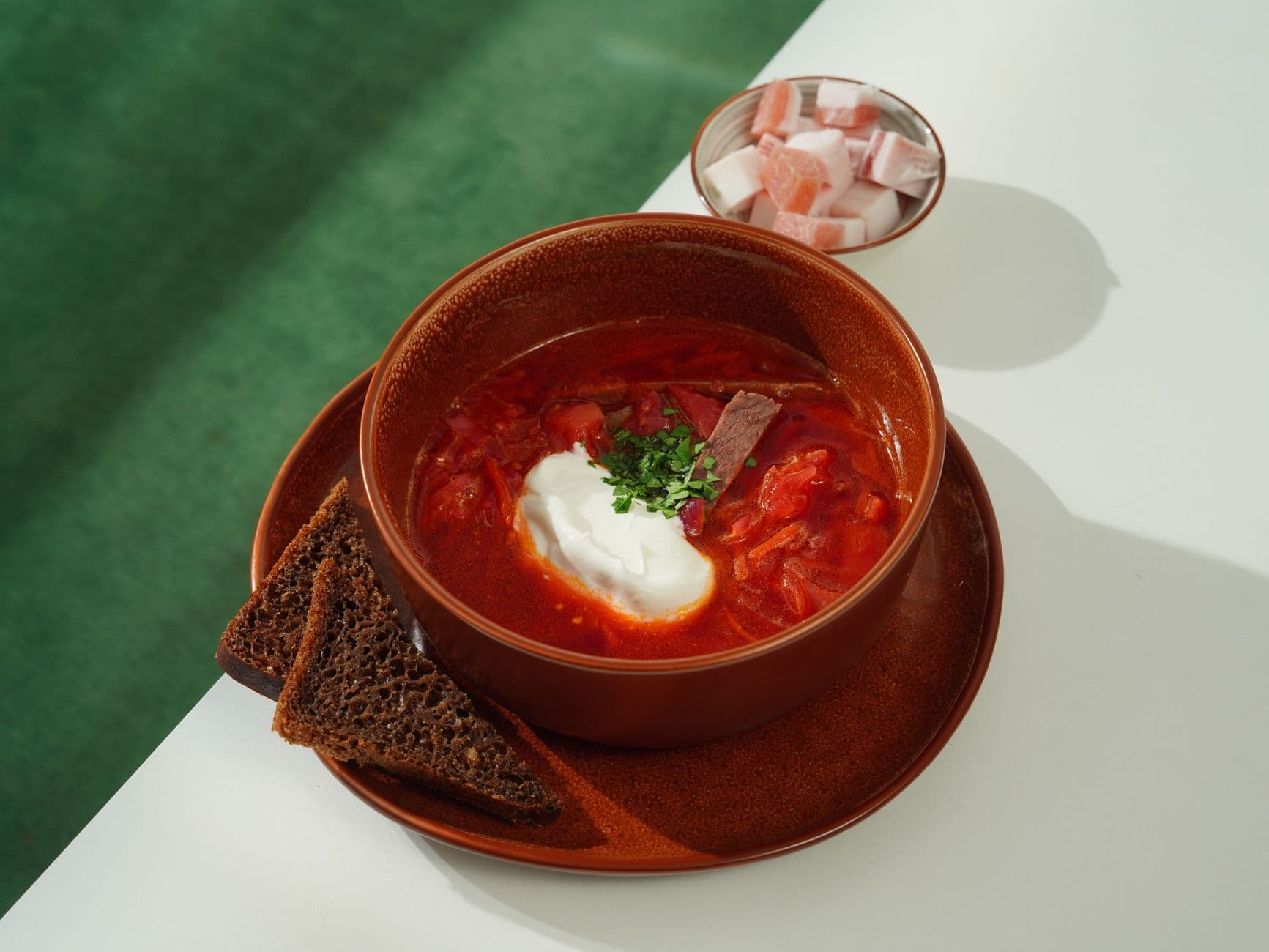

For borscht and pelmeni in Moscow, five Russian restaurants stand out: Café Pushkin for grand old-Russian dining, Mari Vanna for homestyle comfort food, Dr. Zhivago for modern takes on Soviet-era classics, White Rabbit for fine dining with a view, and Lavka-Lavka for farm-to-table seasonal cooking. Each serves the two dishes most travellers want to try first — a beetroot soup and a plate of dumplings — in a distinct setting and price bracket.
Borscht and pelmeni are the backbone of Russian comfort food: a beet-and-cabbage soup finished with sour cream and dill, and small meat-filled dumplings boiled and served with butter or smetana. Below is where to eat them well in Moscow, what each place is known for, and how to choose by budget and occasion. Menus, prices and opening hours change, so check a restaurant's current details before you go.
The 5 best Moscow restaurants for borscht and pelmeni
Café Pushkin — grand old-Russian dining
Café Pushkin, on Tverskoy Boulevard, is Moscow's best-known home of classic Russian cuisine, set in a mansion styled like a 19th-century aristocrat's house. Its borscht and pelmeni are textbook versions served with formal polish, and the upstairs library room is the signature setting. Expect a special-occasion price level and book ahead, especially at weekends.
Mari Vanna — homestyle comfort food
Mari Vanna recreates a Soviet-era family apartment, complete with mismatched china and bookshelves. It is the place for comforting, grandmother-style cooking: generous bowls of borscht, several pelmeni and vareniki fillings, and other home classics. The mood is cosy and relaxed, and it is one of the more family-friendly options on this list.
Dr. Zhivago — modern Russian classics
Dr. Zhivago, beside Red Square in the National Hotel, gives Soviet and traditional Russian dishes a bright, contemporary update in a bold red-and-white dining room. Its borscht is a menu staple and the kitchen keeps long hours, which makes it a reliable choice for a classic Russian meal near the Kremlin.
White Rabbit — fine dining with a view
White Rabbit sits under a glass dome near Smolenskaya with panoramic city views and is regularly ranked among the world's best restaurants. It serves elevated, modern Russian cuisine and tasting menus rather than canteen-style bowls, so come here for a refined interpretation of Russian flavours and a special night out.