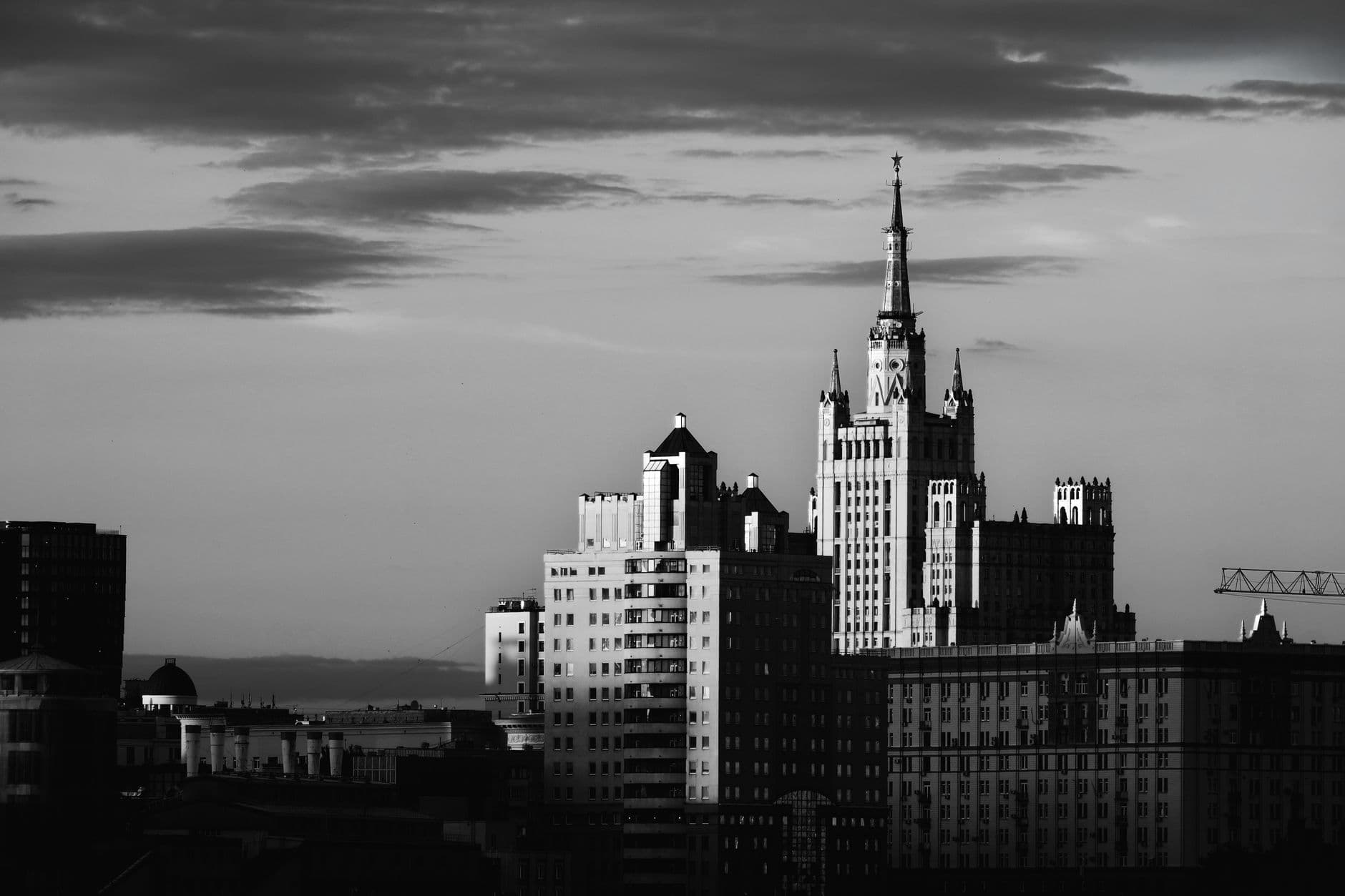
Pavilion 34 at VDNKh is the one with the rocket outside. Inside is the Cosmonautics and Aviation Centre — the largest space exhibition in Russia, and the only place where you can stand underneath a full-size Mir station and walk through it.
Most guides to VDNKh mention the pavilion in a sentence. Here is what is actually inside.
The building itself
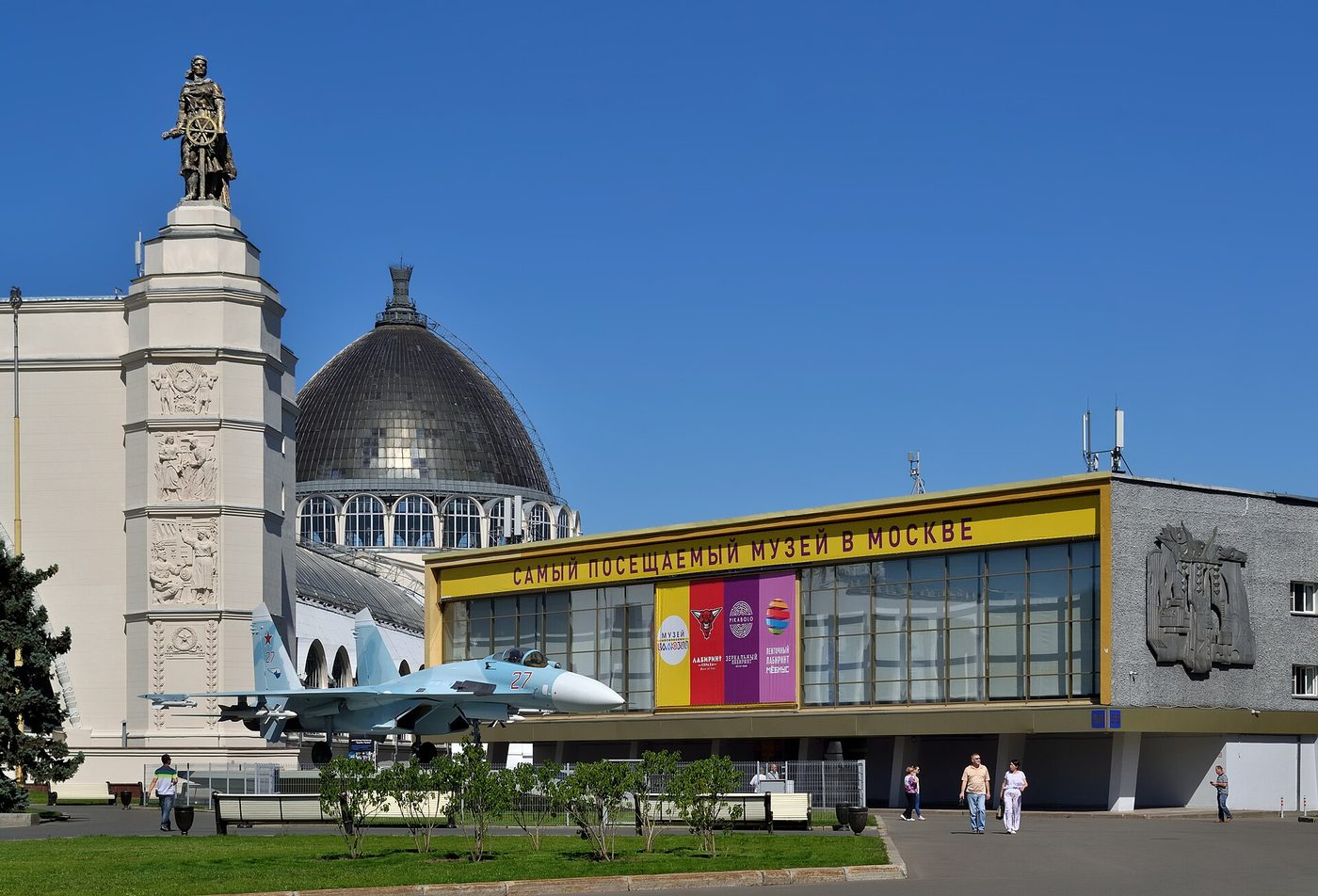
The pavilion was built in 1939 for mechanisation and agriculture, and its glass-and-steel dome is a serious piece of architecture in its own right. It stood derelict for years and reopened in 2018 after a full restoration.
Walk in and look up before you look at anything else. The dome is thirty metres high, and the exhibits are hung in that volume rather than laid out on the floor.
Kosmicheskiy Bulvar — the main hall
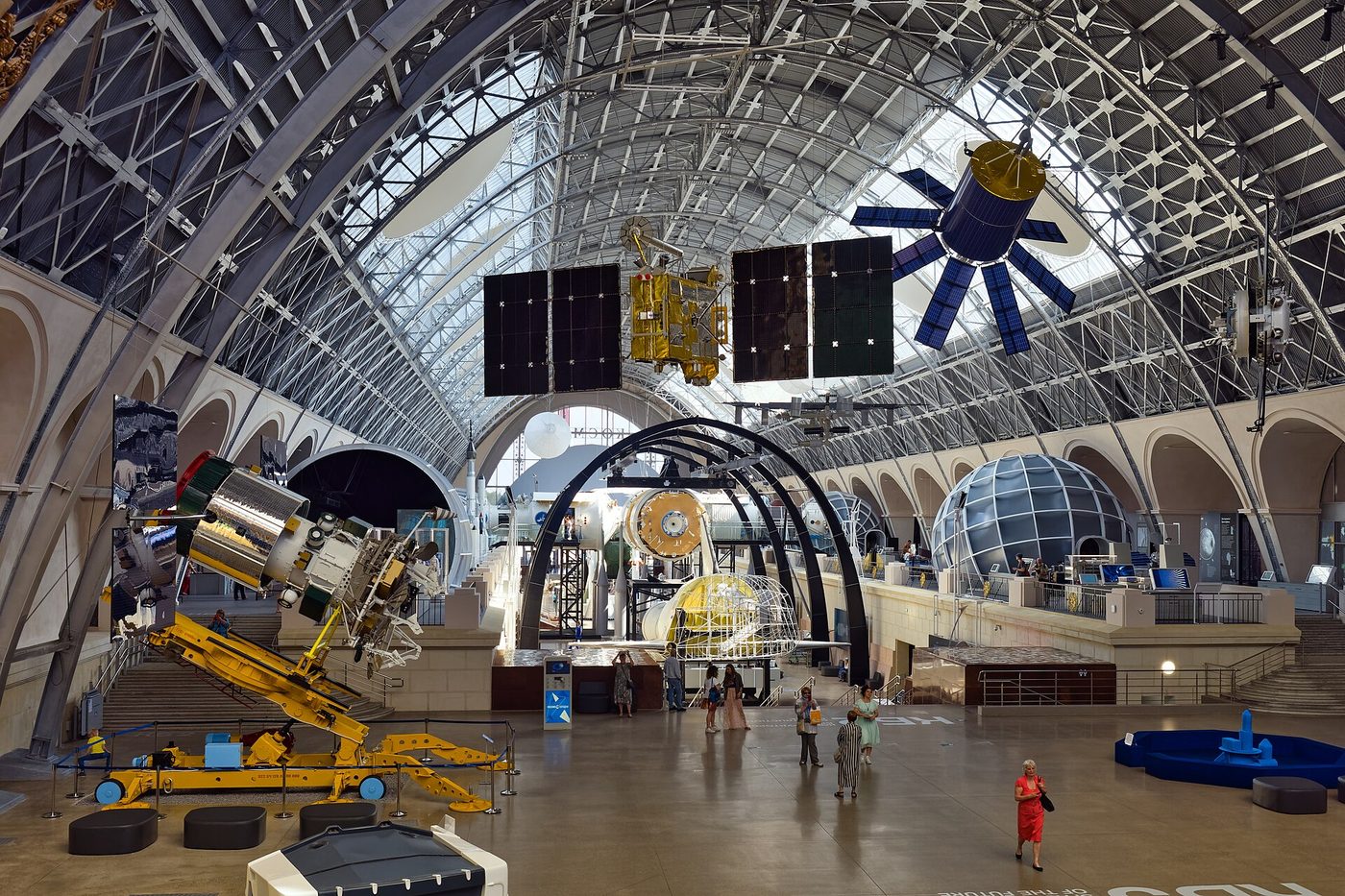
The central space holds full-size craft and models, arranged roughly from the first Sputnik to current rockets. Over 120 pieces of flight and space hardware are on display, alongside more than two thousand archive documents and photographs.
Two objects dominate.
The Energia-Buran model shows the Soviet answer to the Space Shuttle — a programme that flew once, unmanned and fully automatic, in 1988, and was then cancelled. Seeing the scale of it explains why it was abandoned better than any text.
The Mir station module is full-size and you can go inside. This is the part visitors talk about afterwards: the corridors are narrower than anyone expects, and equipment covers every surface including the ceiling, because in orbit there is no ceiling.
The three sections
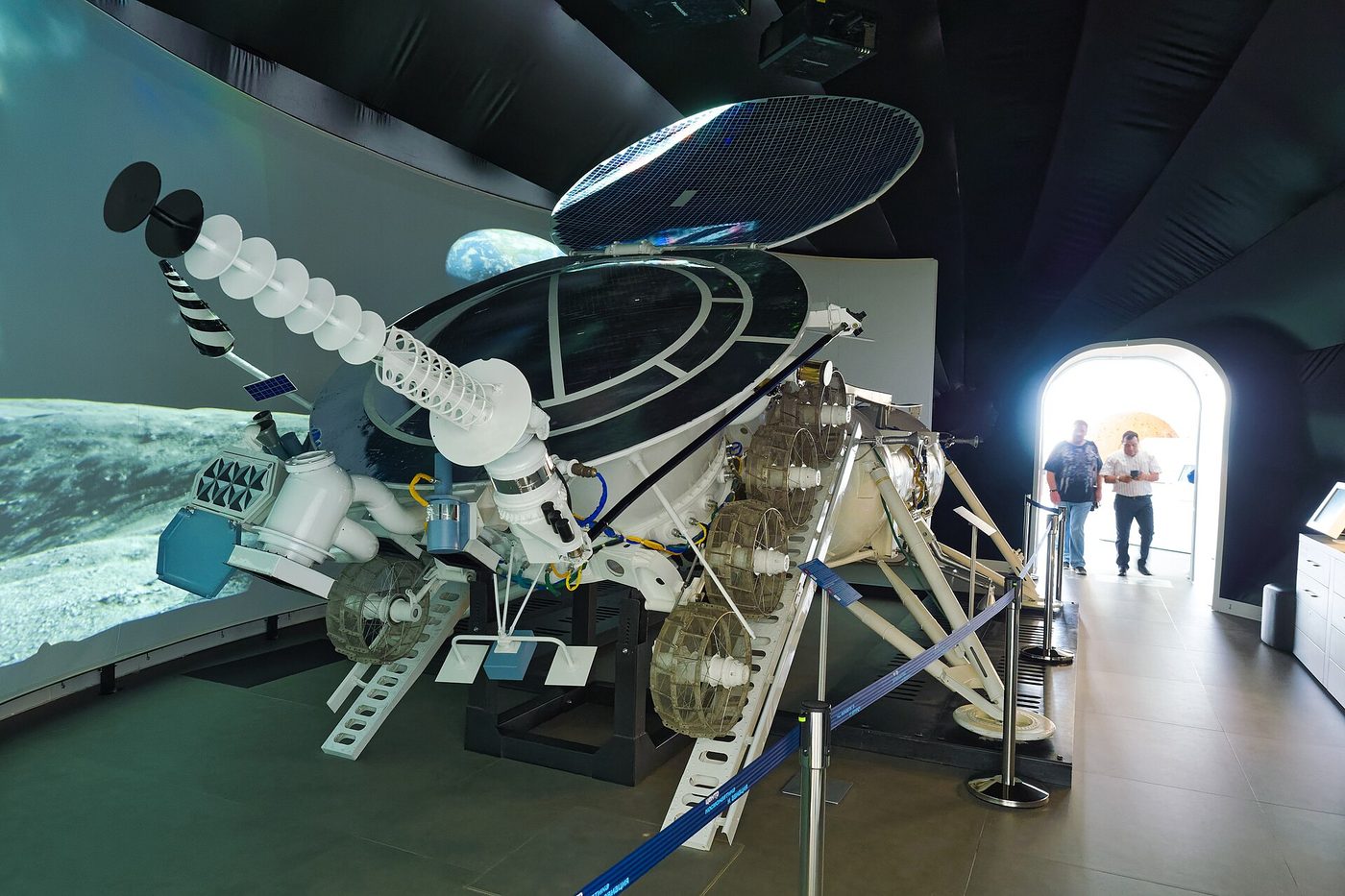
The exhibition is organised as three design bureaux, which is a nice conceit and also a useful way to navigate.
KB-1, Kosmicheskiy Bulvar — the hardware: satellites, descent capsules, engines, launch vehicles.
KB-2, Konstruktorskoye Byuro — how it was built. Drawings, models, the engineering problems and how they were solved.
KB-3, Kosmodrom Budushchego — what comes next: current programmes and projected missions, with interactive stations.
What to look for
The descent capsules are the quiet shock of the visit. They are scorched. A capsule that has come back through the atmosphere looks nothing like the polished models around it, and the burn pattern tells you exactly which side faced the heat.
The engines reward attention: the nozzle assemblies are objects of real beauty, and the labels explain what each one lifted.
The space food display is small and always crowded, for obvious reasons.