When the final section of Moscow's Big Circle Line opened on 1 March 2023, it claimed a record: at 57.5 kilometers, it became the world's longest metro circle line. Known locally as Bolshaya Koltsevaya Liniya (BKL) and marked turquoise on metro maps as line 11, this orbital route wraps around central Moscow, connecting about 30 stations and intersecting with nearly every radial line in the system.
For travelers, the BKL offers something beyond efficient transit. It functions as a low-cost architectural tour, a chance to see contemporary Russian design alongside echoes of Soviet monumentalism, all for the price of a single metro ticket. Riding the entire loop takes roughly 1.5 to 2 hours without transfers, making it a practical rainy-day activity or an orientation exercise for first-time visitors trying to grasp Moscow's layout.
This guide covers which stations deserve a stop, how the ticketing works, and how to integrate the Big Circle Line into a broader exploration of the city.
What Makes the Big Circle Line Unique?
Moscow already had one circle line: the older Koltsevaya (line 5, the brown ring built in the 1950s), completed in the 1950s and celebrated for its Stalinist baroque interiors. The Big Circle Line sits farther out, serving districts that were once peripheral but have since densified. Its construction spanned more than a decade, with segments opening in phases between 2018 and 2023.
The scale alone sets it apart. A full lap covers 57.5 km and passes through neighborhoods ranging from industrial zones near the Moskva River to residential blocks in the northeast, to the gleaming towers of Moscow City, the capital's main business district. Interchange points link the BKL to the Sokolnicheskaya, Zamoskvoretskaya, Arbatsko-Pokrovskaya, Filyovskaya, Kaluzhsko-Rizhskaya, Tagansko-Krasnopresnenskaya, Kalininskaya, Serpukhovsko-Timirovskaya, Lyublinsko-Dmitrovskaya, Butovskaya, and Moscow Central Circle lines, as well as several commuter rail stations.
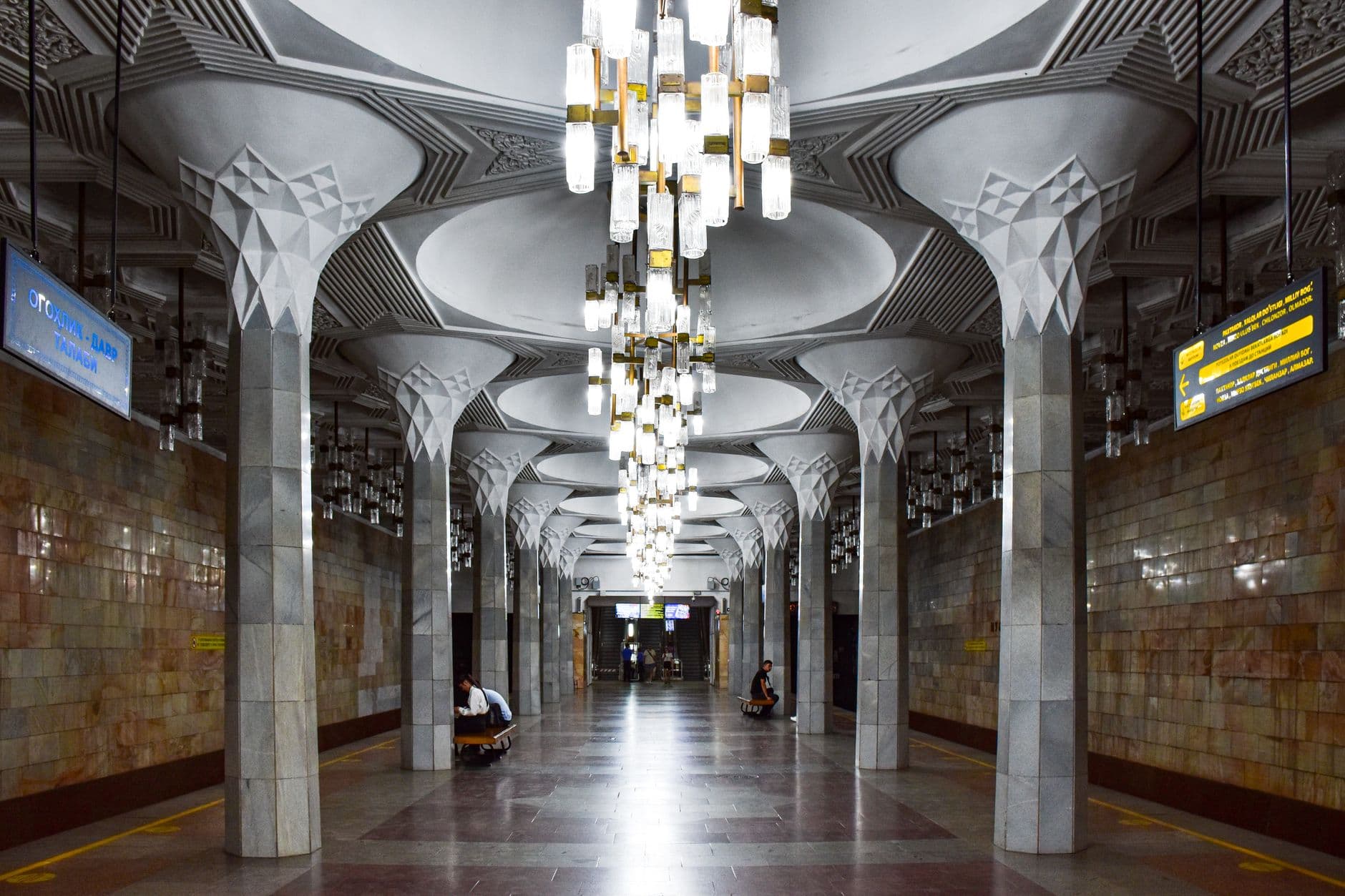
Architecturally, the BKL reflects a different era than the ornate stations of the 1930s through 1950s. Designers favored clean lines, large-format digital screens, and thematic mosaics or panels that reference local history rather than Soviet ideology. The result feels more airport terminal than palace, though individual stations introduce moments of drama.
Which Stations Are Worth Visiting?
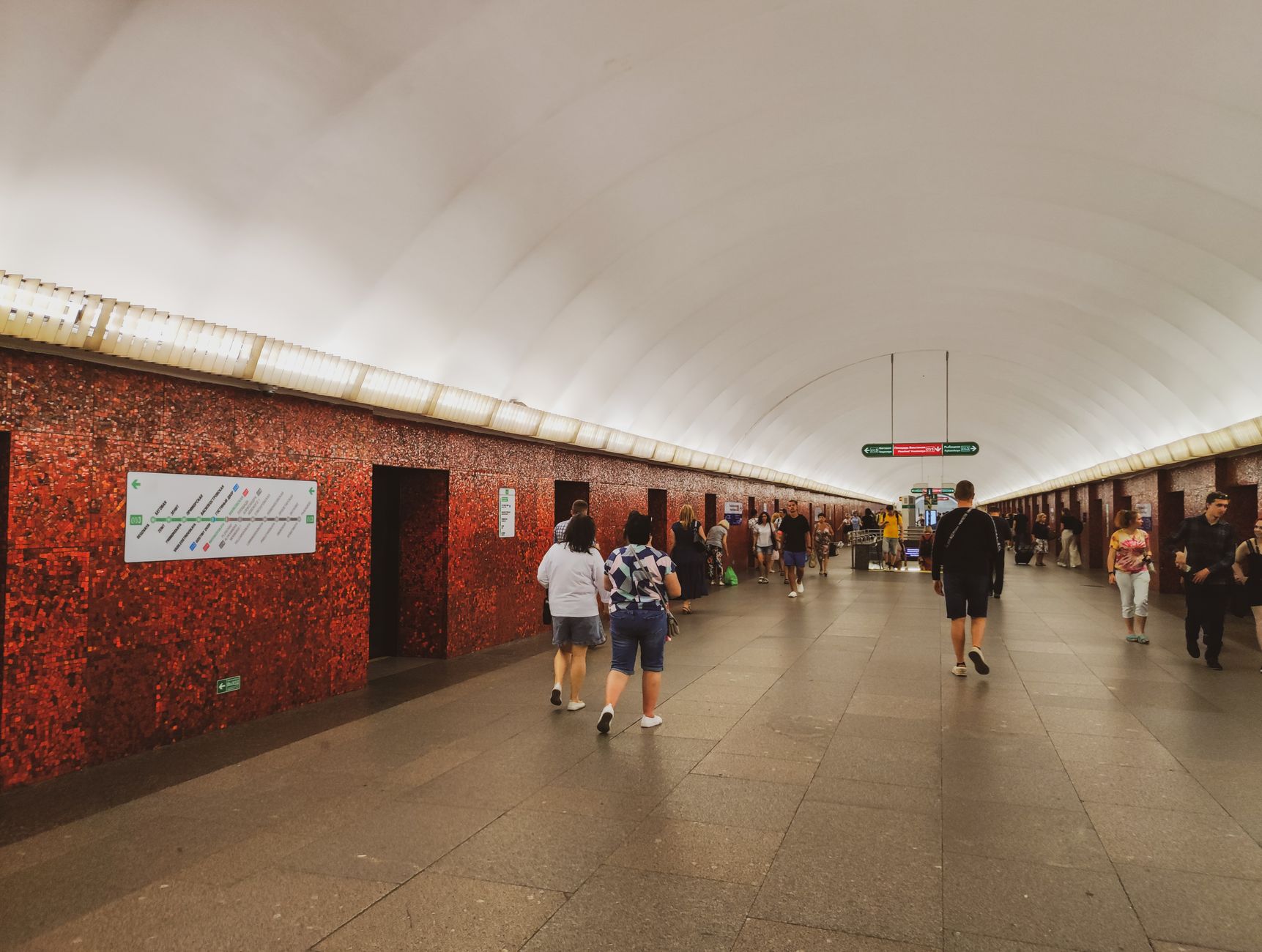
Not every BKL station will stop you in your tracks, but several stand out for design, depth, or thematic coherence.
Nagatinsky Zaton features large mosaic panels depicting fish species found in the Moskva River. The imagery nods to the station's proximity to the river's backwaters, historically a fishing area. The mosaics span entire wall sections, rendered in blues and silvers that catch the platform lighting.
Rizhskaya takes a futuristic approach, with sleek digital screens integrated into the platform design. The station sits deep underground and serves as an interchange with the older Rizhskaya on line 6, a transfer that involves escalators and corridors but remains straightforward compared to some Moscow interchanges.
Klenovy Bulvar and nearby Kolomenskaya incorporate motifs from the Kolomenskoye museum-reserve, a UNESCO World Heritage site known for its 16th-century wooden architecture and apple orchards. Decorative elements reference traditional Russian patterns, though the execution remains minimalist rather than ornate.
Maryina Roshcha ranks among the deepest stations on the BKL. The descent by escalator takes longer than at most stops, and the platform itself sits in a cavern lined with gray granite and backlit panels. The depth relates to geological conditions in that part of the city, where tunneling required boring through water-bearing layers.
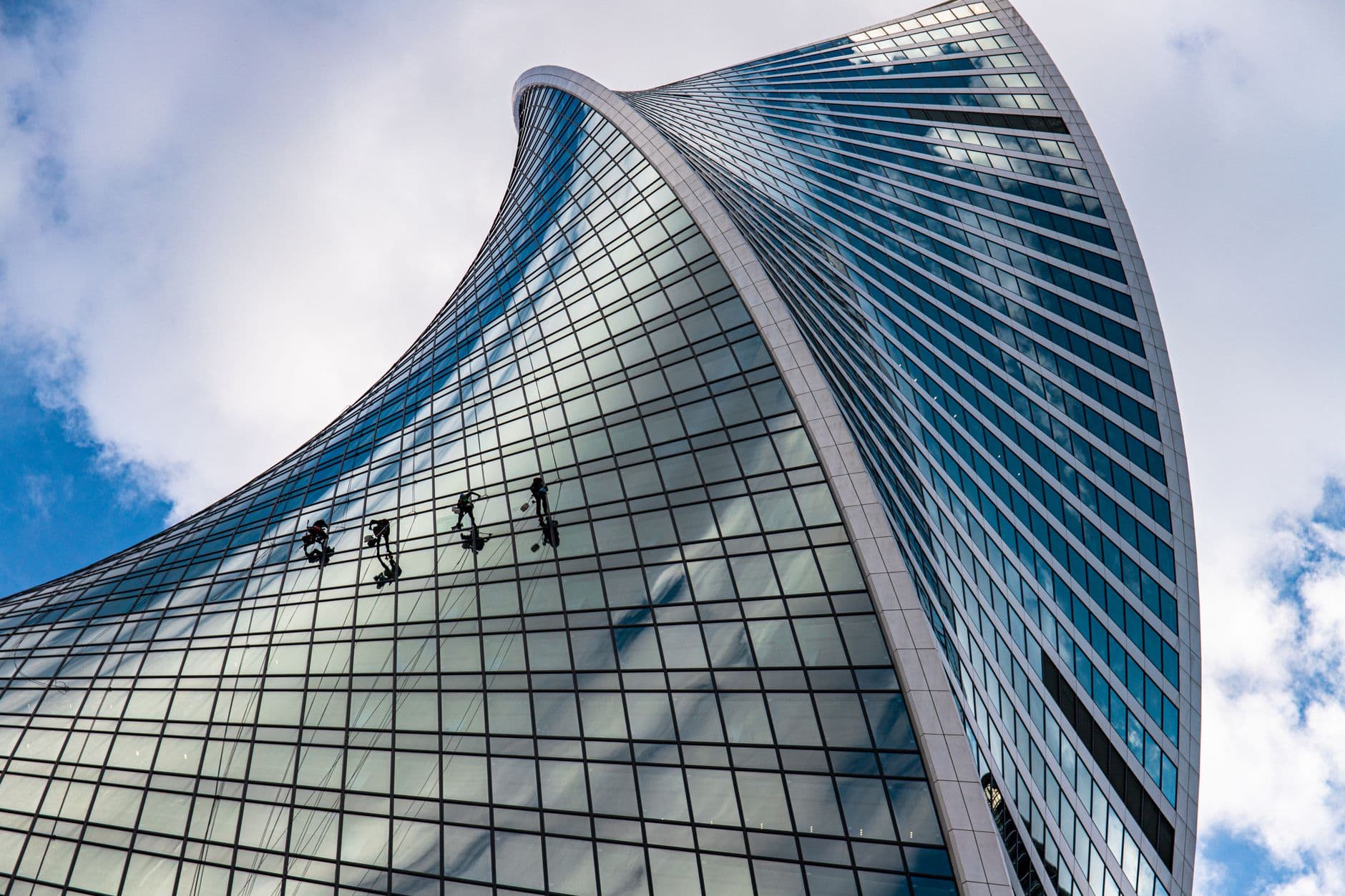
Delovoy Tsentr and Mezhdunarodnaya serve the Moscow City cluster of skyscrapers. Both stations feature wide platforms and high ceilings designed to handle rush-hour crowds from the business district. The interiors favor glass, steel, and neutral tones. Aboveground, exits lead directly to the base of towers like Federation and Mercury City.
For a concentrated architectural experience, consider a partial loop that includes Nagatinsky Zaton, Maryina Roshcha, and Rizhskaya, then transfers to a radial line back toward the center. This route covers the most visually distinct stations without committing to the full 1.5-hour circuit.
How Do You Buy Tickets and Navigate the BKL?
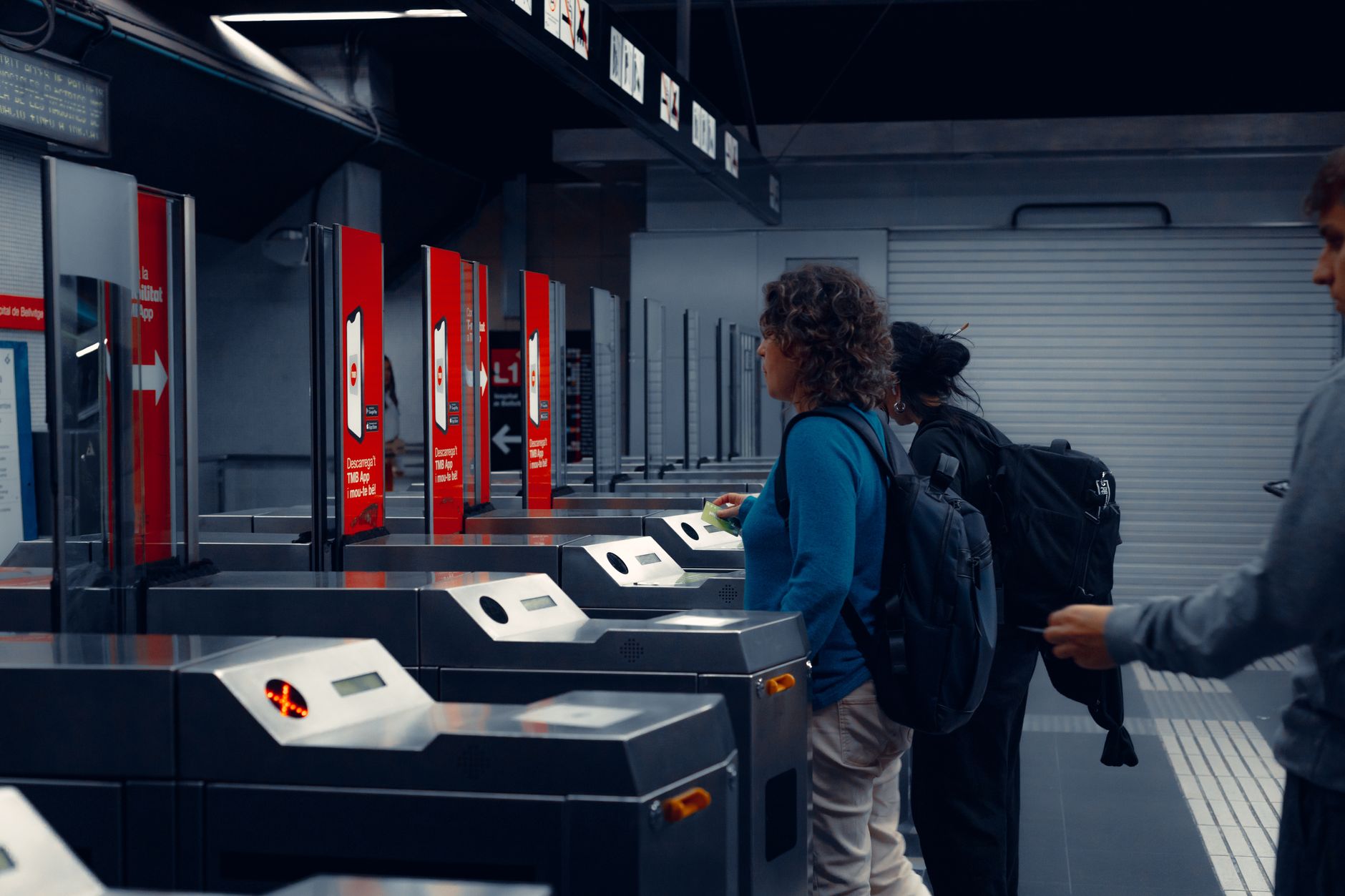
Moscow's metro operates on a flat-fare system. A single ride costs the same whether you travel one stop or loop the entire BKL. As of 2026, the most practical option for visitors is the Troika card, a rechargeable smart card available at ticket machines in any metro station. You tap the card on the yellow validator at the turnstile; the system deducts the fare automatically.
Troika cards work across the metro, buses, trams, and the Moscow Central Circle (MCC), a separate above-ground rail loop that also integrates with the BKL at several points. The card itself costs a small refundable deposit, and you can top it up at machines that accept cash or cards. Instructions appear in English on newer machines, though older models may default to Russian. Staff at ticket windows can assist, and many speak basic English in central stations.
Navigating the BKL itself is straightforward. The line is marked turquoise on all official maps, and digital displays on platforms show the next train's direction by listing upcoming stations. Because it's a circle, trains run in two directions: clockwise and counterclockwise. Check the platform signs to confirm which direction you need. If you board the wrong train, simply ride to the next interchange and cross to the opposite platform.
Interchanges vary in complexity. Some involve a short walk across a shared concourse; others require escalators, corridors, and a five-minute trek. The BKL's interchanges with the older Koltsevaya line (line 5) can be particularly circuitous, as the two circles don't align perfectly at every crossing. Allow extra time if your itinerary depends on tight connections.
Official schedules and service updates appear on mosmetro.ru and transport.mos.ru, both of which offer English-language sections. Real-time train arrival information displays on platform screens and in the official Mosmetro mobile app.
Can You Combine the BKL with Other Sightseeing?
The Big Circle Line intersects with enough surface landmarks to serve as a spine for a day's itinerary. Delovoy Tsentr and Mezhdunarodnaya place you at the foot of Moscow City, where observation decks in towers like Panorama360 offer views across the capital. A short walk from Kolomenskaya station brings you to the Kolomenskoye estate itself, a sprawling park with historic churches and the wooden palace of Tsar Alexei Mikhailovich.
Rizhskaya sits near Rizhsky railway station, a starting point for commuter trains to the northern suburbs and a neighborhood with Soviet-era apartment blocks and small parks. Nagatinsky Zaton, while residential, offers access to riverside paths along the Moskva River's quieter stretches, an area less trafficked by tourists.
For a deeper dive into metro architecture across multiple lines, guided tours are available through GetExperience.com, which organizes walks through Stalin-era stations on lines 1, 3, and 5, often with architectural historians. These tours complement a self-guided BKL loop by providing historical context that the newer line's minimalist design doesn't always convey on its own.
If your schedule allows, pair a BKL circuit with a ride on the Moscow Central Circle (MCC), the above-ground rail loop that runs along the route of the former freight ring railway. The MCC offers a different perspective—industrial zones, residential outskirts, and glimpses of the city's less polished edges—and shares several transfer points with the BKL. Together, the two circles provide a layered view of Moscow's expansion over the past century.
What Should You Avoid or Prepare For?
Rush hour on the BKL mirrors the rest of the Moscow metro: crowded, fast-paced, and not conducive to leisurely station photography. Weekday mornings from 8:00 to 10:00 and evenings from 17:00 to 19:00 see the heaviest traffic, particularly at interchanges serving commuter rail lines or Moscow City. If your goal is to appreciate the architecture, aim for mid-morning or early afternoon on a weekday, or any time on weekends outside major holidays.
Platform etiquette matters. Stand to the right on escalators; walk on the left. Let passengers exit trains before boarding. Photography is permitted in the metro, but avoid blocking doorways or using tripods during busy periods. Security staff may ask you to move if you're obstructing flow.
Not all BKL stations have elevators or step-free access, a common issue in Moscow's metro despite recent improvements. If mobility is a concern, check mosmetro.ru for the list of accessible stations, which is updated as retrofits continue. Maryina Roshcha, given its depth, involves a long escalator ride that may be uncomfortable for those with vertigo.
Language remains a minor barrier. Station names appear in Cyrillic on older signs, though newer installations include Latin transliterations. The Mosmetro app and Google Maps both render station names in English, and the Troika card eliminates the need to interact with ticket machines beyond the initial purchase. Still, learning to recognize a few Cyrillic characters—particularly those in your hotel's nearest station name—reduces confusion.
One common mistake: assuming the BKL reaches the Kremlin or Red Square. It doesn't. The line's inner edge sits several kilometers from the historical center, designed to relieve congestion on radial lines rather than serve tourists directly. To reach central landmarks, transfer from the BKL to lines 1, 2, 3, or the older Koltsevaya (line 5) at one of the many interchange points.
Practical Details for Planning Your Loop
A complete lap of the BKL without stops takes approximately 1.5 to 2 hours, depending on train frequency and dwell time at stations. Add 10 to 15 minutes per stop if you want to explore platforms or take photographs. For a half-day activity, budget three hours: this allows for a partial loop, a couple of station exits to see aboveground landmarks, and a meal near one of the interchanges.
Trains run from roughly 5:30 to 1:00 daily, with intervals of 2 to 4 minutes during peak hours and 5 to 8 minutes late at night. Service is reliable; delays are rare and usually announced in Russian and English.
Even without the pass, the Troika card's per-ride cost remains low compared to taxis or ride-hailing apps for covering similar distances across the city.
If you're staying in central Moscow, the nearest BKL access points are likely Delovoy Tsentr or Savyolovskaya, both of which connect to radial lines that reach hotels near the Kremlin, Arbat, or Tverskaya districts. From there, a clockwise loop takes you southeast through Nagatinsky Zaton, then northeast through Maryina Roshcha and Rizhskaya, before returning west past Moscow City.
Combining the BKL with other transport modes broadens your reach. The MCC, as mentioned, shares transfers at multiple points. Suburban trains (elektrichki) connect to the BKL at Savyolovskaya, Rizhskaya, and other stations, useful for day trips to Sergiev Posad or estates outside the MKAD ring road. For airport transfers, GetTransfer.com offers direct rides that bypass the need to navigate interchanges with luggage, though the Aeroexpress trains from Sheremetyevo, Domodedovo, and Vnukovo also connect to the BKL via the older Koltsevaya line.
The Big Circle Line won't replace a walk through Red Square or a visit to the Tretyakov Gallery, but it adds a layer of understanding to Moscow's geography and its ongoing infrastructure ambitions. For travelers who appreciate transit systems as cultural artifacts, the BKL represents a decade of engineering and a shift in how the city envisions its future growth. For everyone else, it's a warm, dry, and inexpensive way to cover a lot of ground while seeing a side of Moscow that predates and postdates the usual tourist circuit.