A temporary mutual visa-free arrangement between China and Russia allows Chinese citizens to enter Russia for short stays of up to 30 days without applying for a visa. The arrangement has been in place since 15 September 2025. On 20 May 2026, during President Vladimir Putin's visit to China, foreign ministry spokesperson Guo Jiakun announced its extension to 31 December 2027, and Russia is mirroring the same dates. Chinese citizens with ordinary passports can stay up to 30 days for tourism, business, family visits, exchange programs, or transit. Even so, confirm the current status on mid.ru or evisa.kdmid.ru before booking flights.
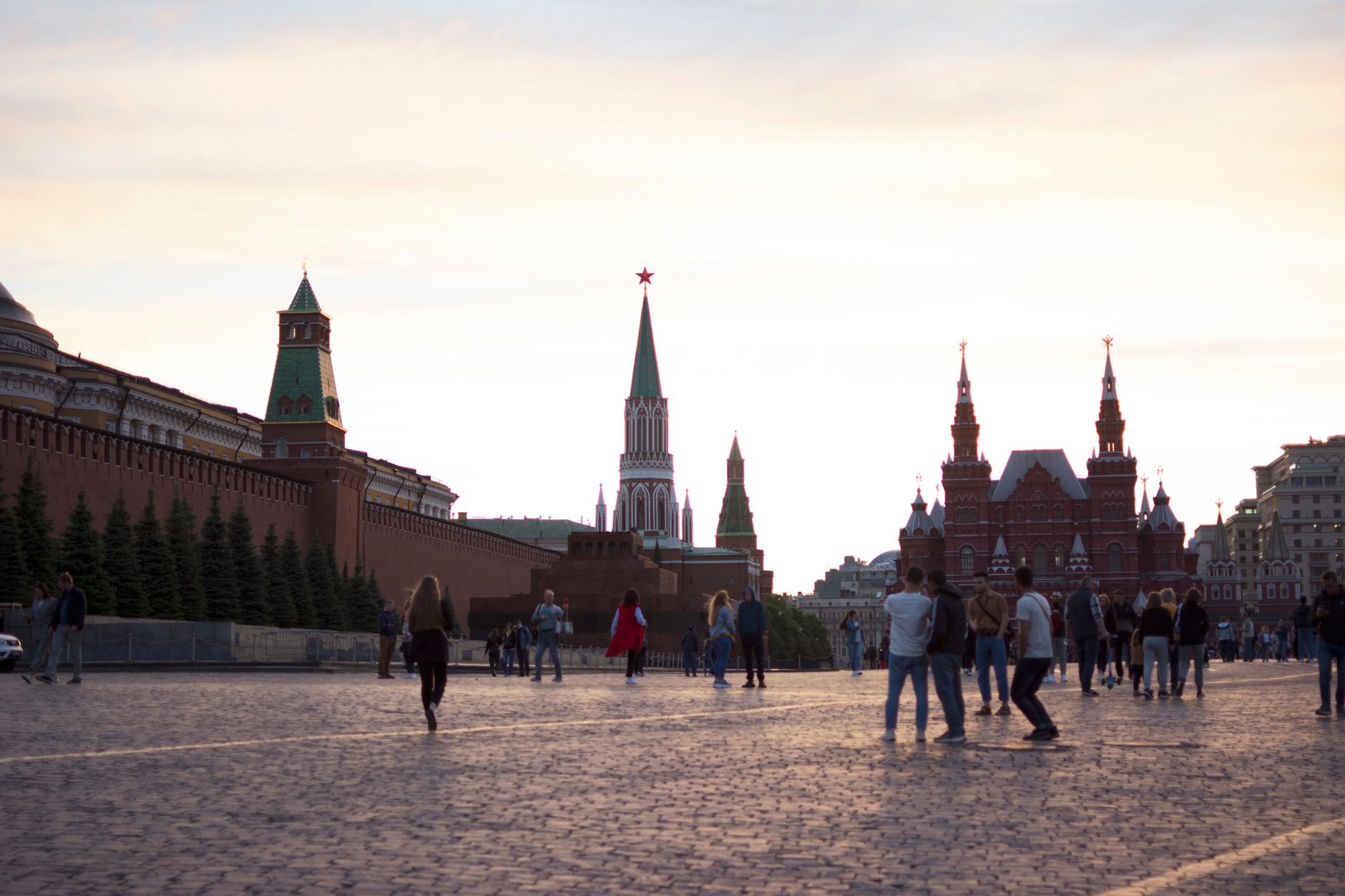
The numbers are striking: roughly 2 million Chinese travelers have visited Russia since the visa-free program began, and Moscow alone welcomed more than 470,000 Chinese visitors in 2025. The first quarter of 2026 brought about 130,000 Chinese tourists to the capital, up 30 percent year on year. The profile has shifted too. By the end of 2025, 84 percent of Chinese visitors traveled independently rather than in groups, and 53 percent were aged 18 to 35, younger travelers chasing authentic experiences well beyond the standard sights. The city has responded by expanding Chinese-language digital services, including ready-made walking routes and event calendars. Red Square, the Kremlin, Tretyakov Gallery, and Gorky Park top the itinerary for first-time visitors, while repeat travelers venture to Kolomenskoye, the Cosmonautics Museum, and evening performances at the Bolshoi Theatre.
This guide addresses the practicalities that matter most: payment systems that work (and the many that don't), airport transfers, mobile connectivity, and how to structure a week in Moscow without a tour operator.
What Does Visa-Free Entry Actually Mean for Chinese Passport Holders?
Chinese citizens holding ordinary passports can cross the Russian border without advance visa paperwork for stays up to 30 consecutive days. You present your passport at immigration, state the purpose (tourism, business visit, family), and receive an entry stamp. No invitation letter, no consular appointment, no visa fee.
The reciprocal arrangement also grants Russian citizens visa-free entry to China under the same terms. Both governments view the measure as a way to increase bilateral tourism and business exchange, though the temporary nature of the current agreement means travelers must verify its status before each trip. Official sources remain the only reliable reference: the Russian Ministry of Foreign Affairs website and the consular portal publish updates in Chinese, Russian, and English.
Overstaying the 30-day limit triggers fines and potential bans on re-entry. If you plan to stay longer or study, you still need a conventional visa. The visa-free window covers the majority of leisure trips—a week in Moscow, a few days in the Golden Ring towns, or a two-week loop that includes both capitals and a Trans-Siberian segment.
How Do Payments Work in Moscow for Chinese Visitors?
Payment systems present the steepest learning curve. Foreign-issued Visa and Mastercard do not function in Russia due to sanctions and network disconnections. That eliminates the fallback many travelers rely on elsewhere in Europe or Asia.
UnionPay cards issued by Chinese banks work inconsistently. Acceptance depends on the issuing bank's correspondent arrangements and the specific payment terminal in the shop or restaurant. Some locations accept UnionPay without issue; others decline the same card. You cannot treat UnionPay as a universal solution the way you might in Shanghai or Hong Kong.
WeChat Pay, Alipay, and UnionPay acceptance is expanding, especially at hotels, restaurants, and shops that court Chinese tourists near Red Square and Tverskaya Street. New national standards for serving foreign tourists, in force from 1 June 2026, recommend that hotels and restaurants accept these systems. Coverage is still uneven, though, so do not rely on any of them as your only payment method.
The dependable approach combines two elements: cash rubles and a Russian Mir card. Bank branches operate inside Sheremetyevo, Domodedovo, and Vnukovo airports. You can open a non-resident account and apply for a Mir debit card on arrival, presenting your passport and completing a short form. Services such as YuMoney now issue tourist Mir cards to foreigners either on arrival or online in advance, available in Moscow, Saint Petersburg, Nizhny Novgorod, at Sheremetyevo Airport, and (from 2026) in Vladivostok; issuance rose 47 percent year on year over the Chinese New Year period. The card activates within minutes to a few hours depending on the bank. Load it with cash rubles at the branch or an ATM, and it will work at virtually every terminal in Moscow—metro gates, museum ticket kiosks, grocery stores, taxis.
Carry cash for smaller vendors, market stalls, and any location where card readers fail. Exchange currency at banks or official exchange offices (obmen valyuty), avoiding kiosks that post rates without a license. The ruble remains the only legal tender; euros and yuan are not accepted for goods and services.
For a full breakdown of methods that work, see our guide to paying in Moscow as a tourist. A common mistake: assuming that digital payment habits from Beijing or Shenzhen transfer directly to Moscow. They do not. Plan as though you are visiting a city where cash and a local bank card are the norm, and you will avoid the frustration of declined transactions at museum entrances or metro stations.
How Do I Get From the Airport to Central Moscow?
Sheremetyevo (SVO) serves the majority of international flights, including direct routes from Beijing, Shanghai, and Guangzhou. The Aeroexpress train departs every 30 minutes from Terminal B and D, reaching Belorussky Railway Station in 35 minutes. From there, the metro connects to hotels and attractions across the city. The train costs around 500 rubles for a standard ticket; buy it at the airport kiosk or vending machine using your Mir card or cash.
Domodedovo (DME) and Vnukovo (VKO) also run Aeroexpress services to Paveletsky and Kievsky stations, respectively. All three lines integrate smoothly with the metro, which operates from approximately 05:30 to 01:00 daily.
Pre-booked transfers through GetTransfer.com eliminate uncertainty if you arrive late at night, travel with heavy luggage, or prefer a direct ride to your hotel. Drivers meet you in the arrivals hall holding a name card, and the fare is fixed at booking—no meter anxiety or language negotiation. This option suits families and groups splitting the cost.
Avoid unlicensed taxis waiting outside the terminal. They quote inflated prices and lack accountability. Official yellow taxis use meters, but communication can be challenging without Russian language skills. Ride-hailing apps function well if you have a Russian SIM card and a working payment method registered in the app.
Where Should I Stay and What Should I Visit?
First-time visitors cluster near the Boulevard Ring or within walking distance of Red Square and the Kremlin. The Arbat district offers pedestrian streets, Soviet-era architecture, and proximity to the Moscow River embankment. Tverskaya Street runs north from the Kremlin and concentrates shopping, dining, and nightlife.
Red Square remains the symbolic center. The Kremlin's cathedrals, Armoury Chamber, and Diamond Fund require separate tickets, which you can purchase on-site or in advance through GetExperience.com to skip queues during peak summer months. GUM—the State Department Store—sits on the eastern edge of the square, offering high-end retail and a historic interior worth seeing even if you don't shop.
The Tretyakov Gallery holds the world's foremost collection of Russian art, from medieval icons to 20th-century avant-garde works. The original building on Lavrushinsky Lane focuses on pre-revolutionary art; the New Tretyakov on Krymsky Val covers Soviet and contemporary periods. Budget three hours for a thorough visit to either location.
Gorky Park has transformed from a Soviet leisure ground into a contemporary urban park with bike rentals, outdoor fitness zones, and seasonal festivals. In winter, the park floods pathways to create one of Europe's largest public ice rinks. The adjacent Muzeon Park of Arts displays Soviet-era statues removed from public squares after 1991, offering an open-air history lesson.
The Moscow Metro doubles as an architectural attraction. Stations such as Komsomolskaya, Mayakovskaya, and Novoslobodskaya feature mosaics, chandeliers, and marble columns that rival museum interiors. A metro day pass costs roughly 250 rubles and grants unlimited rides, making it the most efficient way to cover long distances across the city.
For performing arts, the Bolshoi Theatre stages ballet and opera in a restored 19th-century hall. Tickets range from affordable upper-balcony seats to premium stalls; book months ahead for famous productions like Swan Lake or The Nutcracker. The Moscow Conservatory and Tchaikovsky Concert Hall host classical music performances at lower price points.
Independent Travel vs. Organized Tours
The shift toward independent travel among Chinese visitors reflects improved digital infrastructure. The city's Discover Moscow portal (discovermoscow.com) and the official tourism portal (mos.ru) publish Chinese-language guides, ready-made walking routes, maps, and event calendars. Many hotels and restaurants now add Chinese-speaking staff, Chinese-language menus and signage, power-socket adapters, and Chinese cuisine, part of a service standard rolled out alongside Moscow's "Discover Moscow, discover new surprises" campaign aimed at Chinese guests. Many museums offer audio guides in Mandarin, and younger staff at hotels and attractions often speak basic English, which serves as a bridge language when Chinese is unavailable.
Organized day trips to the Golden Ring towns—Sergiev Posad, Suzdal, Vladimir—remain popular for visitors who want historical context and transport arranged in advance. GetExperience.com lists half-day and full-day excursions with English or Chinese-speaking guides, covering monastery complexes, wooden architecture museums, and traditional crafts workshops.
Walking Moscow independently requires a charged phone, offline maps, and patience with Cyrillic signage. Street signs in central districts increasingly include Latin transliterations, but smaller streets and suburban areas do not. Learning a dozen Russian phrases—hello, thank you, excuse me, how much—smooths interactions and signals respect.
What About Mobile Connectivity and SIM Cards?
Russian SIM cards require passport registration, a process that takes 10 to 20 minutes at carrier shops inside airports or on major streets. MTS, Beeline, and Megafon offer prepaid tourist packages with data, domestic calls, and sometimes international minutes. A typical 30-day package with 10-15 GB of data costs 500 to 800 rubles.
Roaming on a Chinese carrier works but incurs high per-megabyte charges unless you activate a specific Russia roaming package before departure. Check with China Mobile, China Unicom, or China Telecom for current rates and bundles.
Free Wi-Fi blankets the metro system, many parks, and most cafes. The quality suffices for messaging apps and map lookups but not for streaming video or large file uploads.
Practical Notes on Weather, Tipping, and Safety
Moscow's climate swings from minus-15°C winter lows to plus-30°C summer peaks. June through August draw the heaviest tourist traffic, long daylight hours, and outdoor festival schedules. January and February offer snow-draped architecture and lower hotel rates, but short days and icy sidewalks demand warm clothing and caution.
Tipping practices are informal. Restaurants do not include service charges; leaving 10 percent for good service is common but not obligatory. Taxi drivers and tour guides appreciate small tips, though they do not expect the percentages standard in North America.
Petty theft occurs in crowded metro cars and tourist zones. Keep valuables in front pockets or a crossbody bag. Violent crime against tourists is rare. Police presence is visible around Red Square and major transport hubs, and officers generally respond quickly to requests for help, though English fluency varies.
It bundles admission, skips some ticket lines, and includes public transport options.Evaluate whether the included venues match your interests before purchasing; independent ticket purchases sometimes offer more flexibility.
Confirming the Visa-Free Status Before You Travel
Following the May 2026 extension, the visa-free arrangement now runs through 31 December 2027, but terms can still change. Check the Russian Ministry of Foreign Affairs website and the consular section responsible for your province at least two weeks before departure. If the visa-free regime has lapsed, you will need to apply for a tourist e-visa or a standard visa through the consulate.
Border officials may ask for proof of onward travel—a return flight booking or a ticket to another country—and evidence of sufficient funds, though these checks are inconsistent. Carry printed or digital copies of hotel confirmations and a credit card statement showing available balance, even if that card will not work for purchases inside Russia.
The trial nature of the visa-free arrangement means both governments are monitoring entry volumes, compliance rates, and any security concerns. Respecting the 30-day limit and following local laws ensures the program continues and potentially becomes permanent.


